
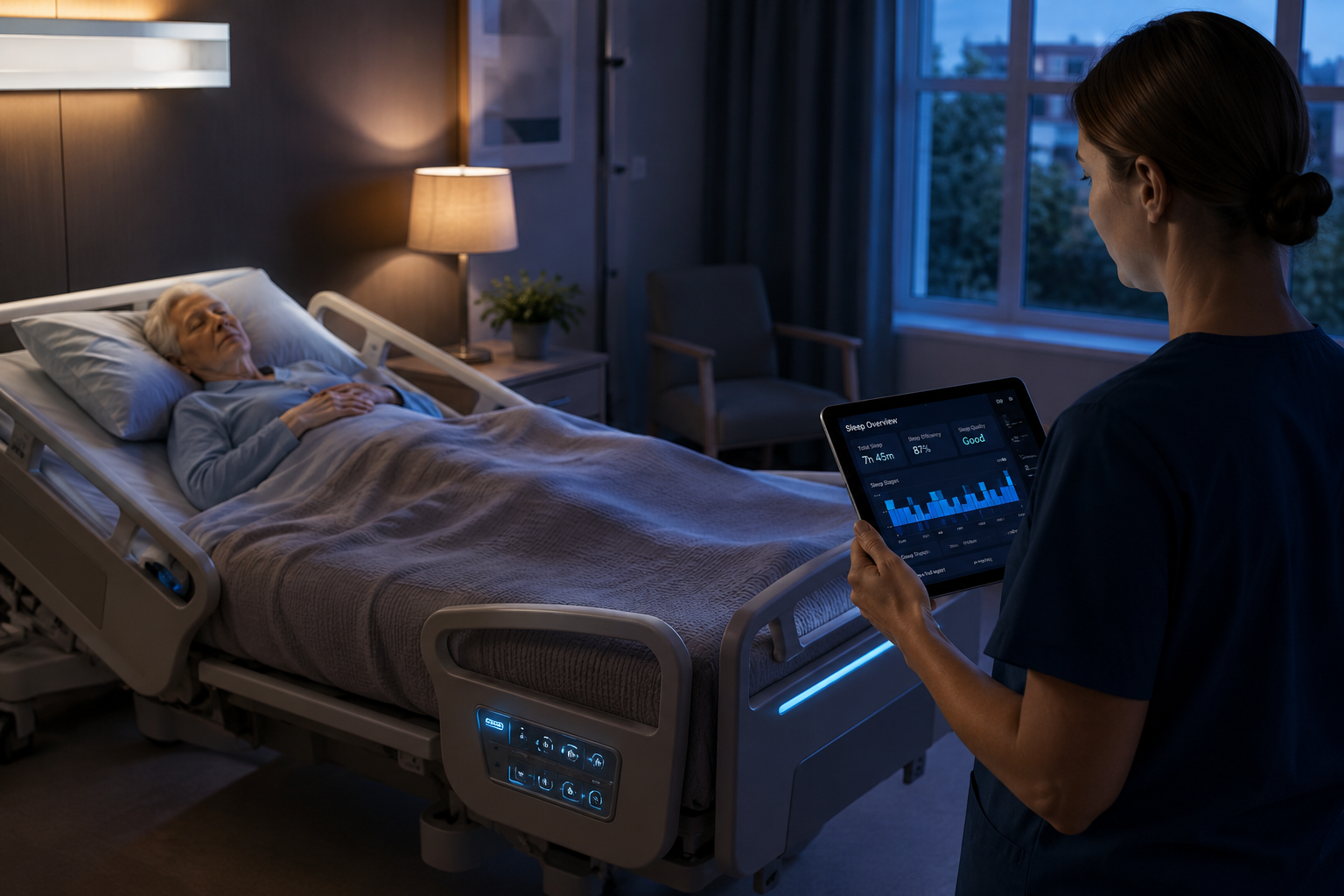
Sleep affects nearly every part of daily well-being. Poor rest can influence mood, energy levels, mobility, concentration, and general comfort, especially for older adults or people recovering from illness. In care facilities, sleep challenges are common. Residents may wake frequently during the night, struggle with discomfort, or experience interruptions caused by medical routines and shared living environments. Care staff also face the difficult task of monitoring residents without disturbing them unnecessarily.
This is one reason smart beds are becoming more common in hospitals, assisted living centres, rehabilitation facilities, and long-term care environments. These beds are designed to do more than provide a place to sleep. Many now include built-in sensors, pressure monitoring, movement tracking, and adjustable support systems that help improve both comfort and caregiving awareness.
What Makes a Bed “Smart”?
A smart bed combines traditional bed functions with digital monitoring technology and automated adjustments. Some systems are relatively simple, while others integrate directly with broader healthcare platforms inside care facilities.
Common smart bed features may include:
- Adjustable sleeping positions
- Pressure distribution tracking
- Sleep movement monitoring
- Bed exit alerts
- Heart rate and breathing observation
- Temperature adjustment
- Remote caregiver notifications
- Fall-prevention support
Not every facility uses the same technology level. Some focus mainly on comfort, while others use smart beds as part of larger patient monitoring systems.
Comfort Is Often the Most Immediate Benefit
Technology discussions sometimes focus heavily on data collection, but comfort remains one of the most practical reasons care facilities invest in smart beds. Residents who spend long periods in bed may experience stiffness, pressure discomfort, or difficulty finding supportive sleeping positions. Adjustable smart beds can help reduce some of these issues by allowing carers or residents to reposition the bed more easily.
Even small adjustments can matter. Raising the head slightly may help someone feel more comfortable while reading or eating. Elevating the legs may improve relaxation for certain residents. Personalised positioning can make long-term care environments feel less physically exhausting. Residents often notice comfort improvements long before they think about the technology itself.
Sleep Tracking Helps Care Teams Notice Patterns
One of the more interesting features of smart beds is their ability to track sleep-related patterns passively throughout the night. Instead of requiring wearable devices or manual observation, some beds use built-in sensors to monitor movement, restlessness, and time spent sleeping.
This information may help carers notice changes such as the following:
- Frequent nighttime waking
- Increased restlessness
- Irregular sleep schedules
- Reduced overnight movement
- Unusual bed exit activity
The goal is not to create perfect sleep scores. In care settings, these observations mainly help staff identify patterns that may affect comfort, routines, or overall well-being.
Reducing Unnecessary Nighttime Disturbances
Traditionally, carers will check on residents periodically during the night. Even though it is important for safety, frequent room entry can disrupt sleep, particularly in shared care environments. Smart beds reduce unwanted disturbance by sending passive monitoring alerts sent when the bed exits, or significant movements occur.
If a resident is stable all night, the carer may not have to do as many physical checks. If unusual movement occurs, staff can respond more quickly. It creates a balance between uninterrupted rest and supervision.
The prevention of falls is another major focus
Falls are a major concern for many elderly and healthcare facilities. Smart beds can be equipped with bed-exit detectors that will alert carers if a resident leaves the bed unintentionally, especially at night. This feature is especially helpful for people who have difficulty balancing, are confused, or have mobility issues.
Instead of relying on physical observation alone, staff can receive notifications to allow quicker response times when help may be required. These systems don’t eliminate all fall risks, but they do make caregiving safer.
Pressure Monitoring Supports Comfort for Long-Term
The lack of movement can cause pressure-related discomfort for residents who spend long periods in bed. Smart beds that are more advanced use pressure sensors to measure how the weight is distributed on the mattress surface. The care teams can then adjust the positioning schedules more efficiently when needed.
This helps carers to respond sooner when certain sleeping positions are left unchanged for a long time. The value is often derived from awareness, not just automation. The technology allows staff to make better decisions while still providing hands-on support and care.
Smart Beds also Help Care Staff Work More Efficiently
Physically demanding jobs include those in the caregiving environment.
Staff members must put in time and effort to reposition residents, adjust bed heights multiple times, and respond to movements at night.
Smart beds reduce this strain by improving workflow coordination and simplifying adjustments.
As an example:
- Height-adjustable settings improve caregiver ergonomics
- Automated alerts eliminate unnecessary room checks
- Remote monitoring saves time during overnight shifts
- Sleep-related observations can be tracked using digital records
These small but important changes can improve care over time.
Residents Often Prefer Less Intrusive Monitoring
Some people consider it uncomfortable to wear health monitoring devices constantly.
Smart beds are an alternative to traditional mattresses because they track in the background, without the need for watches, chest straps, or sensors.
Residents in long-term care facilities tend to respond better to this passive approach.
Residents can use their beds normally without having to constantly interact with the technology. Carers receive information from behind the scenes.
Smart bed systems have gained popularity in modern healthcare environments because of their subtle integration.
Even Today, Technology Has Its Limits
Smart beds have their benefits, but they are not the perfect solution.
Some systems need regular maintenance or calibration. Sensor readings can sometimes produce false alarms. Technical problems can temporarily interrupt monitoring.
The cost is also a factor. Cost is another important factor.
Concerns also exist about the privacy of data and how it is shared or stored across healthcare systems.
The most important thing to remember is that technology cannot replace the need for attentive care. Providing quality care, comfort, emotional support, and human interaction are still important.
Care Facilities Are Becoming More Data-Aware
The use of operational data in healthcare has increased dramatically.
Smart beds help facilities better understand resident needs, such as night care, sleep patterns, and movement patterns, aiding this trend.
This information can help administrators and care teams improve their staffing decisions, strategies for overnight support, and resident comfort planning.
Residents are often unaware of the technology. It is important to feel comfortable, safe, and calm in your daily life.
Conclusion
Smart beds have changed the care industry by combining a comfort-focused design and practical monitoring features to support both residents and carers.
These systems can help reduce unnecessary interruptions by reducing the number of care team members. They include sleep tracking, pressure monitoring, fall alerts, and adjustable positioning.
Smart beds are not a replacement for human attention or carers. They should be supportive, but not intrusive. Smart beds do not replace human care or attention. Smart beds provide an additional level of insight to improve comfort, safety, and care coordination.
Smart beds are likely to become more common as care facilities adopt connected healthcare technology.
FAQs:
What is an intelligent bed in a facility for care?
Smart beds are equipped with sensors that monitor comfort, safety, sleep patterns and movement.
How do smart beds track sleep?
Smart beds often have built-in sensors that monitor sleep, movement, and restlessness. They can also track night activity.
Can smart beds prevent falls?
Smart beds can’t prevent all falls, but they do include bed-exit alarms that alert carers if residents try to get out of bed unexpectedly.
Smart beds are only used in hospitals.
No. Smart beds can also be found in nursing homes, assisted living communities, and rehabilitation centres.
Can smart beds replace carers?
No. Smart beds are not designed to replace human carers. They are intended to improve monitoring and comfort management for carers.