Imagine a future where communicating with people who speak different languages is as easy as having a chat with your neighbour. Thanks to rapid technological advancements, artificial intelligence (AI) is helping to makethis vision aa reality. The era in which language barriers hindered communication and collaboration is over. AI-driven translation technology is changing the way we bridge cultural differences and breaking down what once seemed like insurmountable barriers.
In today’s globalised world, the importance of efficient, real-time translations is unprecedented. Whether it concerns international business meetings or daily interactions on social media, people expect immediate access to the information they need. So, what can quickly generate accurate and fluent translations? The answer lies in the power of artificial intelligence – it not only improves existing methods but also opens doors to entirely new solutions. Discover with us how AI can revolutionise language translation, overcome barriers, and open new communication channels!
The Limitations of Traditional Translation Technologies
Traditional translation methods struggle to handle context. Words are rich in meaning, and human translators inevitably miss subtle nuances, which can lead to communication problems or errors. Moreover, cultural connotations pose a major obstacle. Some expressions that are highly meaningful in one culture may be meaningless or even offensive in another. Literal translation cannot accurately convey the true meaning of these words.
Time is also an important factor. Professional translation is a time-consuming process, especially for complex texts that require careful consideration and repeated revisions. Hiring professional translators for large projects or ongoing translation needs can be costly and represent a significant cost for companies operating abroad. Consistency in translations is also a challenge. Without effective oversight and standards, it is difficult to guarantee consistency when multiple teams are working on different documents simultaneously.
Real-time AI Translation Revolutionizes Translation
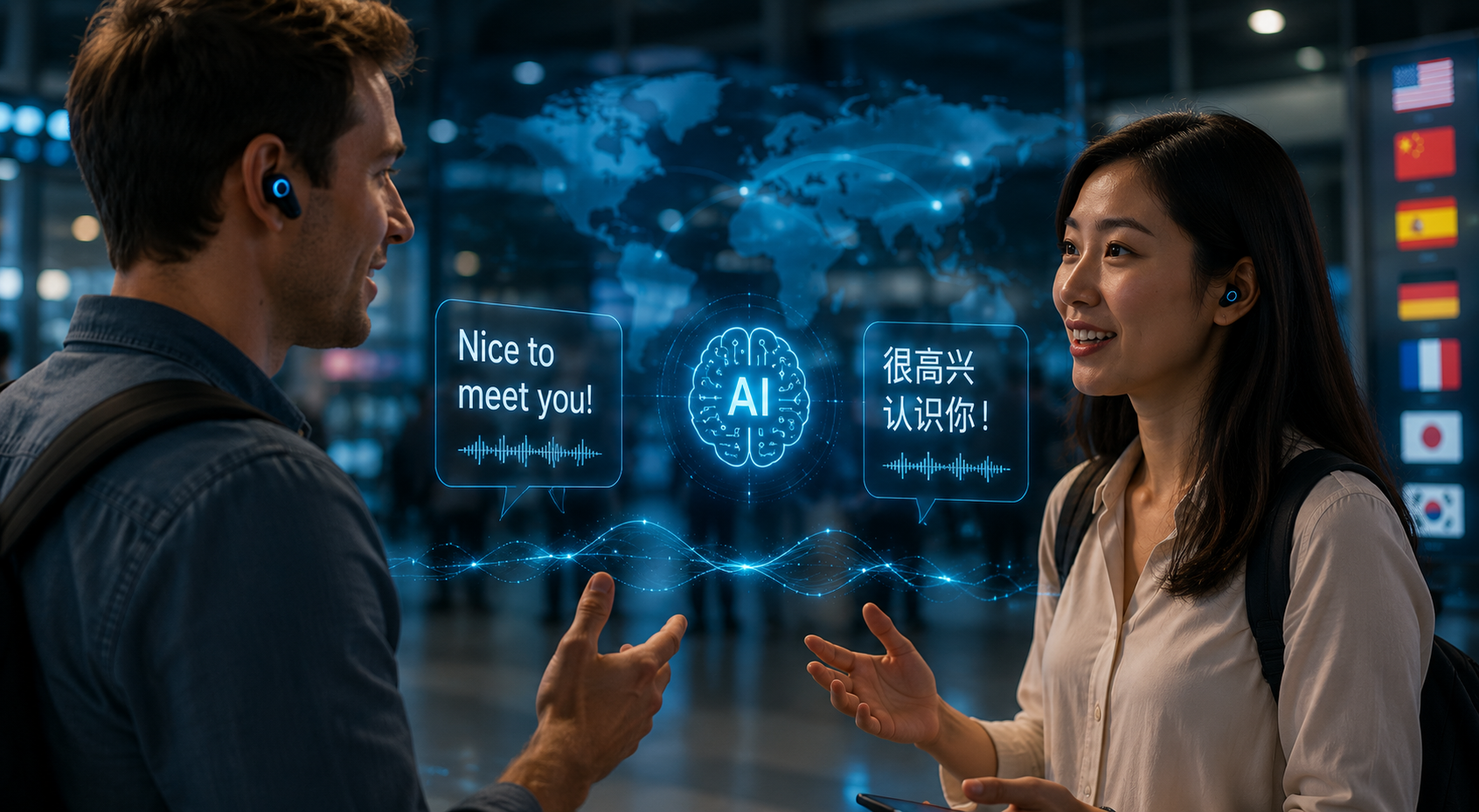
Artificial intelligence is changing how people communicate in realtime across different languages. These systems use advanced algorithms and vast datasets to capture context, idioms, and nuances that traditional methods sometimes miss. Nowadays, real-time translation systems enable communication between speakers of different languages with virtually no delay. Imagine people conversing fluently in different languages during a meeting.
Natural language processing (NLP), a branch of artificial intelligence, enables machines to understand meaning rather than simply translating word for word. This leads to smoother interaction and more accurate communication. Speech recognition technology has advanced, enabling users to speak naturally while the software interprets their speech in real time. The end result? It is a natural and fluent dialogue. As this technology continues to develop, barriers caused by language differences are gradually being removed. Communication becomes richer and easier, benefiting all participants.
Examples of AI-driven Real-time Translation Tools
Currently, various AI-driven real-time translation technologies are revolutionising global communication. Google Translate has made significant progress by supporting real-time conversations and instant text translation, which has helped reduce language barriers. Microsoft Translate goes a step further with its chat function, allowing users to communicate simultaneously in multiple languages, ideal for business meetings or everyday conversations.
Another excellent application is iTranslate, which offers speech translation in multiple dialects. This app is ideal for travellers who need help and want to adapt quickly to a new environment. SayHi has a user-friendly interface designed to provide an immersive experience for users with different languages and facilitate rapid communication. Skype Translator, integrated into video conferencing, translates speech in real time, allowing users to communicate easily regardless of their language background. These developments demonstrate how technology can improve our ability to communicate seamlessly with people all over the world.
Advantages and Limitations
Artificial intelligence offers numerous advantages in language translation. It speeds up intercultural communication and removes barriers that previously seemed impossible to overcome. The greatest advantage lies in speed and efficiency: translations can be completed almost immediately. AI learns from vast datasets, and its accuracy is constantly improving. This significantly reduces misunderstandings in professional environments such as business negotiations or diplomatic debates.
However, artificial intelligence also has limitations. It can easily overlook nuances in context. Cultural differences can be ignored or misunderstood, which can lead to translation problems. Furthermore, relying on technology entails risks regarding privacy and data security. Users run the risk of sharing sensitive information with AI tools. Human factors remain crucial. Computers are not adept at recognising emotions and tone. People may prefer to work with private translators rather than using automated solutions.
Ethical Considerations and Human Supervision
The application of AI in translations raises important ethical issues. Accuracy is essential for meaningful translation between languages. Insufficient accuracy can lead to misunderstandings, which in turn can harm sensitive situations. Therefore, human supervision is particularly important. Humanised communication ensures that cultural nuances and context are respected. AI excels in data processing and numerical calculations but lacks emotional intelligence, which is crucial for certain communication methods.
Moreover, the way translation apps handle data raises privacy concerns. Users must be able to trust that their chat history is private and secure. Companies must be transparent about how they process user data. Another risk is bias: algorithms trained on biased data can lead to biased translations that reflect societal prejudices. We can gradually address this problem through continuous monitoring and improvement of algorithms. The combination of human factors and the development of artificial intelligence can promote more effective communication while simultaneously upholding the ethical values required in international relations.
Conclusion
The future of language communication offers endless possibilities. Artificial intelligence (AI) is constantly overcoming seemingly insurmountable barriers. Imagine being able to communicate easily with people on the other side of the world without having to worry about mutual understanding. As AI continues to evolve, real-time translation will become more intuitive and accurate. It will not only translate text but also convey context, tone, and emotion—crucial for authentic interpersonal communication.
Over time, machines will become increasingly better at capturing cultural nuances. This will help people with different linguistic backgrounds forge more profound bonds. This is a promising development, but we must be alert to the potential impact of AI on communication. “Language is an integral part of identity and culture. To protect these, language must be managed responsibly when embracing technology.” Applying AI to language translation offers an excellent opportunity to strengthen global dialogue and increase understanding between people with diverse backgrounds.
FAQs
1. How can AI improve real-time translation?
AI algorithms can quickly analyse and evaluate language patterns, enabling instant translation during conversations or interactions.
2. Commonly used real-time translation tools include:
For users who want to translate anytime and anywhere, there are many excellent alternatives, such as the chat function of Google Translate, Microsoft Translate, and various smartphone apps.
3. Will artificial intelligence completely replace human translators?
Artificial intelligence can be fast and efficient (and produce stunning results), but it cannot understand the nuances of context and emotional expression found in many languages.
4. What are the limitations of applying artificial intelligence in translation?
Yes. Challenges include errors in spoken language, misunderstandings regarding cultural allusions, and reliance on an internet connection.
5. Which ethical issues need to be considered?
When using these technologies, data confidentiality must be ensured and a good balance must be struck between machine support and human control to maintain translation quality.