
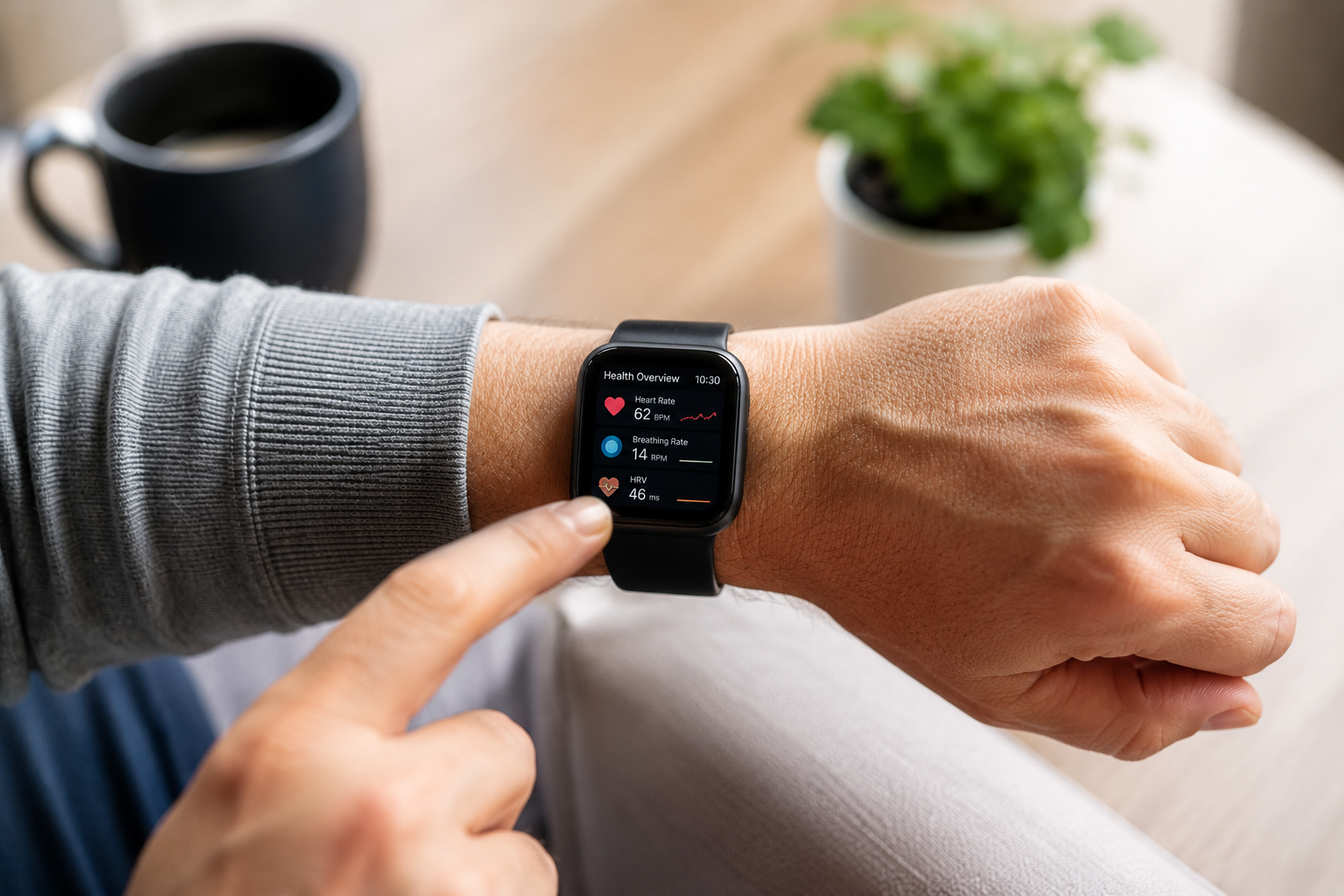
Most people only think of fitness equipment when it comes to wearables. Smartwatches record your steps and activity level and display notifications from your phone throughout the day. But wearables have evolved into something much more practical and fun: devices that can detect subtle changes in health patterns before people even realise it themselves.
This shift is crucial because many physical changes do not occur immediately but gradually. Sleep quality, for example, can gradually decline over a period of weeks. Resting heart rate can gradually increase with stress or fatigue. Subtle changes in daily activity patterns may have already occurred before you start worrying about them.
These devices are not intended for diagnosing diseases and cannot replace medical care. However, they are often excellent at identifying health trends, allowing people to better understand changes in their habits and overall health.
Why Pattern Tracking Matters More Than Single Readings:
Often, a single abnormal heart rate reading is meaningless. A sleepless night or a lazy day can lead to the same result.
As wearables become more powerful, they can continuously collect more information. Modern systems no longer compare just individual numbers but trends over days, weeks, or even months. This broader perspective enables people to notice subtle changes that would otherwise go unnoticed.
For example, people might not realise that their sleep quality has gradually declined over the past three weeks. But wearables perform the same measurements daily (and do not rely on memory), so they can capture this trend.
This capability for long-term monitoring is one of the reasons why wearable technology is more valuable today than it was a few years ago.
Heart Rate Monitoring Often Reveals Early Changes:
One of the most prominent features of wearables today is heart rate monitoring, partly because it runs silently in the background all day long.
Many devices measure the following:
- Resting heart rate
- Heart rate variability
- Recovery after exercise
- Heart rate changes during exercise
- Heart rate trends during the night
Rapid changes in heart rate are not always a sign of health problems. Temporary factors such as stress, sleep deprivation, dehydration, travel, caffeine use, or intense physical activity can influence heart-related values.
However, persistent changes can also prompt users to pay more attention to their lifestyle choices or, if necessary, to consult a doctor about abnormal trends.
Wearable devices are often more effective as health monitoring tools than as alarm systems.
Sleep Tracking Has Become Surprisingly Detailed:
In the past, measuring sleep outside of professional sleep research was difficult. Wearable devices have changed the landscape, making it easy for ordinary users to record their night’s rest.
Modern wearable devices can measure the following:
Sleep Duration
Many people overestimate their actual sleep time. Tracking a night’s rest allows users to understand whether irregular sleep patterns are affecting their energy levels.
Sleep Disorders
Even if someone thinks their sleep is normal, frequent tossing and turning or sleep interruptions can be a sign of poor sleep patterns.
Recovery Trends
Some devices analyse sleep quality in combination with activity level, training level, or stress level. Users often report a correlation between late-night screen time, irregular sleep patterns, and lower recovery capacity.
The value lies not in absolute accuracy, but in identifying recurring habits over the long term.
Wearables Can Notice Changes People Ignore:
Heavy devices can detect subtle changes that people do not notice. “Wearable technology is fascinating because it often captures subtle daily changes that people easily overlook during a busy week.
People who work long hours might not realise that they are walking much less than normal. Others might not realise that they are becoming increasingly fatigued, because life simply goes on.
Wearable devices continuously record subtle information, making these subtle changes easier to recognise.
Reduced activity, poor sleep quality, and an elevated resting heart rate, for example, can indicate that people are experiencing more physical and mental stress than they realise.
But this does not mean that the device understands the underlying causes. It simply observes these patterns.
Activity Tracking Is About More Than Exercise:
Counting steps is easy to understand, hence its rapid popularity. Today’s activity trackers do much more than that.
Some wearable devices can measure:
- Sitting time
- Stair climbing
- Walking balance
- Training intensity
- Regularity of daily activities
- Recovery after exercise
Perspective is crucial, because healthy habits often… It is often based on daily habits, rather than the occasional intensive workout at the gym.
Even if you train intensively twice a week but spend most of the day sitting, you can still discover habits you can improve. Wearable devices can help you better understand these habits.
Stress and Recovery Features Are Becoming More Common:
Many of the latest wearable devices are designed to measure your stress and recovery levels based on physiological indicators such as heart rate variability, breathing patterns, and sleep patterns.
These indicators do not provide precise stress measurements. Machines cannot fully comprehend the complexity of human stress.
However, many users find this information useful for reflecting on their daily activities.
They may realise that travel, lack of sleep, busy work schedules, or irregular meals can all impact their recovery scores. Over time, this information can help them develop healthier habits and better manage their daily lives.
Continuous Tracking Changes Personal Awareness:
Continuity is a practical benefit of wearable devices.
People typically do not manually record their health every day for months on end. Information. Wearable devices can perform these tasks automatically in the background without user intervention.
This provides a more realistic picture of daily life, rather than fragmented snapshots.
A doctor’s visit, for example, might only show normal measurements for a specific afternoon. Wearable devices, on the other hand, record your daily activities throughout the week, stressful periods, weekends, workouts, and sleep.
This continuous perspective helps consumers better understand how daily habits affect their overall health.
The Limitations Are Important Too:
Although wearable electronics have made great strides, limitations remain, and consumers must be aware of them.
Sometimes, poor sensor contact, incorrect device placement, or errors in motion or software interpretation can lead to inaccurate measurements. Furthermore, different brands may calculate health statistics in different ways.
Another problem is overinterpretation.
Some people focus excessively on every notification or numerical change, even when short-term fluctuations are perfectly normal. Slight daily fluctuations in sleep, heart rate, or activity level are normal.
Wearable devices should be viewed as sources of information, not as medical devices. authorities.
Privacy Remains Important.
Health data is a matter of personal privacy, and people are becoming increasingly suspicious of the way companies producing wearables collect and store information. Some devices continuously synchronise with apps, cloud services, or third-party platforms. When purchasing a wearable, pay attention to privacy settings, data sharing permissions, and account security.
Compared to feature-rich platforms, devices with simpler functions and a clearer privacy policy are generally more reliable.
Wearable Devices are Gradually Becoming Part of Daily Life:
A few years ago, health tracking wearables were either too niche or too technical. Today, that perception has changed.
People wear these devices at work, while travelling, exercising, sleeping, and during daily activities, without paying much attention to the technology itself.
One of the benefits is ease of use. Users do not have to constantly manually enter information or interpret complex reports. Most devices offer easy-to-understand visualisations of basic trends.
This technology is becoming less obscure as it becomes part of daily life.
Conclusion:
Wearable devices prove their value by helping consumers detect changes in health patterns early—changes that are often overlooked in a busy life.
Wearable devices can monitor sleep, activity, heart rate patterns, recovery, and daily behaviour over extended periods, creating a more complete picture of health than relying on mere statistics.
These devices are not a substitute for medical interventions and cannot fully explain the causes of health changes. Their true value lies in the fact that they help consumers better understand the various patterns that influence their daily feelings.
For many, this subtle awareness is precisely where the true value of wearable technology lies.
Frequently Asked Questions
Can wearable devices identify health problems?
Wearable devices are not intended to diagnose diseases. Their primary role is to help users identify notable trends and changes.
Are health assessments from smartwatches always accurate?
Not always. Variations in measurements can be influenced by the quality of the device, sensor placement, movement, and software algorithms.
What health data do wearable devices typically collect?
Most wearable devices record heart rate, sleep, activity, physical activity, movement patterns, and recovery data.
Why do we need long-term tracking?
Long-term tracking allows us to see slow changes and trends that we might not notice with occasional measurements.
Will wearable technology replace routine medical checkups?
No. Wearable devices should be viewed as tools for health and health awareness, not as a replacement for professional medical care.

Nathan Hayes is a technology writer at Pimozoogin who covers AI, digital wellness, smart healthcare, and emerging technology trends. He creates simple, informative content that helps readers understand how modern technology is influencing everyday life, productivity, fitness, and connected living.