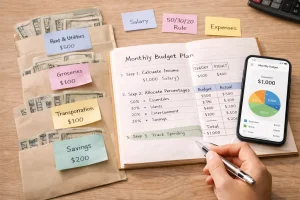
Budgeting is a powerful but misunderstood tool for managing money. Many people think budgeting means restricting spending, cutting out all enjoyment, and constantly worrying about money. Because of this, they either avoid budgeting completely or give up after a short time.
In reality, budgeting is not about restriction. It is about control, clarity, and confidence. A successful budget allows you to manage your money effectively while still maintaining your lifestyle.
The key is not to create a perfect budget but to build a system that works consistently in your everyday life. This article provides practical budgeting tips along with a structured system that helps you stay in control of your finances without feeling overwhelmed.
Why Budgeting Feels Difficult for Most People
Before learning how to budget effectively, it is important to understand why many people struggle with it.
One major reason is complexity. People often try to use complicated budgeting methods that are difficult to maintain. Another reason is inconsistency. They may start tracking expenses, but stop after a few days.
Emotional spending also plays a big role. Mood often influences decisions rather than logic, making it more challenging to adhere to a budget.
To better understand these patterns, you can explore understanding the psychology of spending and how to control it.
The Foundation of an Effective Budget
A budget is not just a plan. It is a system that guides your financial decisions.
The most effective budgets share three key characteristics:
They are simple, realistic, and flexible.
A simple budget is easy to follow. A realistic budget matches your lifestyle. A flexible budget allows adjustments when needed.
Without these qualities, even the best budgeting plan will fail.
Step One: Understand Your Income Clearly
Before creating a budget, you need a clear understanding of your income.
This includes:
- Your total monthly income
- Any irregular or additional income
- Your actual usable amount after fixed commitments
Many people overestimate what they can spend because they do not calculate their income accurately.
To improve this, you can refer to how to manage income effectively and stay financially secure.
Step Two: Categorize Your Expenses Properly
Once you understand your income, the next step is organizing your expenses.
Divide them into three main categories:
Essentials include rent, groceries, utilities, and transportation.
Savings include money set aside for future needs.
Flexible spending includes entertainment, shopping, and non-essential purchases.
This structure keeps your budget clear and manageable.
Step Three: Track Your Daily Spending
A budget cannot work without tracking.
Tracking your daily expenses helps you stay aware of your spending habits and identify areas where you can improve.
You do not need complex tools. A simple method works best.
You can follow complete guide to tracking daily expenses for better money management to build a consistent tracking habit.
Step Four: Use Daily and Weekly Spending Limits
One of the biggest reasons budgets fail is that they are only reviewed monthly.
Instead, break your budget into smaller timeframes.
Set a daily or weekly limit for flexible spending. This makes it easier to control your expenses in real time.
If you exceed your limit one day, you can adjust the next day instead of losing control for the entire month.
Step Five: Save Before Spending
Saving should not depend on what is left after spending.
Instead, treat savings as a fixed expense.
Set aside a portion of your income as soon as you receive it. This ensures consistency and helps you build financial stability over time.
If saving feels difficult, you can follow saving money on low income realistic tips that work.
Step Six: Reduce Unnecessary Expenses
Budgeting is not about removing all comforts. It is about removing waste.
Focus on identifying small, repeated expenses that do not add value to your life.
These may include:
- Frequent impulse purchases
- Unused subscriptions
- Daily spending habits
Reducing these expenses can significantly improve your financial situation.
Step Seven: Review Your Budget Regularly
A budget is not something you create once and forget.
Regular reviews help you stay on track and make necessary adjustments.
At the end of each week, review your spending and check if you stayed within your limits.
At the end of the month, evaluate your overall performance and identify areas for improvement.
Step Eight: Build Financial Discipline
Discipline is what keeps your budget working over time.
Without discipline, even the best system will fail.
Develop simple routines such as:
- Daily expense tracking
- Weekly budget review
- Monthly financial evaluation
To strengthen your discipline, you can follow simple methods to maintain long term financial discipline.
Common Budgeting Mistakes to Avoid
Even with a good system, certain mistakes can reduce effectiveness.
One common mistake is setting unrealistic limits. This makes the budget difficult to follow.
Another mistake is ignoring small expenses, which can add up over time.
Inconsistency is also a major issue. Skipping tracking or reviews reduces awareness and control.
Avoiding these mistakes helps you maintain a strong budgeting system.
A Practical Example
Consider someone who struggles to manage their finances.
They create a budget but do not track their spending. As a result, they overspend and lose control.
After applying the steps in this guide, they start tracking their expenses daily, set realistic limits, and review their finances regularly.
They also reduce unnecessary spending and build saving habits.
Over time, they gain control and improve their financial situation.
Long-Term Benefits of Budgeting
When you follow a consistent budgeting system, you begin to notice several improvements.
You gain better control over your spending. You reduce financial stress. You increase your savings. You make more confident financial decisions.
These benefits contribute to long-term financial stability.
Frequently Asked Questions
What is the best way to start budgeting?
Start with a simple system. Understand your income, categorize your expenses, and begin tracking your spending.
Do I need to track every expense?
Yes. Tracking every expense improves awareness and helps you stay within your budget.
How often should I review my budget?
Weekly reviews help maintain control, while monthly reviews help you evaluate overall progress.
Can I still enjoy my money while budgeting?
Yes. A good budget allows for flexible spending while maintaining financial control.
Why do budgets fail?
Budgets fail due to a lack of consistency, unrealistic limits, and the absence of daily tracking.
Final Thoughts
Budgeting is not about limiting your life. It is about managing your money in a way that gives you control and stability.
By creating a simple system, tracking your spending, saving consistently, and reviewing your progress, you can build a budget that works in your everyday life.
Start small, stay consistent, and focus on gradual improvement.

Aiden Lewis runs pimozoogin.com, where he provides practical and understandable financial tips. He writes articles about Everyday Finance, Financial Stability Tips, Insurance Basics, and Money Habits, with the goal of helping people gain more confidence in managing their finances. He designs his content to enhance financial literacy, foster informed decision-making, and simplify financial matters for everyone. The information provided is for educational and informational purposes only.