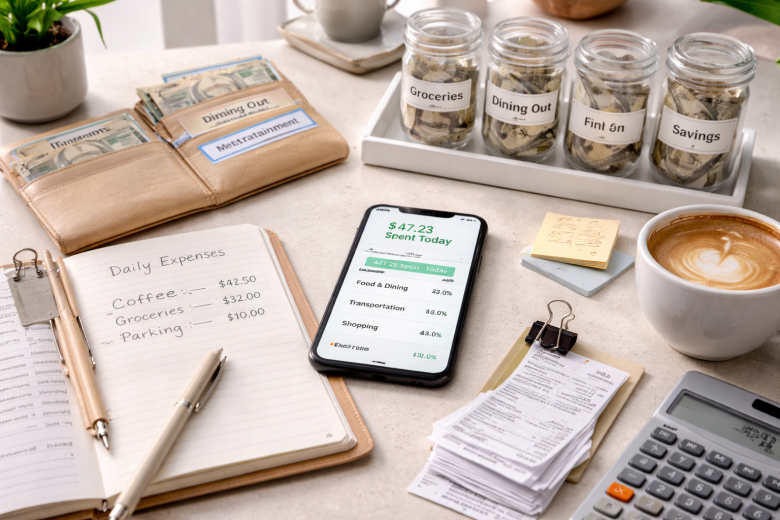
Controlling daily expenses is not about strict rules or cutting everything you enjoy. Most people already know they should spend less, but the real challenge is staying consistent.
For a long time, I struggled with consistency. I would try to control my spending for a few days, but then things would slip back to normal. The problem was not a lack of knowledge. It was a lack of a simple system I could follow every day.
Once I focused on building small, repeatable habits instead of relying on motivation, things started to change. My spending became more controlled, and I stopped feeling confused about where my money was going.
If you are trying to improve your financial habits, this simple system can help you stay consistent without feeling overwhelmed.
Table of Contents
ToggleWhy Daily Expense Control Feels Difficult
Most people fail to control daily expenses because they depend on willpower. That approach rarely works in the long run.
Daily spending decisions happen quickly. You do not always have time to think deeply before every purchase. Without a system, it becomes simple to overspend.
Common problems include:
- Spending without thinking
- Ignoring small expenses
- Losing track of daily spending
- Making decisions based on mood
If you want to understand this topic better, you can read understanding the psychology of spending and how to control it.
What Is a Simple Habit System
A habit system is a set of small actions that you repeat daily. Instead of trying to control everything at once, you focus on a few consistent behaviors.
The goal is not perfection. The goal is to make better decisions automatically over time.
This system works because habits reduce the need for constant thinking. Once something becomes part of your routine, it requires less effort.
The Core Principles of This System
Before building the system, it is important to understand the basic principles behind it.
Keep It Simple
Complex systems are challenging to follow. A simple approach is easier to maintain daily.
Focus on Small Actions
Small habits are easier to repeat. Over time, they create noticeable results.
Be Consistent
Doing something small every day is more effective than doing something big occasionally.
Step One: Track Your Daily Spending
The first habit is awareness. You cannot control what you do not track.
Start by writing down every expense during the day. This includes even the smallest purchases.
At first, this may feel unnecessary, but it quickly builds awareness. You begin to notice patterns and understand where your money goes.
If you need a simple method, you can follow how to track daily expenses without apps simple method that works.
Step Two: Set a Daily Spending Limit
Instead of thinking about your entire monthly budget, focus on a daily limit.
This makes decisions easier because you know exactly how much you can spend each day.
For example, if your monthly budget allows, divide it into daily amounts and try to stay within that limit.
This habit creates natural control without overthinking.
Step Three: Pause Before Every Purchase
One simple habit that makes a big difference is pausing before spending.
Before making a purchase, ask yourself:
- Do I really need this
- Can I delay this purchase
- Is this worth the cost
This short pause helps you avoid impulse decisions. Over time, it becomes automatic.
Step Four: Use Cash for Flexible Spending
For daily expenses, using cash can improve control.
When you carry a fixed amount, you naturally limit your spending. Seeing money leave your hands creates awareness that digital payments often lack.
You do not need to switch completely, but using cash for daily expenses can help you stay within limits.
Step Five: Review Your Spending at the End of the Day
At the end of each day, take a few minutes to review your expenses.
Look at what you spent and identify anything unnecessary. This daily reflection helps you improve quickly.
Over time, you start making better decisions without needing to think too much.
Step Six: Plan Your Spending Weekly
Daily habits work best when supported by a simple plan.
Once a week, review your spending and plan the next week. Decide how much you want to spend and where you can improve.
This keeps you aligned with your goals and prevents mistakes from repeating.
You can build a weekly money planning routine for better financial control.
Step Seven: Reduce Small Unnecessary Expenses
Small expenses often go unnoticed, but they have a big impact over time.
Instead of cutting everything, focus on reducing unnecessary spending, like this:
- Frequent small purchases
- Impulse buying
- Repeated nonessential expenses
These small changes create extra savings without affecting your lifestyle too much.
Step Eight: Stay Consistent Even on Difficult Days
There will be days when things do not go as planned. You might overspend or forget to track an expense.
The key is to continue the next day without overthinking.
Consistency matters more than perfection. Even if you make mistakes, staying consistent will bring results.
How This System Improves Over Time
At the beginning, these habits may require effort. But as you repeat them daily, they become part of your routine.
You start noticing changes like:
- Better awareness of spending
- Fewer impulse purchases
- More control over daily expenses
- Increased savings without pressure
If you want to strengthen your long-term discipline, you can explore simple methods to maintain long term financial discipline.
Common Mistakes to Avoid
While building this system, avoid these common mistakes:
- Trying to change everything at once
- Setting unrealistic limits
- Ignoring small expenses
- Giving up after a few bad days
Keeping your system simple and flexible makes it easier to follow.
How to Start Without Overthinking
You do not need a perfect system to begin. Start with a few simple actions:
- Track your expenses daily
- Set a basic spending limit
- Review your spending every night
Once these habits feel natural, you can gradually add more steps.
Final Thoughts
Controlling daily expenses is not about strict rules or constant effort. It is about building small habits that guide your decisions.
A simple system makes this process easier and more sustainable. Over time, these habits become automatic, and managing money feels less stressful.
Simple Takeaway
You do not need a complex strategy to control your expenses. A few simple habits, followed consistently, can create strong financial discipline.
Start small, stay consistent, and let your habits do the work.
Frequently Asked Questions
What is the easiest habit to start for controlling expenses?
Tracking your daily spending is the easiest and most effective starting point.
How long does it take to build spending control habits?
It depends on consistency, but most habits start feeling natural within a few weeks.
Do I need to stop using digital payments?
No, you can still use digital payments, but tracking and setting limits are important.
What if I fail to follow the system one day?
Missing one day is not a problem. Continue the next day and stay consistent.
Can small habits really make a big difference?
Yes, small habits repeated daily can lead to significant improvements over time.

Aiden Lewis runs pimozoogin.com, where he provides practical and understandable financial tips. He writes articles about Everyday Finance, Financial Stability Tips, Insurance Basics, and Money Habits, with the goal of helping people gain more confidence in managing their finances. He designs his content to enhance financial literacy, foster informed decision-making, and simplify financial matters for everyone. The information provided is for educational and informational purposes only.