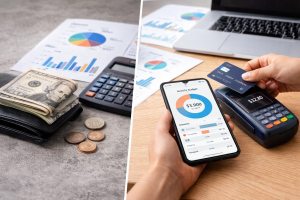
A few years ago, I believed I was reasonably careful with money. I paid my bills on time, avoided large debts, and tried not to overspend on unnecessary things. Yet, at the end of every month, I had the same frustrating question: Where did my money go? It didn’t make sense. My salary was decent, my rent was manageable, and I rarely made big purchases. Still, my savings barely grew. Sometimes I even had to dip into my emergency fund.
One evening, after reviewing my bank account again, I noticed something surprising. My spending wasn’t being destroyed by large purchases. Instead, dozens of small daily expenses were quietly draining my money. Coffee, online subscriptions, random food deliveries, impulse purchases, and small convenience spending were adding up far more than I realized.
That realization changed how I handled my finances. I started tracking every daily expense, and within a few months, my financial situation improved dramatically. My savings increased, my spending became intentional, and I finally felt in control of my money. This guide shares everything I learned during that process — a simple, practical system anyone can use to track daily expenses and improve money management.
Why Tracking Daily Expenses Is the Foundation of Financial Control
Before discussing methods, it’s important to understand why expense tracking matters so much.
Many people try budgeting, saving challenges, or financial apps, but still struggle with money. The main reason is simple: they don’t fully understand their spending habits.
Tracking daily expenses reveals three critical things:
Your Real Spending Habits
Most people underestimate their spending by 20–40%. Memory is unreliable when it comes to small purchases.
When I started tracking every expense, I realized that my “occasional coffee” habit was actually costing me more than a utility bill.
Hidden Spending Leaks
Small expenses feel harmless individually but become significant over time.
Examples include:
- Snacks and drinks
- Food delivery fees
- App subscriptions
- Online impulse purchases
- Convenience spending
Tracking reveals these leaks clearly.
Spending Patterns and Emotional Triggers
Expense tracking also shows when and why you spend money.
For example:
- Stress spending
- Weekend overspending
- Late-night online shopping
- Social pressure spending
Recognizing these patterns helps you make smarter financial decisions.
The Simple System I Used to Track Daily Expenses
Many people assume expense tracking requires complicated spreadsheets or accounting skills.
In reality, the simplest system is often the most effective.
Here’s the exact step-by-step approach I followed.
Step 1: Start With Awareness, Not Perfection
When people begin tracking expenses, they often try to create a perfect budgeting system immediately. That approach usually fails.
Instead, start with one simple goal: record every expense.
At the beginning, don’t worry about categories, analysis, or optimization.
Just track things like:
- Groceries
- Coffee
- Transportation
- Online purchases
- Bills
- Snacks
- Entertainment
The objective is building awareness.
During my first month, I simply wrote every purchase in my phone notes.
That simple habit alone changed my mindset.
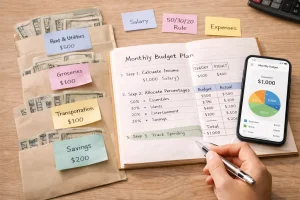
Step 2: Choose a Tracking Method That Feels Easy
If tracking feels complicated, you won’t stick with it.
The best system is the one you can maintain consistently.
Here are three beginner-friendly options.
Notebook Method
A small notebook works surprisingly well.
Each day write:
Date – Item – Amount
Example:
June 5
Coffee – $3
Lunch – $8
Bus ticket – $2
This method is simple and distraction-free.
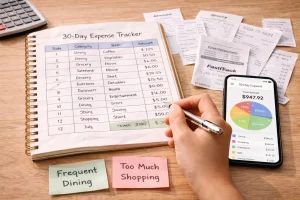
Spreadsheet Method
If you prefer digital tracking, a simple spreadsheet works well.
Basic columns include:
- Date
- Expense
- Category
- Amount
This option makes it easier to analyze spending later.
Expense Tracking Apps
Many people prefer mobile apps that automatically categorize spending.
These apps connect to bank accounts and track purchases automatically.
However, manual tracking often builds stronger spending awareness, especially in the beginning.
Step 3: Track Expenses Immediately After Spending
One mistake I made early on was waiting until the evening to record expenses.
By that time, I had already forgotten several small purchases.
The solution was simple:
Track expenses immediately after spending money.
This habit takes less than 10 seconds and dramatically improves accuracy.
For example:
- Buy coffee → record it immediately
- Pay for parking → log it
- Order food → track it
Over time, this becomes automatic.
Step 4: Create Simple Spending Categories
After a few weeks of tracking, you’ll begin seeing patterns.
At this stage, adding categories helps analyze spending.
Common categories include:
- Housing
- Groceries
- Transportation
- Dining out
- Entertainment
- Subscriptions
- Shopping
- Utilities
- Miscellaneous
When I categorized my spending, I discovered that dining out was my biggest financial leak.
I wasn’t overspending on luxury items. I was simply eating out too often.
That insight helped me make better choices without feeling deprived.
Step 5: Review Your Expenses Weekly
Tracking expenses is only useful if you review them regularly.
A quick weekly review helps identify patterns before they become problems.
During my weekly review, I asked myself three simple questions:
- What did I spend the most money on?
- Were those expenses necessary?
- What can I reduce next week?
This weekly check-in takes 10–15 minutes but provides powerful financial clarity.
Step 6: Set Realistic Spending Limits
Once you understand your spending patterns, you can create realistic limits.
This is where tracking turns into true money management.
For example, after reviewing my expenses I set limits like:
- Dining out: $80 per month
- Entertainment: $50
- Online shopping: $40
The key is setting reasonable limits, not extreme restrictions.
Overly strict budgets often fail quickly.
Step 7: Identify and Eliminate “Silent Expenses”
Silent expenses are recurring charges people forget about.
Examples include:
- Streaming subscriptions
- App memberships
- Cloud storage services
- Automatic renewals
- Gaming subscriptions
When I audited my subscriptions, I found five services I wasn’t even using.
Canceling them saved over $30 per month instantly.
Small changes like this can significantly improve financial health.
Practical Tips That Make Expense Tracking Easier
Expense tracking becomes much easier with a few practical habits.
Here are strategies that worked extremely well for me.
Table of Contents
ToggleUse the “One-Minute Rule”
If tracking an expense takes more than one minute, simplify your system.
Complex systems create friction, which eventually leads to quitting.
Track Cash and Digital Spending Separately
Cash spending is often forgotten.
If you use cash frequently, keep a small daily record.
Otherwise, those expenses disappear from your financial picture.
Schedule a Weekly Money Check-In
Choose one specific time each week to review your spending.
For example:
Sunday evening:
Review expenses
Update totals
Adjust next week’s spending plan
This habit keeps finances organized and stress-free.
Focus on Progress, Not Perfection
Missing a few expenses occasionally is normal.
The goal is awareness and improvement, not perfect tracking.
Even tracking 80–90% of expenses dramatically improves financial control.
Common Mistakes People Make When Tracking Expenses
Many people quit expense tracking because they fall into these common traps.
Avoiding them can make the process much easier.
Trying to Track Too Many Details
Some people create complicated systems with dozens of categories.
This becomes exhausting.
Keep categories simple and practical.
Being Too Strict With Spending
Expense tracking is about understanding spending, not punishing yourself.
Occasional treats are part of healthy money management.
Ignoring Small Purchases
Small purchases are exactly what expense tracking reveals.
A $5 daily habit becomes $150 per month.
These small insights make the biggest difference.
Stopping After a Few Weeks
The biggest mistake is quitting too early.
Real insights usually appear after 30–60 days of tracking.
Consistency creates clarity.
Real Example: How Expense Tracking Changed My Finances
To show how powerful this habit can be, here’s a real example from my experience.
Before tracking expenses:
Monthly savings: about $50
After tracking expenses for three months:
- Reduced food delivery
- Canceled unused subscriptions
- Limited impulse shopping
- Planned grocery spending
New monthly savings:
$350–$400
The difference wasn’t earning more money.
It was simply understanding where my money was going.
How Expense Tracking Improves Long-Term Financial Goals
Expense tracking doesn’t just help with budgeting.
It also supports long-term financial goals.
These include:
- Building emergency savings
- Paying off debt faster
- Saving for travel
- Buying a home
- Investing for the future
When spending becomes intentional, financial goals become achievable much faster.
Conclusion:
Tracking daily expenses might seem like a small habit, but it has a powerful impact on financial stability. Most people struggle with money not because they earn too little, but because they don’t fully understand their spending patterns. Once you begin tracking expenses, everything changes.
You gain clarity about where your money goes, you identify unnecessary spending, and you make smarter financial decisions without feeling restricted. The key is starting simple. Track every expense, review your spending weekly, and gradually adjust your habits. Over time, these small changes lead to significant financial improvement. Better money management doesn’t require complicated strategies — it starts with understanding your daily spending.
FAQs
1. What is the best way to track daily expenses?
The best method is the one you will consistently use. A simple notebook, spreadsheet, or expense tracking app can all work effectively. The key is recording expenses immediately after spending.
2. How long should I track my expenses?
Tracking expenses for at least two to three months provides a clear understanding of spending patterns. Many people continue tracking long-term because it helps maintain financial discipline.
3. Should I track every small purchase?
Yes. Small purchases are often the biggest source of hidden spending. Recording even small expenses like coffee or snacks helps reveal where money is really going.
4. Can expense tracking help with saving money?
Absolutely. Expense tracking highlights unnecessary spending, making it easier to reduce costs and increase savings without drastically changing your lifestyle.
5. What if I forget to track some expenses?
Missing a few entries is normal. The goal is consistent tracking, not perfection. Even partial tracking significantly improves financial awareness and money management.

Aiden Lewis runs pimozoogin.com, where he provides practical and understandable financial tips. He writes articles about Everyday Finance, Financial Stability Tips, Insurance Basics, and Money Habits, with the goal of helping people gain more confidence in managing their finances. He designs his content to enhance financial literacy, foster informed decision-making, and simplify financial matters for everyone. The information provided is for educational and informational purposes only.