
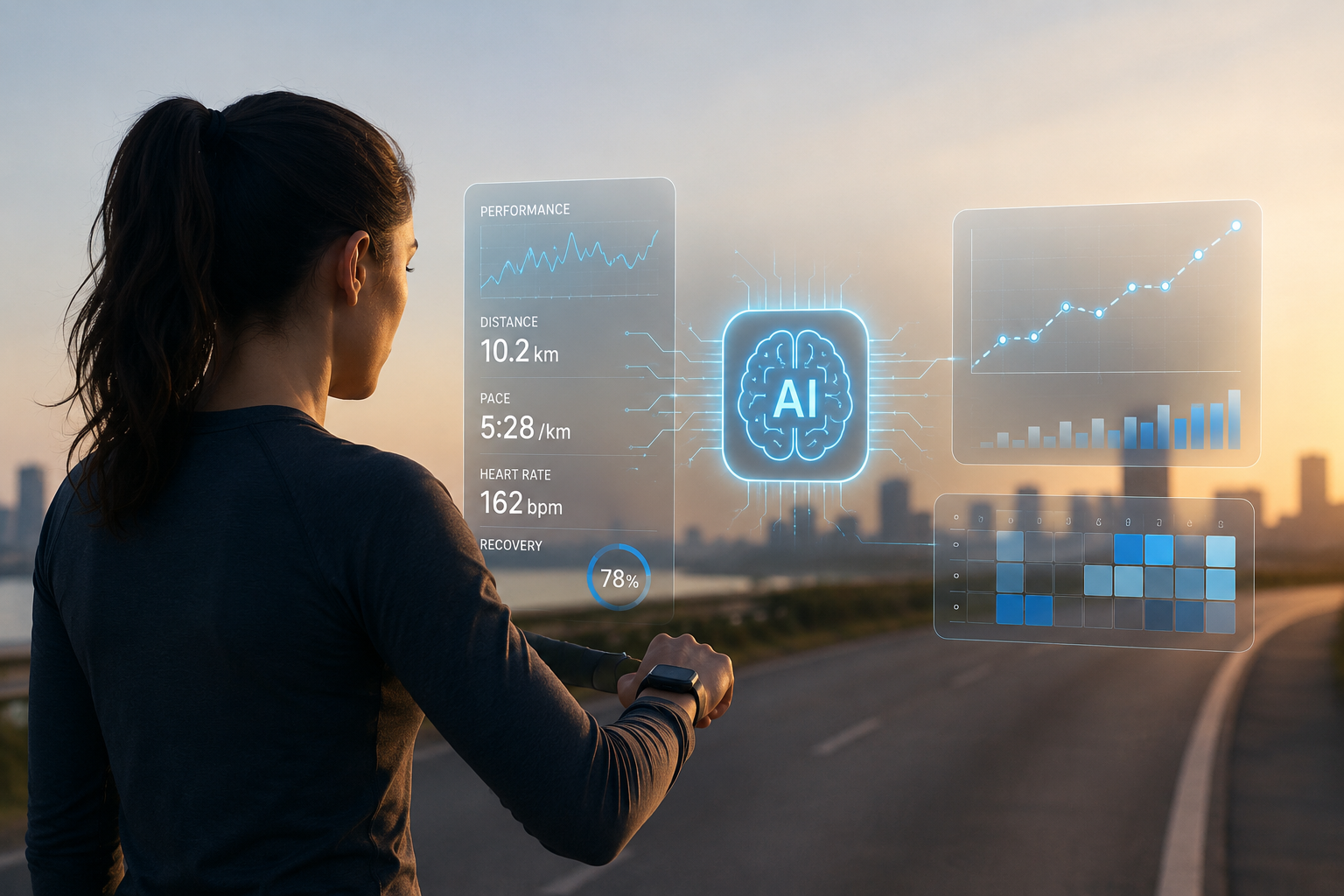
Runners use AI running coaches that track daily heart rate variability, sleep quality, cadence, and other variables to create personalised training plans. Machine learning algorithms use this data to adjust the volume, intensity, and frequency of future workouts in real time, maximising performance and minimising injuries. Running training used to be based on static, paper-based schedules, such as running ten miles every Tuesday, regardless of fatigue. Today, AI is revolutionising endurance training.
AI coaches are like a living training partner on your watch or smartphone. Instead of following a rigid training schedule, these smart apps get to know your physiology over time. They analyse your recent activity and fatigue level for the day, then recommend the best workout for that day. Understanding how this technology works with your body data can help you train more scientifically. This tutorial shows you in detail how AI running coaches adjust various performance metrics to help you work safely toward your race goals.
What Data do AI Running Coaches Collect?
AI running coaches continuously collect data and make personalised adjustments. These apps continuously receive physiological data via wearables. The algorithms focus on data points that demonstrate how effectively the body responds to physiological stress. Most platforms used to train artificial intelligence focus on cardiovascular load and biomechanical efficiency. Heart rate data reflects the load on the body during running. At the same time, GPS measures your speed, elevation gain, and running distance to calculate your training load.
The Importance of Heart Rate Variability in Training
Heart rate variability (HRV) is a measure of the interval between heartbeats. A higher HRV value means that your nervous system has recovered and is ready for high-intensity training. A lower HRV value indicates that your body is under stress, fatigue, or illness. When an AI running coach detects a decline in your HRV value overnight, the system immediately adjusts your training schedule. A planned interval training session can then change into a gentle recovery run. This immediate adjustment helps prevent overtraining and reduces the risk of injury.
Why is it Important to Track Pace and Cadence?
‘Cadence’ refers to the number of steps per minute while jogging. AI programs track your running efficiency by monitoring your pace and cadence. If your cadence suddenly drops at the end of a long endurance run, the algorithm interprets the drop as a sign of fatigue. AI-driven running coaches use this biomechanical data to adjust the training for your next long-distance runs. If you cannot maintain this running pace for 90 minutes, the programme suggests shorter runs to gradually improve your endurance. The goal is to help you maintain good running fitness and prevent you from developing detrimental habits due to fatigue.
How Do AI Running Apps Modify Daily Training Plans?
Traditional coaches must periodically monitor your progress and manually adjust training schedules. But as soon as you stop training with your wearable, the AI running coach begins analysing your training data. Machine learning algorithms compare your actual performance with the expected goals for that training session.
If you complete a tempo run that is much faster than the recommended speed and your heart rate remains low, the AI concludes that your fitness has improved. The app then increases the intensity or duration of your next tempo run. However, if you struggle to reach your target time, the algorithm lowers the training intensity to allow for full recovery. These refinement processes take place daily. The AI running coach adjusts the training load based on your current physical condition, including the number of training days, rest days, and the target pace. This continuous feedback loop ensures that runners can always deliver their peak performance when needed.
Choose An AI Running Coach Over A Human Trainer
Runners must choose between digital and human coaches, depending on their budget, available time, and need for emotional support. If your schedule is irregular and changes daily, an AI running coach is a good option. Artificial intelligence can quickly adjust your training schedule based on unexpected appointments or travel situations, whereas a human coach might need hours or even days to do so.
If you struggle to motivate yourself or want to correct your running posture, choose a human coach. Machine learning programmes cannot observe your running movements and guide you to relax your shoulders. The details of mental encouragement and race strategies are currently beyond the reach of AI. Cost is also an important factor. AI running apps cost only a fraction of the monthly cost of a qualified human running coach. For data-driven athletes who need affordable and flexible training schedules, AI systems offer tremendous value and a powerful training framework.
Train Smarter with Dynamic Data
AI brings top-level personalized training to ordinary athletes. AI running coaches analyze variables such as heart rate variability and cadence to set precise physiological goals for every training session. These apps make endurance training no longer a gamble.
No more worries about overtraining or, conversely, exhaustion. Algorithms read your body’s signals and provide clear, concrete training schedules for every day. Ready to say goodbye to boring spreadsheets? Download an AI running app and synchronise it with your favourite wearables. Listen to how the algorithm responds to your workouts and rest days. Rely on the data to start your running training in a healthy way.
FAQs
1. How effectively does an AI running coach help prevent sports injuries?
The advantage of AI running coaches is that they can accurately monitor your training volume and intensity using daily recovery data, effectively preventing overuse injuries. However, they cannot account for external factors such as worn-out running shoes or running on uneven surfaces, which can lead to sports injuries.
2. Do I need a smartwatch to use an AI training app?
Yes, you usually need a watch with GPS or a heart rate monitor to fully utilise AI training programmes. The algorithm requires accurate physiological data, such as continuous heart rate and GPS pace, to accurately update your training strategy daily.
3. Can an AI running coach handle bad weather?
Some advanced AI running apps integrate local weather data to adjust your target pace in hot or humid weather. Does your app not have this feature? No problem; your app still recognises the elevated heart rate caused by the heat and adjusts your recovery schedule accordingly.
4. What if I miss a workout in my AI training schedule?
Missed a workout? Your AI running coach will automatically reassign your training volume. The software does not force you to make up the missed kilometers the next day; instead, it safely recalculates your training volume for the rest of the week so that you train according to plan and avoid overtraining.