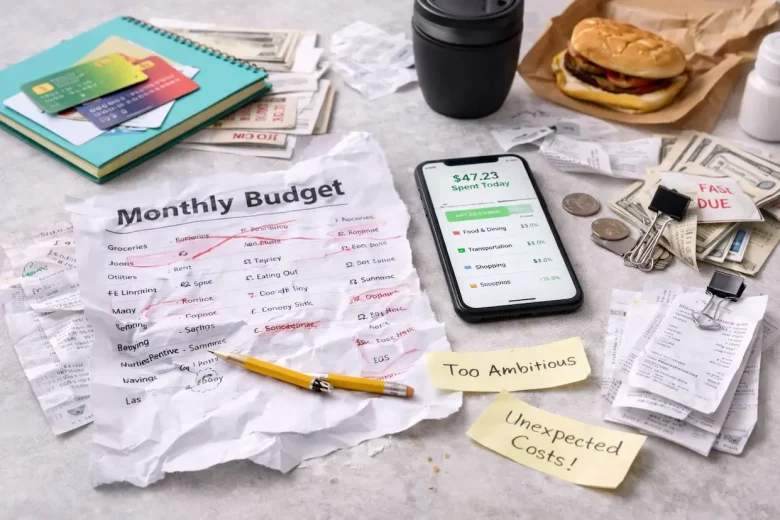
Budgeting sounds simple in theory. You plan your income, control your expenses, and save what is left. But in real life, it rarely works that smoothly.
Many people create a budget with positive intentions, follow it for a few days, and then slowly stop. By the end of the month, they are back to guessing where their money went.
You are not alone if you have ever experienced such feelings. The problem isn’t that budgeting does not work. The problem is that most budgets are not designed for real life.
This article will help you understand why budgets fail and what actually works practically and sustainably.
The Real Problem With Most Budgets
Most budgeting methods focus on numbers but ignore behavior.
You can create a perfect plan on paper, but if it does not match your daily habits, it will not last. Budgeting is not just about calculations. It is about how you make decisions every day.
Many people fail because they try to follow a system that feels restrictive or unrealistic.
Reason One: Budgets Are Too Strict
One of the major reasons budgets fail is that they are too strict.
People often try to cut all unnecessary expenses at once. They remove everything they enjoy and expect themselves to follow the plan perfectly.
This approach usually leads to frustration. After a few days or weeks, the restriction becomes too much, and they go back to their old habits.
A budget should guide your spending, not control it completely.
Reason Two: Lack of Daily Awareness
A budget is useless if you do not track your spending.
Many people create a monthly plan but never monitor their daily expenses. As a result, they lose control without realizing it.
Small expenses add up quickly, and by the time you notice, it is already too late.
If you want to fix this, you can start with how to track daily expenses without apps simple method that works.
Reason Three: Budgets Ignore Real-Life Situations
Life is not predictable.
Unexpected expenses, social events, and emergencies constantly happen. Many budgets fail because they do not leave room for these situations.
When something unexpected happens, the entire plan breaks.
A successful budget should be flexible enough to handle real life, not just ideal situations.
Reason Four: Emotional Spending Is Ignored
Most budgets focus only on numbers, but spending decisions are often emotional.
People spend money when they feel stressed, bored, or exhausted. If your budget does not address these factors, it will fail.
Understanding your behavior is just as important as managing your money.
You can learn more about these issues in emotional spending triggers and how to control them.
Reason Five: Goals Are Too Big or Unclear
Many people set unrealistic goals when budgeting.
They try to save a large amount quickly or cut expenses drastically. This creates pressure and makes the process difficult to maintain.
When goals feel too big, it becomes easier to give up.
Small and clear goals work much better in the long run.
What Actually Works Instead
Now that we understand why most budgets fail, let us look at what actually works.
The key is to build a system that fits your real life, not a perfect plan that you cannot follow.
Start With Simple Tracking
Instead of focusing on a perfect budget, start by tracking your expenses.
This gives you a clear picture of where your money is going. Once you understand your spending patterns, making changes becomes easier.
Tracking builds awareness, and knowledge leads to better decisions.
Use a Flexible Budget Instead of a Strict One
A flexible budget works better than a strict one.
Instead of controlling every detail, set general limits for different categories. Allow some room for changes and unexpected expenses.
This makes your budget easier to follow and reduces stress.
Focus on Daily Habits
Budgeting works best when it becomes part of your daily routine.
Simple habits can make a big difference, such as:
- Checking your spending regularly
- Thinking before making purchases
- Avoiding unnecessary expenses
You can build a system using a simple habit system to control daily expenses consistently.
Plan Weekly Instead of Monthly
Monthly planning can feel overwhelming.
A weekly approach makes budgeting more manageable. You can track your progress, adjust your spending, and correct mistakes quickly.
This keeps you in control throughout the month.
You can try this method through weekly money planning routine for better financial control.
Make Small Adjustments Instead of Big Changes
Instead of trying to fix everything at once, focus on small improvements.
For example:
- Reduce one unnecessary expense
- Save a small amount regularly
- Avoid one impulse purchase per day
These small changes are easier to maintain and add up over time.
Build Consistency Over Perfection
One of the most important things to understand is that perfection is not required.
You will make mistakes. You will have days where you overspend.
What matters is continuing the next day.
Consistency creates results, not perfection.
How to Build a Budget That Actually Works
A practical budget should be simple, flexible, and easy to follow.
Here is a basic approach:
- Track your expenses daily
- Set realistic spending limits
- Review your spending regularly
- Adjust your plan when needed
This approach focuses on real behavior instead of perfect planning.
Common Mistakes to Avoid
Even with a better approach, it is important to avoid common mistakes:
- Making your budget too strict
- Ignoring daily tracking
- Setting unrealistic goals
- Giving up after small failures
Keeping your system simple helps avoid these issues.
Long-Term Benefits of a Practical Budget
When you follow a realistic budgeting system, you start seeing long-term benefits:
- Better control over spending
- Reduced financial stress
- More consistent savings
- Improved decision-making
If you want to strengthen your financial discipline, you can explore simple methods to maintain long term financial discipline.
Final Thoughts
Budgets do not fail because they are useless. They fail because they are often unrealistic.
A budget should support your life, not control it completely. When you focus on habits, flexibility, and consistency, budgeting becomes much easier.
Simple Takeaway
The best budget is not the most detailed one. It is the one you can actually follow.
Keep it simple, stay consistent, and adjust as needed.
Frequently Asked Questions
Why do most people fail at budgeting?
Most people fail because their budgets are too strict, unrealistic, or disconnected from their daily habits.
Is budgeting really necessary?
Yes, budgeting helps you understand your spending and stay in control of your finances.
What is the easiest way to start budgeting?
Start by tracking your expenses and setting simple spending limits.
Should I follow a strict budget?
A flexible budget works better because it allows you to adjust based on real situations.
How can I stay consistent with budgeting?
Focus on small daily habits and review your spending regularly to stay on track.

Aiden Lewis runs pimozoogin.com, where he provides practical and understandable financial tips. He writes articles about Everyday Finance, Financial Stability Tips, Insurance Basics, and Money Habits, with the goal of helping people gain more confidence in managing their finances. He designs his content to enhance financial literacy, foster informed decision-making, and simplify financial matters for everyone. The information provided is for educational and informational purposes only.