
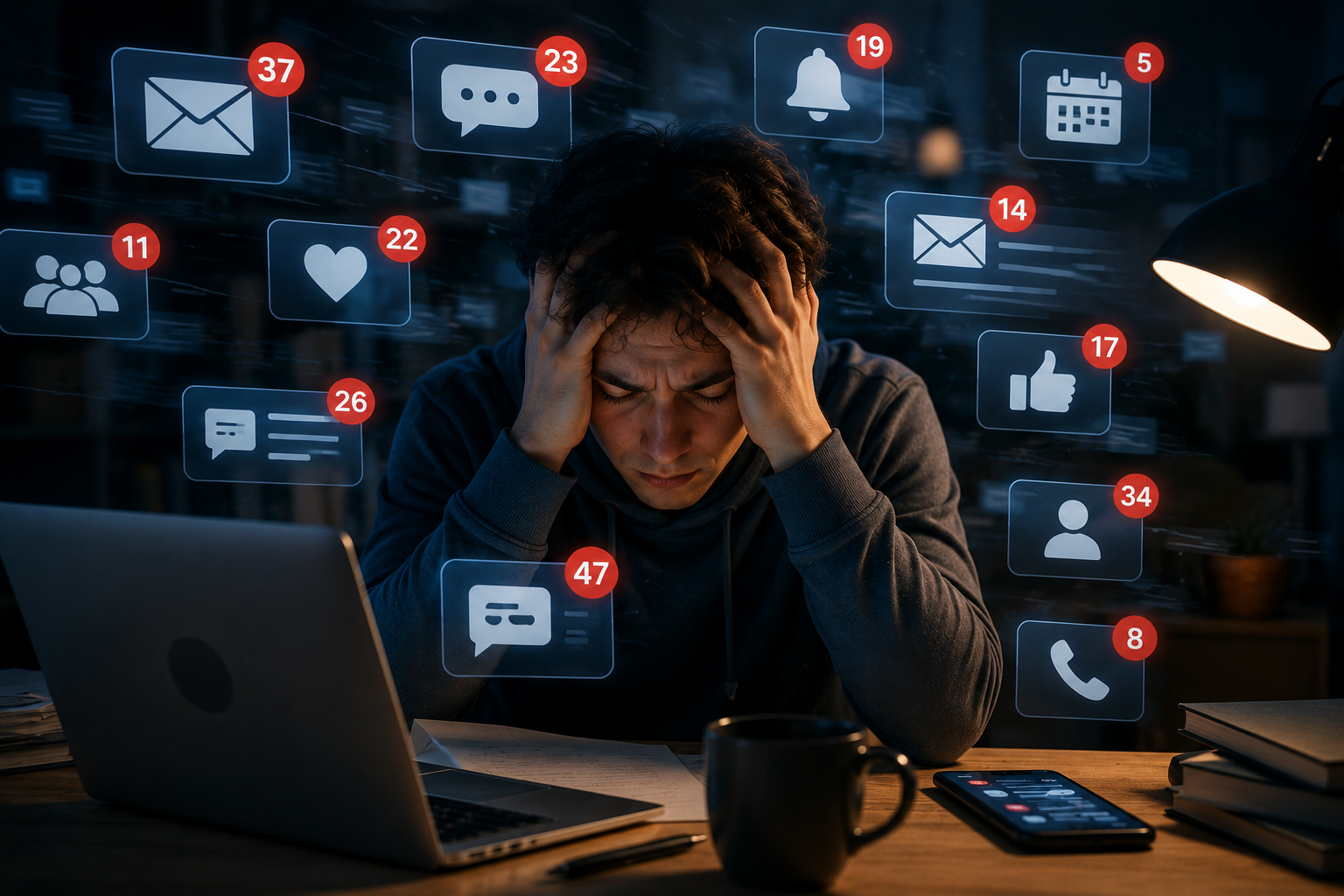
Noises, vibrations, and pop-up messages interrupt modern life every few minutes. Mobile devices buzz during meals, smartwatches vibrate during chats, and laptops display warnings as people work. These messages may seem harmless since they keep people informed and connected. Constant interruptions eventually influence how the mind feels and works. Many people feel fatigued after effortless work and have trouble concentrating. People may not realise that continual notifications cause mental weariness because it builds slowly.
The brain was not meant to alter focus every few seconds while awake. Every alert requires the mind to pause and switch tasks rapidly. Shifting repeatedly causes tension and mental exhaustion. Even with excellent news or kind greetings, continuous interruptions can drain vitality. Due to their daily usage of digital gadgets, understanding why such occurrences happen is crucial. Discovering how alerts affect attention, emotions, and rest can help people adopt healthier behaviours and relax.
Constant Attention Switching Tires the Brain
Switching focus too often causes mental weariness, which notifications cause. Concentration occurs while reading, studying, working, or relaxing. Notifications interrupt focus and require the brain to comprehend new information fast. Even a brief message might disrupt concentration. After checking the alert, the brain must work again to resume the task.
Despite its smallness, this process occurs daily. Studies and personal experience suggest that interruptions make jobs harder and more frustrating. People think they multitask effectively, but the brain normally does one activity at a time while swiftly switching focus. Switching mentally can be exhausting and frustrating. People may start forgetting facts or having trouble focusing over time. The brain works best with uninterrupted thinking time. Constant notifications disrupt natural focus and cause mental overload that lowers productivity and well-being.
Notifications give a Sense of Urgency
Many notifications encourage speedy responses. Sounds, vibration patterns, preview messages, and bright colours grab attention. People start to think every alarm is time-sensitive, even if it’s not. This produces daylong stress. My mind stays alert because I expect another interruption soon. Prolonged suspense can be mentally taxing. The brain remains active even when relaxing because of the chance of receiving another piece of information. This hinders slumber and calm.
Some people get worried when they hear phone notifications because their brains are primed to react immediately. Daily life might become emotionally weighty due to this constant attentiveness. People may struggle to enjoy calm moments due to constant information. Pressure to respond quickly affects relationships and employment. Many people check devices even when weary because they fear missing anything crucial. This cycle keeps the brain engaged for lengthy durations, preventing daytime mental recovery.
Alerts Worsen Sleep Quality
Notifications influence people at night too. They disrupt sleep and rest, which are essential for mental health. Phones are often kept near beds and checked late at night. Some technologies alert users while they sleep. Any noise, vibration, or light screen might disrupt sleep. If someone doesn’t fully wake up, the brain may react to the notification. Mental weariness quickly follows poor sleep quality since the brain has less time to rejuvenate.
Poor sleepers wake up weary, distracted, and emotional. They may struggle with focus and patience during the day. Constant nocturnal notifications encourage undesirable habits like social media scrolling before bed. Bright screens and constant stimulation make brain relaxation harder. Many people create a pattern of never disconnecting from technology. Lack of sleep impacts mood, focus, and mental balance. Reducing nocturnal alerts can help the brain heal and perform better each day.
Notifications Increase Stress
Communication platforms with notifications often pressure users to respond promptly. Constant messages from friends, family, coworkers, and online communities might stress you out. Many worry ignoring texts would appear rude or irresponsible. This pressure keeps individuals emotionally attached to their smartphones all day. Even in personal time, thoughts of interactions and responses persist. Group discussions, social media comments, and professional messages arrive faster than people can digest, making them overwhelming.
People may feel emotionally fatigued before the day ends as notifications mount. Due to social media updates and notifications, some people compare themselves to others online. This comparison might lower confidence and exhaust emotions. The brain is saturated with information and emotions. A notification can cause anxiety, exhilaration, annoyance, or pressure in seconds. Repetitive emotional reactions throughout the day drain the brain’s energy. Many individuals don’t realise how much stress comes from constant digital connectivity and notifications.
Constant Notifications Reduce Creativity and Deep Thinking
To think deeply, solve problems, and create, the mind needs stillness. Constant notifications prevent these natural mental processes from developing. Distractions keep thoughts short and scattered, not focused and profound. It can decrease creativity and make problem-solving harder. Many people find it hard to read long articles, finish work, or enjoy hobbies without checking their phones. The brain learns to expect rapid stimulation over deeper thought. Slowly, patience for quiet occupations weakens.
Inspiration frequently arises from reflection, boredom, or unbroken focus. Notifications remove numerous calm spaces from regular life. Devices interrupt thinking development with new information. Mental overload limits imagination and self-reflection. People might be intellectually engaged all day without thinking much. Because the brain never slows down and organises thoughts, weariness increases. Small intervals without notifications can help people focus and regain mental equilibrium in their daily lives.
Over Time, Emotional Exhaustion Builds
Mental weariness from alerts normally develops gradually. Frequent warnings may initially annoy or distract. The interruptions eventually damage emotional health and energy levels over weeks and months. Small issues may cause impatience, forgetfulness, or emotional distress. Simple tasks might become psychologically weighty due to brain overload from continual stimulus. Constant notifications also limit daily quiet time. Without breaks, emotional tension rises slowly.
Digital communication is becoming normal; therefore, many people push through this tiredness. They may not realise how much technology use causes mental fatigue. Subtle signs of emotional weariness include trouble concentrating, low motivation, impatience, and feeling intellectually exhausted after resting. The brain needs time to recover from daily stress, but constant notifications make it challenging. Recognising these trends helps you develop healthy digital habits. Limiting unnecessary alerts or arranging device-free periods can reduce stress and regulate emotions.
Healthy Notification Habits Improve Mental Health
Reducing notification overload does not require abandoning technology. Modern phones, apps, and digital communication keep individuals informed and engaged. Creating healthier behaviours helps the brain rest and focus. Turning off unneeded notifications or scheduling message checks relieves many individuals immediately. This lowers distractions and calms the mind during daily duties. Screen-free periods, silent modes, and focus settings help boost concentration and emotional balance.
Some people just enable important alerts and disable social media and entertainment app notifications. These modest modifications can boost mood and energy. Time away from computers helps people reconnect with mental health-boosting activities like reading, exercising, walking, and talking to loved ones without interruptions. Unbroken focus and rest improve brain function. Healthy notification practices let people use technology without feeling overwhelmed by alerts. With time, this equilibrium can lessen mental tiredness and make people more present, focused, and emotionally rejuvenated.
Conclusion
Modern notifications may seem typical, yet they have a profound impact on mental energy and emotional wellness. Alerts disrupt focus, increase stress, lower sleep quality, and keep the brain on alert. This constant stimulus exhausts the mind, affecting focus, creativity, mood, and well-being. Instead of being physically exhausted, many people are tired because their minds rarely rest. Digital alerts are not always detrimental, but too many can be overwhelming without good boundaries. Learning to manage notifications better can help people focus and relax throughout the day. Reduce needless alerts, create quiet moments, and restrict screen usage before bed to make a difference. Protecting mental space is crucial in a digital environment. One of the easiest methods to improve daily living and lessen mental tiredness is to let the brain rest.
FAQs
1. Why are alerts psychologically tiring?
The brain constantly switches focus due to notifications. Constant focus shifting drains mental energy and is fatiguing.
2. Do alerts impact sleep?
Yes, notifications can wake people up or keep the brain active at night. Daytime mental fatigue often results from poor sleep.
3. Why do notification sounds worry people?
Many associate notification sounds with urgency or social pressure. After learning to react reflexively, the brain might increase tension and anxiety.
4. Can turning off notifications improve mental health?
Limiting alerts can improve focus, calmness, and mental overload during daily tasks.
5. How can one improve notification habits?
Limiting alarms, scheduling screen-free times, and reviewing messages at specified times can help people develop healthy habits.