
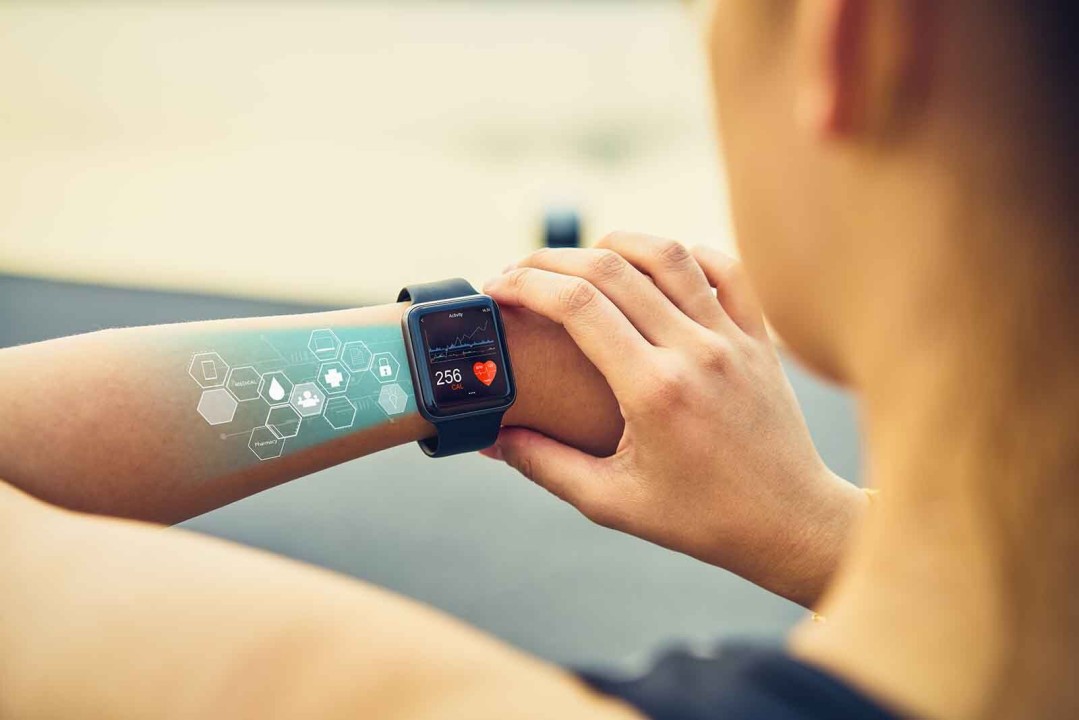
Current wearable fitness devices combine advanced multi-axis accelerometers, optical heart rate sensors, and GPS technology to more accurately represent our daily activities. Machine learning algorithms interpret this raw sensor data and filter out random movements to provide users with precise step counts, calorie calculations, and training intensity monitoring. Ten years ago, simply wearing a pedometer around the waist often led to significant errors in health data. A bumpy bus ride or fast typing at a desk could be misclassified as brisk walking. People were often frustrated when devices failed to record their actual activity level.
Today, the hardware in smartwatches and fitness trackers has improved enormously. Medical optical sensors and advanced motion sensors fit into devices that are small enough to be worn comfortably on the wrist. This hardware, combined with powerful software, enables real-time analysis of activity data. By understanding exactly how these existing technologies measure movement, users can make better informed decisions based on their health data. This guide describes the specific technologies used in wearable fitness devices to accurately measure human activity, heart rate, and daily energy expenditure.
How Do Multi-Axis Accelerometers Detect Human Movement?
Multi-axis accelerometers are an essential component of all modern wearable fitness devices. An accelerometer is a small electromechanical sensor that measures the speed and direction of an object’s movement. Early pedometers used single-axis sensors, which only measured vertical movement and were prone to false alarms. Current wearable fitness devices use three- or even six-axis accelerometers, which simultaneously measure forward/backward, left/right, and vertical movement.
Wearable fitness devices measure movement in three-dimensional space, providing a highly accurate representation of the wearer’s physical activity. During walking, wrist movement patterns are accurate and repeatable. Accelerometers record the speed and angle of wrist movements, allowing the device’s internal CPU to distinguish between actual walking movements and the movement of drinking coffee.
In many advanced wearable fitness devices, accelerometers are often used in combination with gyroscopes. Accelerometers register linear motion, while gyroscopes register angular rotation. Together, these sensors provide a complete picture of the wrist orientation, allowing the wearable to accurately track complex movements such as swimming strokes and weightlifting.
Why you Need an Optical Heart Rate Monitor
Counting steps alone does not provide an accurate picture of a person’s daily energy expenditure. To solve this problem, fitness wearables are equipped with photoplethysmography (PPG) sensors. The PPG sensor uses a small green light-emitting diode (LED) on the back of the watch. The light emitted by these LEDs penetrates the wearer’s skin, and highly sensitive photodiodes register the reflected light.
Human blood absorbs green light, and the amount of reflected light changes with every heartbeat. With every heartbeat, the heart pumps blood into the capillaries of the wrist, increasing light absorption. During the intervals between heartbeats, light absorption decreases. Fitness wearables use these rapid changes to calculate a highly accurate heart rate in real time. By combining continuous heart rate data with personal user parameters such as age, weight, and gender and motion sensors, fitness wearables can provide a more accurate estimate of calorie consumption. Even when someone pedals intensely on a stationary bike, the wrists do not move and the accelerometer shows 0. An optical heart rate monitor, however, can register the increase in cardiovascular activity, allowing fitness wearables to accurately track intense training and the number of calories burnt.
Machine Learning Improve Activity Recognition
Hardware sensors generate enormous amounts of raw data, but without advanced software to interpret it, this data is meaningless. Modern fitness trackers use machine learning algorithms that process thousands of data points per second. In the lab, engineers train these algorithms by collecting sensor data from users performing specific activities, such as jogging, cycling, or climbing stairs.
When a user uses a fitness tracker, the device compares the wearer’s current sensor data with a pre-built computer model. If the user’s pulse rotation speed and rising heart rate correspond to the algorithmic characteristics of a tennis match, the device automatically recognises the activity. This means that users do not have to manually start and end workouts on the device.
Machine learning also enables fitness wearables to become more personalised over time. After months of wearing, the device learns the user’s unique resting heart rate and cadence. The system continuously optimises the baseline measurements, improving the accuracy of the daily activity data displayed to the user.
Personal Health Data
Fitness wearables provide a wealth of information about your daily activities and heart health, but you need to know how to maximise their benefits. For optimal accuracy, always wear the device snugly above your wrist. A loose strap can cause external light to interfere with the optical heart rate sensor, resulting in inaccurate heart rate measurements.
Additionally, it is important that users regularly update their profile in the accompanying smartphone app. Weight fluctuations have a significant impact on the algorithm’s estimate of daily calorie expenditure. By keeping this data up-to-date, users can transform their fitness device into a highly accurate, personalised health partner.
FAQs
1. How accurate are fitness wearables?
The answer depends entirely on the parameters being measured. For example, when jogging outdoors, high-end devices from Garmin and Apple often provide the most accurate optical heart rate measurements and GPS location tracking, while the Oura Ring excels in highly accurate sleep phase analysis.
2. Why does my fitness tracker count steps while driving?
The algorithm filters out most movements that are not walking movements. However, driving on very bumpy roads simulates the repeated vertical acceleration that people experience while walking. If the driver intentionally drives over bumpy surfaces, the device’s accelerometer can interpret the physical vibrations transmitted through the steering wheel as actual steps.
3. Does my wearable need a smartphone to track routes?
If your fitness tracker does not have an integrated GPS sensor, you only need to bring your smartphone. Devices with built-in GPS chips can work directly with positioning satellites to automatically plan outdoor running and cycling routes, allowing users to leave their phone at home.
4. How long does an optical heart rate sensor last before it fails?
The LEDs and photodiodes used in photoplethysmography (PPG) sensors do not wear out physically, so their accuracy is not affected within the typical lifespan of three to five years. However, scratches or a layer of dried sweat and dirt on the glass sensor cover can block the light, temporarily reducing the accuracy of the measurements.