
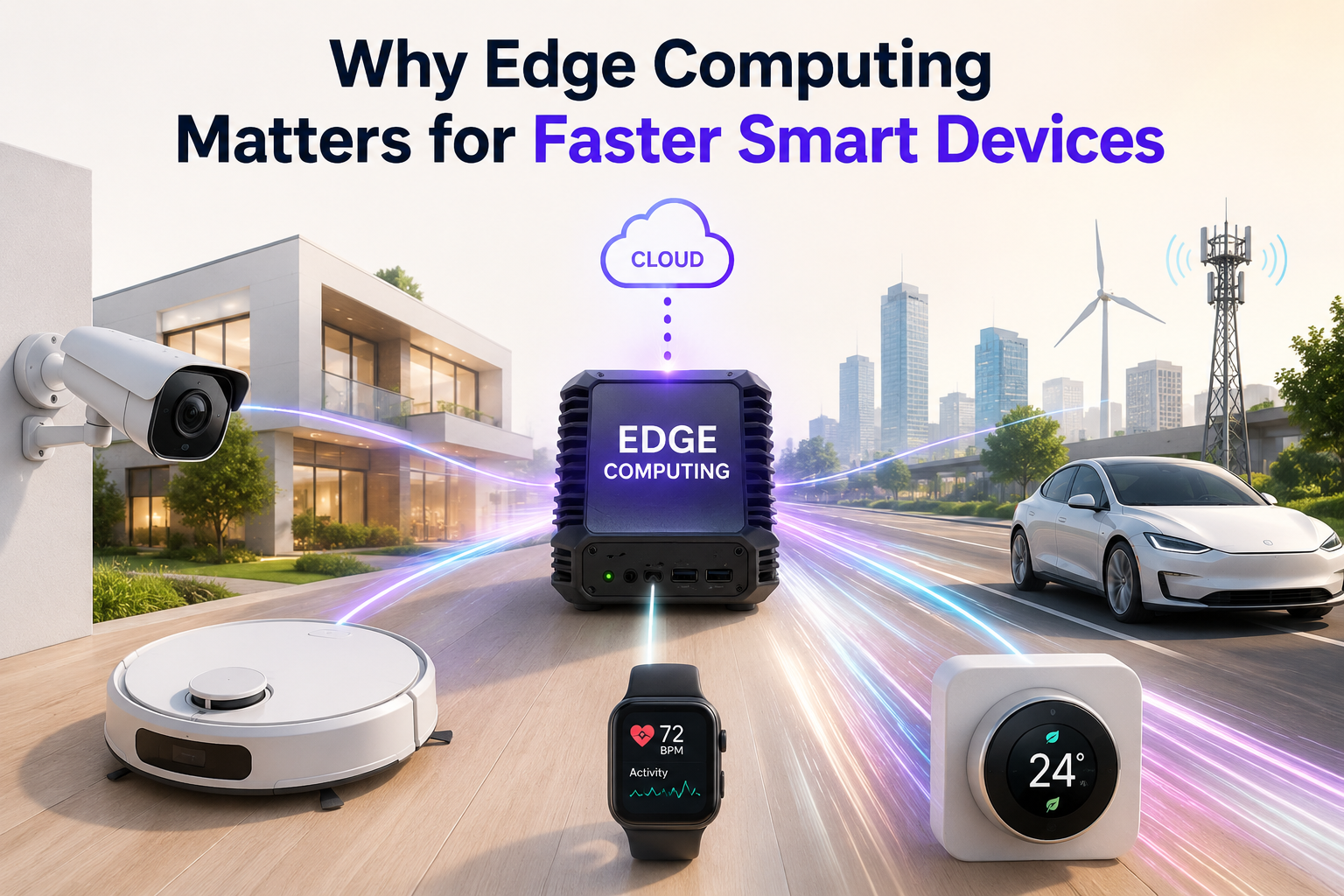
Edge computing reduces bandwidth use and server resources by processing data closer to its source. Furthermore, edge computing minimises network latency so smart devices can quickly respond to user needs. An intelligent refrigerator doesn’t need to upload its temperature data directly into the cloud for analysis; instead, EC screens it locally and sends only what’s necessary.
1. Real-time Processing
Real-time processing sits between real-time data ingestion and real-time visualisation, providing the engine and caboose of the real-time data train a chance to connect, communicate, and operate effectively together. Edge computing filters and analyses data closer to its source, bypassing centralised servers and relieving network congestion. By transmitting selectively between applications that need bandwidth for critical uses and the remainder that don’t, edge computing reduces latency while improving the reliability of networked resources.
Security cameras at retail stores may employ AI to identify suspicious behaviour instead of constantly transmitting footage, providing staff with instantaneous visual data evaluation and the capability to restock shelves or open more checkout lanes when traffic surges.
2. Scalability
Scalability is crucial for businesses, as it allows them to maintain quality service as their business expands and builds customer trust by avoiding frustrating experiences that prompt people to switch brands or switch businesses elsewhere. Processing data closer to its source allows immediate actions without depending on cloud servers, thus reducing latency, bandwidth usage and network reliability issues. It also optimises energy use with techniques such as sleep modes and adaptive processing, which help minimise power consumption for battery-powered devices.
Edge computing enables manufacturers and retailers to monitor equipment health in real time and detect any potential issues immediately; retail systems to restock merchandise quickly; and security cameras to alert of potential incidents without the need for reliable Internet connections – thus significantly decreasing downtime, increasing operational efficiency, and enhancing safety.
3. Faster Response Times
Edge computing brings data analysis closer to its source, improving device response times. This feature can be particularly advantageous when dealing with time-sensitive applications like security cameras and autonomous vehicles. These devices process raw footage locally and only transmit actionable data when necessary – significantly decreasing latency, bandwidth usage and network congestion.
This technology not only enhances gaming performance by processing graphics close to the player and reducing frame-rate drops and latency, but it can also enable real-time decision-making, so digital signage can change instantly or checkout systems can open additional lanes during peak traffic times.
4. Lower Latency
Edge computing reduces latency by processing data nearer its source. This relieves compute demands from centralised servers while simultaneously decreasing transmission distance and bandwidth usage, thus speeding response times and decreasing bandwidth consumption.
An AI-enabled security camera in a warehouse could be programmed to analyse footage locally and only send relevant information back to headquarters, significantly cutting network traffic while speeding incident response times. This feature would prove invaluable for technologies requiring real-time decision-making such as self-driving cars or advanced healthcare apps.
5. Lower Power Consumption
Moving computational resources closer to data sources reduces data volume sent upstream, reduces latency, and reduces transmission costs, while offloading application processing from the cloud reduces overall system power consumption. Edge computing increases network reliability by ensuring computer systems continue to function even when cloud connectivity is lost, which is essential for critical applications like autonomous vehicles and industrial automation.
Edge computing makes remote site monitoring simpler when Internet connectivity or bandwidth limitations exist, such as on an oil rig in the Bering Sea or isolated wind farms. Furthermore, edge-enabled sensors on manufacturing lines can detect equipment malfunctions instantly and respond accordingly in real-time to avoid downtime while increasing efficiency.
6. Better Security
Edge computing enables quick decision-making for time-sensitive applications by eliminating delays caused by moving data between servers, such as factory floors or vehicles. By processing it locally instead of sending it back and forth from servers, edge computing ensures timely decisions for these time-critical processes.
Additionally, cloud services free up computing resources by eliminating unnecessary data aggregation, which decreases bandwidth consumption and infrastructure costs, leading to faster and more responsive IoT operations. Edge-enabled security cameras in remote warehouses process visual data immediately to distinguish between pedestrians and delivery vans or detect fire alarms – providing instantaneous decisions and minimising security risks.
7. Enhanced Mobility
Edge computing brings real-time processing closer to users for faster insight and action, decreasing network traffic while saving on bandwidth consumption costs and infrastructure expenses. For instance, IoT sensors on a factory floor can analyse data to alert staff of potential maintenance issues more efficiently than waiting for instructions from the cloud. Furthermore, autonomous vehicles rely on edge technologies for rapid decisions without accessing central servers for information.
Edge computing also improves mobile applications by offloading computational work to local devices, which reduces latency and allows better performance in remote areas with unreliable internet connectivity.
8. Personalized Experiences
Edge computing brings computers closer to data sources in order to optimise performance for time-sensitive applications. By shifting towards local processing, edge computing significantly reduces response times and bandwidth usage. Healthcare edge-enabled sensors process patient vital signs quickly and immediately trigger alerts rather than waiting for data to travel to central servers, thus maintaining the cold chain integrity of vaccine shipments while hospitals track equipment in real-time for emergency situations.
Autonomous vehicles rely on edge computing for processing sensor and camera data quickly, without depending on remote cloud servers for decision making. This enables autonomous vehicles to quickly respond to road conditions, traffic conditions and obstacles for safer and more efficient driving experiences.
9. Better Traffic Management
Edge computing enables real-time chat apps to process messages locally, thus decreasing latency between colleagues and their recipient screens. For instance, an internal chat app between coworkers may encounter noticeable delays as each message must travel out of the building, hit servers across the country and back before being received by its intended receiver. Edge computing reduces that noticeable latency.
Edge computing enhances IoT devices that require instantaneous decision-making, such as sensors or images sent directly from sensors and images to remote servers for analysis. Instead of sending sensor and image data outward for processing by remote servers, local processing reduces recognition times for faces or obstacles, supporting their IoT performance even in low bandwidth environments and alleviating congestion issues more effectively.