
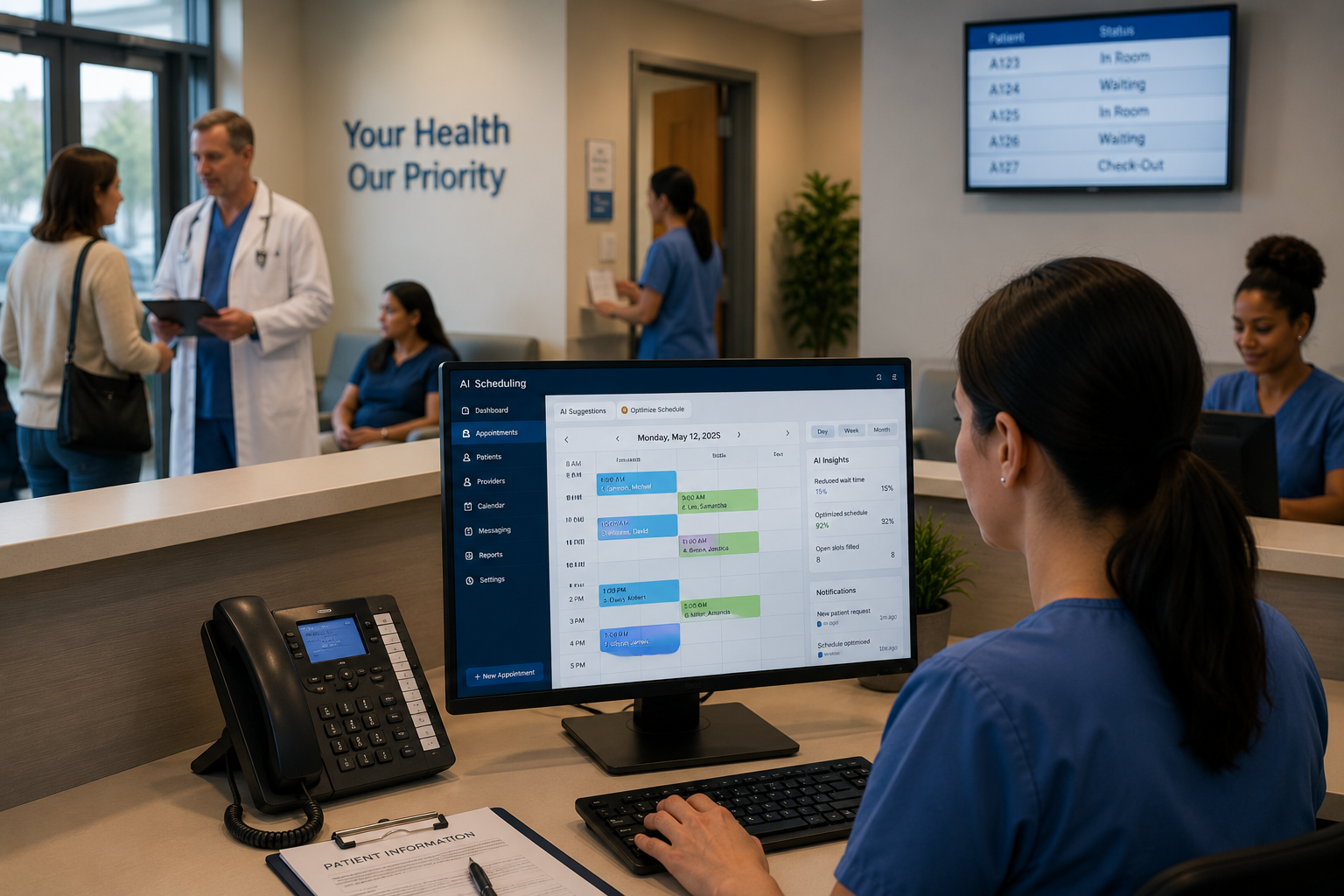
Running a clinic involves much more than just patient care. Behind every appointment lies a complex system that involves scheduling, staffing, space utilisation, cancellations, emergencies, and ensuring everyone understands the next steps.
Even smaller clinics struggle to keep everything running on time during busy weeks. Appointments scheduled late in the morning often lead to problems that last into the afternoon. Patients have to wait longer, staff have little time, and the administrative team spends hours manually rescheduling appointments.
This is one of the reasons why the healthcare sector is interested in AI-driven scheduling systems.
These systems are not intended to replace office managers or receptionists, but rather to streamline processes, simplify scheduling, and help clinics respond more quickly to the ever-changing circumstances of the day.
Traditional Scheduling Systems Often Create Bottlenecks:
Many clinics still use rigid scheduling systems that ensure appointments stay on time. However, in practice, such punctuality is often difficult to achieve. Appointments take longer than planned. Patients often arrive late. Emergency room visits disrupt the appointment schedule. Some patients cancel appointments, while others immediately require a follow-up visit that is not in their calendar.
Humans can handle these situations, but as the number of patients increases, manual processing becomes increasingly difficult.
AI-driven scheduling systems help by constantly identifying trends and adjusting the schedule more quickly when problems arise.
This typically results in a smoother workflow, rather than having to react all the time reactively.
AI Scheduling Systems Learn From Clinic Patterns:
An advantage of AI scheduling software is its ability to recognise long-term trends.
For example, a doctor might notice that certain types of appointments consistently take longer than planned. Follow-up appointments for long-term issues may require more time for communication, while routine follow-up appointments can be scheduled more quickly.
AI systems can analyse this historical data and develop more realistic appointment times. Moreover, some systems can identify recurring operational trends, such as:
- A high number of appointments
- A high cancellation rate
- Frequent lateness in certain departments
- Strongly fluctuating patient numbers
- High demand for specialists
- Frequent no-shows
This information helps clinics schedule appointments better instead of constantly relying on guesswork.
Reducing Waiting Times Improves Patient Experience:
Patients often judge their care experience based on how well a clinic is organised.
Even with excellent medical care, long waiting times in the waiting room can be frustrating. Many patients have to schedule appointments based on factors such as work, childcare, or transportation issues.
AI-driven appointment systems can help shorten waiting times by creating more space between appointments, which prevents unnecessary overbookings.
Some clinics also use automated systems to send reminders, confirm appointments, or give patients the option to reschedule their appointments before they miss one.
These seemingly small changes, individually insignificant, collectively lead to a calmer and more predictable care experience for patients.
Staff Workloads Become Easier to Manage:
Just like patients, problems with appointment scheduling hamper clinic staff.
Receptionists are often busy handling cancellations, rescheduling appointments, updating calendars, and answering phone calls about appointments. Artificial intelligence-based appointment systems can automate repetitive tasks, freeing up staff time for communicating with patients and assisting other patients at the front desk.
This transformation is important because healthcare managers are under increasing pressure.
More efficient scheduling leads to more efficient clinic operations.
Smarter Appointment Matching Helps Clinics Operate Better:
An often overlooked problem when scheduling medical appointments is assigning patients to unsuitable types or durations of care.
AI systems can sometimes improve this process by matching patients more accurately with available doctors, treatment rooms, or appointment durations based on previous appointment data.
For example:
Complex Appointments Can Be Given More Time
Patients requiring a more extensive examination can be scheduled for longer time slots instead of fixed time slots.
Routine Visits Can Move More Efficiently
Shorter follow-up appointments can be grouped to make clinic scheduling more efficient.
Specialist Availability Can Be Managed Better
When multiple specialists share a clinic’s limited resources, AI tools can help prevent unnecessary scheduling conflicts.
These operational changes help centres maintain a stable patient flow throughout the day.
Predictive Scheduling Helps Clinics Prepare Earlier:
During certain periods of the year, many doctors face fluctuating patient demand.
Flu season, school inspections, allergy season, and the peak in appointments after the holidays can quickly fill your schedule.
A growing number of AI scheduling systems use predictive analytics to help doctors plan ahead during these busy periods and prevent overcrowded schedules.
By analysing past trends and current appointment data, the system can suggest staffing adjustments or extend appointment times much sooner than traditional scheduling methods.
This proactive approach can reduce stress for both patients and clinic staff.
Smaller Clinics Are Exploring AI Too:
Large hospitals and healthcare networks are no longer the only institutions using AI for management purposes.
Small private clinics and neighbourhood clinics are starting to use cloud-based scheduling platforms with built-in automation tools.
What is attractive is not only the new concept but also its practical applicability.
For smaller clinics with less administrative staff, these tools can significantly reduce the number of telephone enquiries, set up automatic reminders, and streamline scheduling without the need for a large technical team. This approach offers significant benefits.
As software prices fall and ease of use improves, more and more small healthcare institutions are adopting software.
Human Oversight Still Matters:
Despite advances in automation, clinics cannot fully rely on AI systems to automate patient scheduling. Software cannot fully understand the complex emotional factors, emergencies, and unpredictable human factors that are inherent in the healthcare environment.
Patients sometimes require flexible scheduling, something computers cannot anticipate. Healthcare professionals must still use their best judgment when dealing with diverse situations, sensitive cases, and prioritising tasks.
In most cases, reputable clinics use AI scheduling systems as supplementary tools to support their experienced management teams.
Although technology makes work more organised, in practice, people are still needed to maintain interpersonal relationships and make decisions.
Privacy and Data Management Remain Important:
Appointment systems store sensitive, personal patient data, such as names, past appointment details, and health information.
As more physicians use AI software, data security is becoming increasingly important.
Patients want to be assured that someone handles their appointment details securely and correctly. Furthermore, clinics need systems that comply with privacy legislation to prevent unauthorised access.
For many healthcare professionals, trust and reliability are just as important as completing tasks on time.
Clinics Are Moving Toward More Flexible Operations:
A key shift in the healthcare sector is the growing importance of freedom.
Patients expect to be able to make appointments online, receive electronic reminders, easily change appointments, and experience shorter waiting times. Clinics that work exclusively with human systems may struggle to meet these needs.
With AI-driven appointment tools, clinics can adapt better to changes, making systems more responsive and enabling quick adjustments when schedules change. In most cases, this technology simply makes it easier and more efficient to perform tasks in the background of care.
Patients may not even notice the presence of the software. They experience a more organised, responsive, and user-friendly service.
Conclusion:
AI-driven appointment systems help clinics operate more smoothly by simplifying appointment tracking, reducing delays, and optimising daily workflows.
These tools are increasingly becoming essential operational support systems in modern healthcare. They assist in smarter appointment matching, performing predictive scheduling, and reducing administrative workload.
This technology is not intended to replace medical staff or doctors. Its primary role is to optimise coordination, enabling clinics to better respond to patient needs and adapt to changing schedules.
As healthcare continues to evolve, AI-assisted scheduling systems will likely become standard practice for clinics to better manage time and resources and improve the patient experience.
Frequently Asked Questions
What are AI-driven appointment methods in healthcare?
AI-driven scheduling systems use software and data analysis to help clinics schedule appointments, track them, reduce delays, and improve operational efficiency.
How do AI-driven scheduling systems shorten wait times?
These tools help clinics find optimal appointment times, handle cancellations, set up automatic reminders, and adjust the schedule to the clinic’s daily operations.
Can small clinics use AI-driven scheduling tools?
Yes. Many scheduling tools are currently designed for private clinics and smaller clinics with less administrative staff.
Will AI-driven scheduling systems replace front desk staff?
No, they primarily support administrative teams by automating time-consuming scheduling tasks, making processes run more smoothly.
Why should doctors invest in automated scheduling?
Clinics use scheduling technology to reduce operational stress, improve the patient experience, lower administrative burdens, and better manage the increasing demand for appointments.