
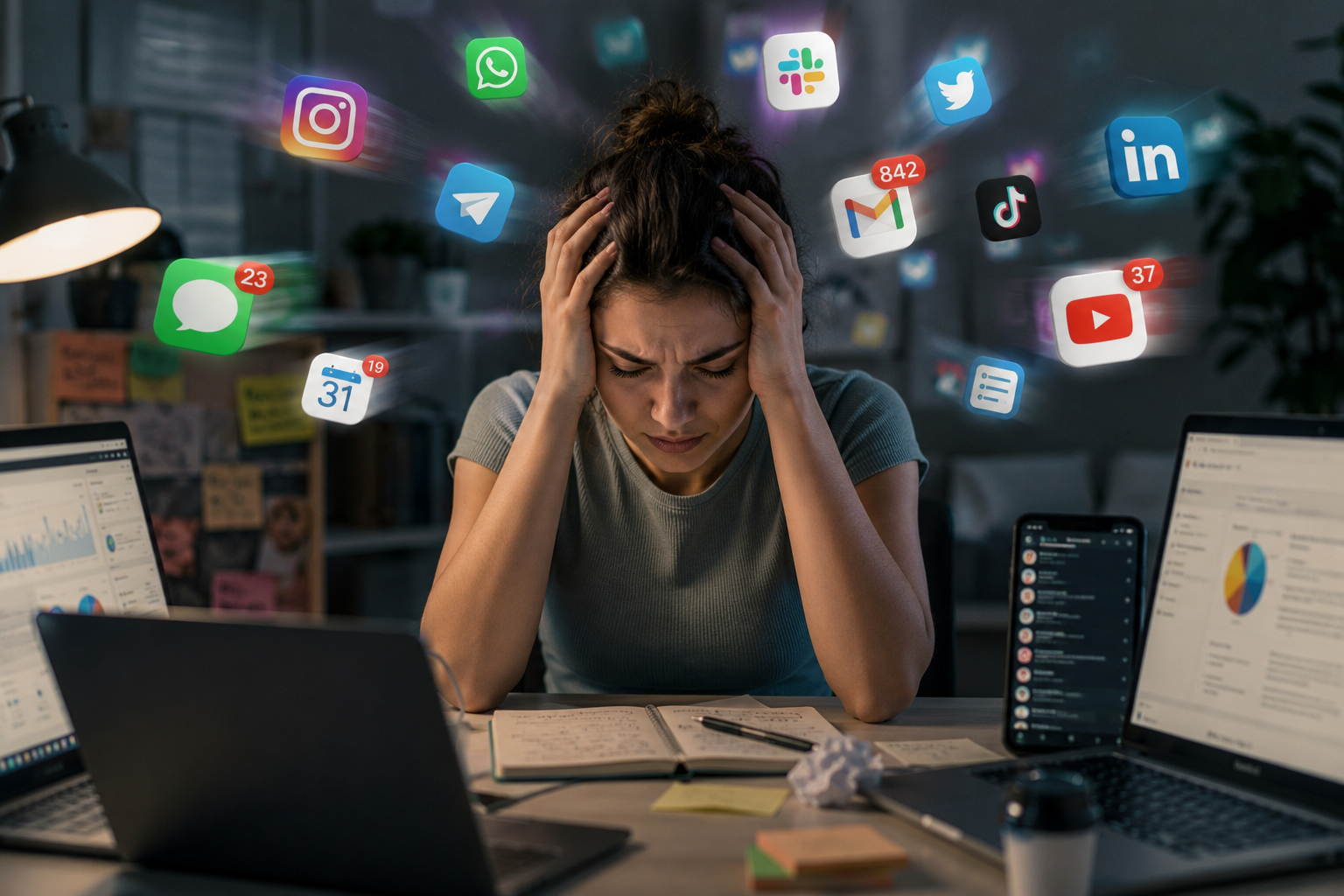
Beginning the day with positive intentions is typical. You check your email, react, open a calendar app, move to task management, answer a notice, then plunge into social media for ‘just one minute’. Before long, your head feels cluttered even though the day has just begun. Modern technology offers ease, yet many individuals silently face a different reality. Switching applications during the day generates an undetected mental load. It may not seem severe at first because launching applications is so common. This behaviour can eventually damage attention, energy, productivity, and emotional well-being.
Digital multitasking might create mild stress. Subtle manifestations are common. You may feel cognitively weary after basic chores, forget what you were doing, or struggle to finish one activity. Many blame themselves for poor attention, but the underlying issue is constant screen, platform, and notification switching. Because modern life relies on applications for communication, work, entertainment, shopping, navigation, and management, this hidden stress is growing. These tools are important, but using too many can overwhelm the brain in ways that most people don’t realise.
The Brain Was Not Made for Continuous Digital Switching
Human attention functions best when focused on one important job. Every app switch requires your brain to halt, adjust, and refocus. Your mind requires energy for even a brief changeover. Imagine composing a critical message with messaging app, news alert, and social media notifications. Each interruption challenges your brain to switch tasks and prepare for another. Repeating these actions throughout the day causes mental tiredness.
Multiple tasking is often thought to be efficient, yet studies and experience reveal that switching decreases performance. The brain is continuously adjusting its focus, slowing tasks. Therefore, individuals often feel active yet unproductive at night. Lack of effort isn’t always the issue. Focus fragmentation is the issue. Instant replies, rapid browsing, and availability are valued online. This constant activity harms the brain.
Invisible Mental Pressure from Notifications
Notifications cause app-switching tension despite their harmlessness. Every sound, vibration, or pop-up disturbs focus. Part of the brain reacts to ignored signals. This causes mental stress. You partially focus on incomplete discussions, unread messages, and alarms. Background tension drains emotionally over time.
Due to constant messages, many individuals no longer have calm mental space. Apps demand attention throughout meals, work, family interactions, and bedtime. The strain increases when applications have various goals. Different apps handle work communication, personal correspondence, banking, and leisure. The brain changes emotions based on the app being open. Someone may go from an unpleasant work email to a hilarious social media video to a banking app to pay debts. Rapid emotional shifts can cause mental confusion and exhaustion.
App Overload Impairs Concentration
Today’s digital world makes deep attention tougher. Many folks realise they can’t concentrate as well. Too much app switching is a factor. Multiple interruptions make it difficult for the brain to concentrate. Instead of focusing, they pay half an attention. This impacts learning and work quality. Reading slows, creativity suffers, and problem-solving becomes harder. Even delightful hobbies might lose enjoyment due to continual distraction.
Students, remote workers, freelancers, and company owners are especially susceptible because they utilise many platforms every day. One hour can be spent on email, messaging, project management, browsers, video chats, and cloud storage. It first feels productive. However, mental tiredness builds slowly over weeks or months. Many individuals respond with more digital stimulation, creating a loop of distraction and tiredness.
Digital Exhaustion Emotions
The hidden stress of app switching goes beyond productivity. It impacts emotions. Constant digital movement can cause anxiety, restlessness, and frustration. Some people are uncomfortable in quiet because their minds are used to stimuli. When people miss messages or answer slowly, others feel unwell This generates digital pressure, making individuals emotionally attached to their gadgets all day.
Social media applications exacerbate the situation by encouraging comparison and emotional reactions. Rapidly switching between personal discussions, work, pleasure, and internet viewpoints might upset emotional equilibrium. Many users suffer weird emotional clutter. They remember pieces of dozens of conversations, movies, notifications, and unfinished activities. This emotional overflow hinders relaxing. Because it never disconnects from digital information, the brain may stay engaged during spare time.
Why Heavy Screen Use Makes Simple Tasks Harder
Have you ever taken up your phone to accomplish something easy but forgot moments later? This is because app switching disrupts focus. Digital interruptions somewhat impair short-term memory. After each changeover, the brain must refocus. Over time, this makes everyday chores harder intellectually. This phenomenon is typically noticed in work or school. They use one app for information, another for conversation, check a notification, and lose track of the initial job.
This pattern is frustrating because it keeps the mind engaged without making any progress. Mental congestion impacts decision-making. Decision fatigue can result from too many digital decisions daily. Selecting applications, responding to messages, handling notifications, and filtering information need brain resources. Even after sitting all day, many individuals feel emotionally and cognitively exhausted by night.
App Switching and Poor Sleep
Many people don’t realise how much app habits impair sleep. Switching apps late at night keeps the brain busy. Social media, brief movies, business emails, and continuous notifications keep the mind busy. After putting the phone aside, the brain may process digital stimuli. Emotions rise, thoughts stay engaged, and rest becomes harder.
People who quickly move between leisure and business applications before bedtime often experience this phenomenon. Mixed messages from the brain make it hard to relax. Poor sleep causes attention issues the next day, perpetuating digital fatigue. Many blame stress, job pressure, or lack of enthusiasm for mental healing, but app habits are silently hurting it.
Productivity Apps can Sometimes Cause Issues
Overusing productivity tools might raise stress. Many download many applications to organise. They have distinct applications for notes, calendars, reminders, habits, projects, objectives, and communication. Many productivity systems can confuse rather than simplify. App management consumes more time than productive work.
This approach gives a false impression of productivity by organising things instead of completing them. Technology is not the issue. Digital excess without limits is the problem. A basic digital system usually performs well. Minimising applications can increase mental clarity and reduce friction.
Constant Switching Impacts Relationships
In subtle ways, digital distraction affects personal connections. When attention is split, people lose significance in talks. Unknowingly, many individuals use apps during meals, family time, and social events. Even momentary disruptions might diminish emotional connection since the brain never fully focuses on the person in front of them.
This causes separation over time. Even when no damage is meant, friends, lovers, and family may feel overlooked. Constant app switching lowers presence. Many individuals split their focus between real life and internet activities, missing out on moments. This tendency might eventually erode relationship happiness since true connection demands concentrated attention.
Staying Current Illusion
People switch applications often because they worry about missing something vital. Many users think they must continually check messages, trends, news, and social media. However, this behaviour rarely brings peace. It typically causes anxiety and information overload. Digital space moves indefinitely. Always have fresh stuff, updates, and conversations to attend to.
Maintaining everything is mentally exhausting. Ironically, those who continuously check applications gather less information because they scatter their attention. Slower, more purposeful digital habits improve comprehension and calmness.
Simple Ways to Reduce App Switching Stress
Avoiding app-switching stress doesn’t necessitate ditching technology. Minor adjustments may have a big impact. Limiting unneeded alerts helps. Many warnings are unimportant and distracting. Disabling unnecessary alerts frees up brain space throughout the day. Another good practice is grouping related chores. Instead of monitoring messages every few minutes, users may schedule conversations. This prolongs brain attention.
When feasible, use fewer applications to decrease mental clutter. Some find they don’t require many applications for comparable tasks. Also vital is screen-free time during the day. Short pauses from electronics help the brain recuperate from persistent stimuli. Moving distracting programs to hidden directories or uninstalling infrequently used apps might also help. Even small impediments minimise impulsive switching. Most importantly, people should realise that availability is not always required. While responding to everything immediately may feel useful, it might undermine attention and ease of mind.
Better Technology Relationship
Not all technology is bad. Apps aid learning, communication, organization, and creativity. Digital life should be used more purposefully, not eliminated. A better tech connection starts with awareness. People can make better digital choices if they grasp how excessive app switching drains mental energy.
Straightforward procedures can restore equilibrium. Limiting screen usage before bed, removing phones during meals, and focusing on one activity improve brain clarity. People find that decreasing digital turmoil boosts mood, attention, and everyday contentment. The brain works best when it can think clearly without interruption. Attention protection is one of the most important self-care practices in a world of constant digital noise.
Why Digital Simplicity Matters
Apps will continue to be vital in daily living as life becomes more linked. However, greater technology does not automatically improve experience. Digital minimalism is crucial since attention is finite. All apps fight for time, energy, and concentration.
Simplifying digital habits can make people calmer, more productive, and more present. They focus more on meaningful work and less on distractions. This change takes time. This takes purposeful choices and continuous practices. Small changes can reduce stress significantly. Choosing deliberate technology usage versus frequent digital switching helps people restore concentration and mental health.
Conclusion
Today’s hidden stress of switching between too many apps daily is expanding. Apps simplify work, yet switching platforms can discreetly sap mental energy, impair attention, raise emotional tiredness, and lower productivity. People often feel digital weariness without knowing why. Constant alerts, fractured attention, and multitasking disrupt mental clarity and emotional equilibrium.
Fortunately, simple modifications may have a big effect. Reducing notifications, streamlining digital habits, reducing distractions, and focusing work can enhance mental health and everyday living. Supporting rather than controlling attention is how technology works best. Intentional app use can lower hidden tension, boost attention, and foster healthy digital habits for long-term well-being.
FAQs
1. Why does switching between apps feel mentally exhausting?
Switching between apps forces the brain to repeatedly adjust focus and process new information. Even short interruptions use mental energy, and frequent switching throughout the day can create cognitive fatigue and reduced concentration.
2. Can too many notifications increase stress levels?
Yes, constant notifications can create ongoing mental pressure. They interrupt attention, increase distraction, and make it difficult for the brain to fully relax or focus on one task at a time.
3. How can I reduce app-switching stress during work?
You can reduce stress by disabling unnecessary notifications, using fewer apps, grouping similar tasks together, and setting specific times to check messages instead of responding instantly to every alert.
4. Does app switching affect productivity?
Frequent app switching often reduces productivity because the brain loses focus during transitions. Tasks may take longer to complete, and attention becomes fragmented throughout the day.
5. Is it possible to use technology in a healthier way?
Yes, healthier technology use involves being more intentional with screen time, reducing digital distractions, taking regular breaks from devices, and focusing on meaningful app use rather than constant multitasking.