
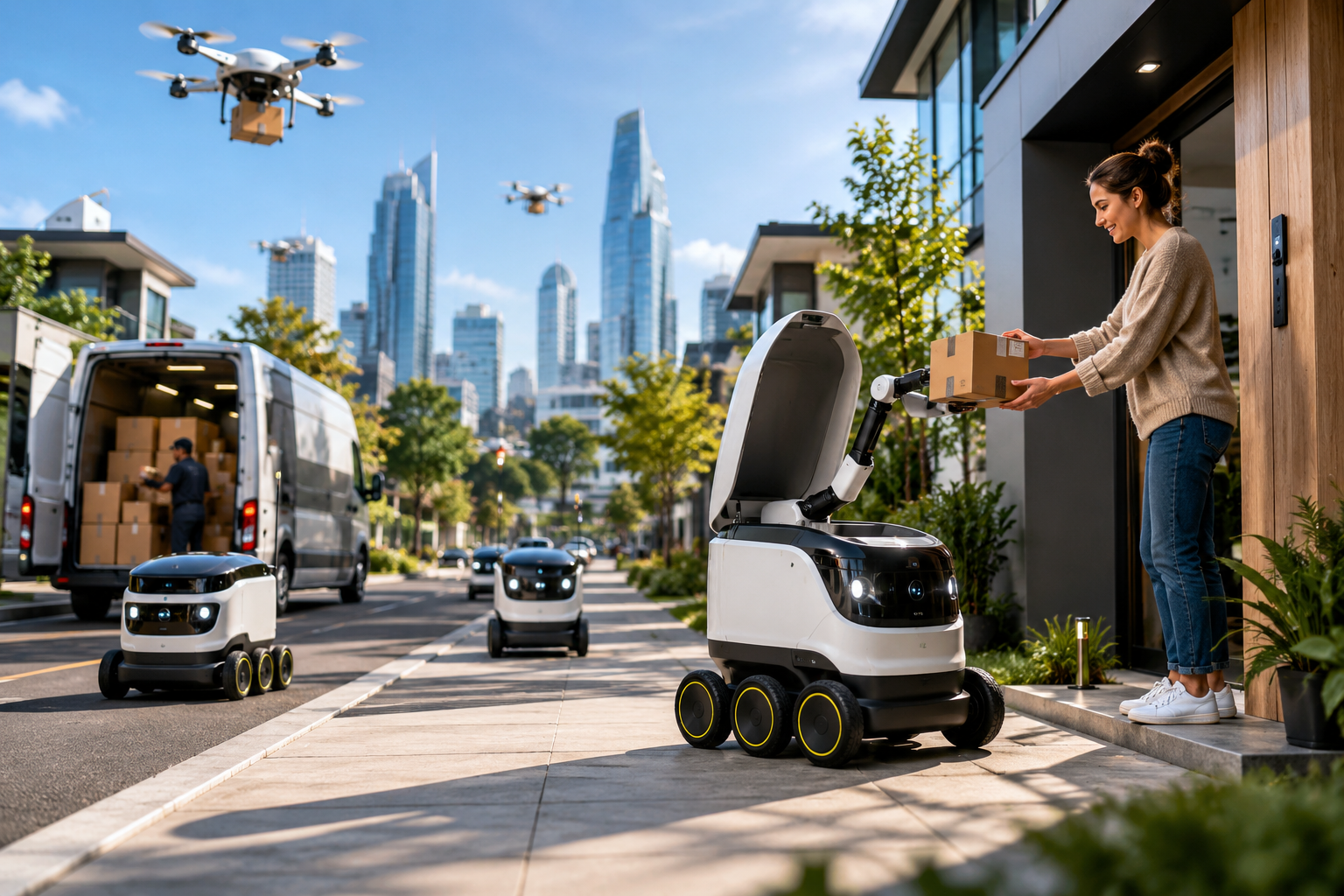
The arrival of automated delivery robots is radically transforming local logistics. These small, self-driving trucks deliver goods from distribution centres right to the consumer’s front door, without human intervention. Traffic congestion, high labour costs, and environmental concerns have made ‘last mile’ delivery the most expensive and inefficient link in the supply chain. To avoid traffic, automated delivery robots can drive on sidewalks and footpaths, thereby resolving these bottlenecks. GPS, cameras, and advanced software enable these machines to navigate safely through complex urban environments. Currently, countless pilot projects and large-scale implementations of automated delivery systems are underway worldwide on university campuses, in suburban areas, and in bustling cities. This fundamental shift prioritises speed, sustainability, and cost-effectiveness in the transport of goods within communities.
The Technology Behind the Robots
Each automated delivery robot is powered by an advanced, perfectly synchronised ecosystem of hardware and software. These devices use LiDAR, ultrasound, and high-definition cameras to create real-time 360-degree panoramic maps of their surroundings. This sensor array helps the robot recognise pedestrians, obstacles, and traffic lights with astonishing accuracy. A built-in computer processes sensor data using powerful machine learning algorithms. These algorithms enable robots to immediately yield to pedestrians, avoid bicycles, or stop at crosswalks. Continuous communication via 4G and 5G networks allows operators to remotely monitor the robot fleet and take manual control in emergency situations when the robots cannot handle the situation. As the AI models receive more training data from real-world situations, the navigation capabilities and reliability of the robots will improve significantly, making the technology safer and more efficient.
Impact on Local Businesses
The introduction of automated delivery robots into the operations of local businesses offers significant benefits. Third-party delivery services can be prohibitively expensive for restaurants, supermarkets, and shops, eroding profit margins. Automated robots can save on the costs of hiring drivers and maintaining delivery vehicles and offer high scalability. Local retailers can increase order volume and market reach by lowering delivery costs and offering more affordable delivery options. Robot delivery guarantees consistent delivery times and prevents driver shortages or traffic jams during rush hour. This reliability strengthens brand image and customer loyalty. In addition to cost savings, green, electric robots align with consumer demand for environmentally friendly business operations, allowing local retailers to project a progressive and sustainable image.
Benefits for the Consumer
Automated delivery robots offer consumers unprecedented convenience and reliability. One of the biggest advantages is delivery speed. Because robots focus on specific areas and are traffic does not affect them, they deliver much faster thanans. Customers can track the progress of their order in real-time, accurate to the minute, via a mobile app. The robots’ cargo compartments remain closed during transport, and only the recipient can open them upon arrival using a unique code or a notification on their smartphone, which enhances security. This prevents package theft and ensures that items arrive undamaged. Retailers often waive or reduce delivery fees, passing the savings on to the consumer. The convenience, safety, and affordability of robot delivery increase customer satisfaction.
Obstacles and Solutions
Despite the potential benefits of autonomous delivery robots, numerous logistical and technological challenges remain. Vandalism and theft pose major problems due to their unsupervised operation in public spaces. Manufacturers are equipping robots with tamper-proof alarms, a more robust chassis, and continuous video streaming to a central control centre. Optical and lidar sensors struggle to navigate in snowstorms or heavy rain. Engineers are improving sensor fusion technology and using thermal imaging to ensure proper robot operation in adverse weather conditions. Unstructured pedestrian environments and unpredictable human behaviour can mislead algorithms. Continuous software updates and deep reinforcement learning help robots predict and respond to unusual movements. The industry is gradually removing obstacles to widespread adoption through iterative design and extensive field testing.
Regulations
The rise of autonomous vehicles on sidewalks and public roads has forced local and national governments to rapidly develop new regulations. Urban planners and policymakers must weigh the economic benefits of modern logistics against public safety and convenience. Pilot projects in various regions have limited the speed of robots to three to four miles per hour, equivalent to brisk walking. Regulations limit the weight of robots and require operators to take out liability insurance. Regulators must ensure that robots do not block wheelchair ramps or pedestrians with disabilities, in accordance with the Americans with Disabilities Act (ADA). Some cities have welcomed the technology, while others have banned its itil safety investigations are completed. As the industry continues to evolve, stakeholders and relevant departments are developing standardised rules to encourage innovation while simultaneously protecting pedestrian rights and safety.
The Future of Last Mile Delivery
The future of last-mile delivery is inextricably linked to autonomous robotics. Thanks to advances in battery technology, we can envision a future of delivery robots with a greater range and payload capacity, used for transporting bulk goods and large supermarket orders. More advanced artificial intelligence will enable robot swarms to communicate with one another, dynamically optimise routes, and distribute tasks during peak hours. In the future, specialised robots may emerge, such as large transport robots for highways in suburban areas and flexible robots capable of climbing stairs in busy residential neighbourhoods. Over time, automated delivery robots, drones, and automated warehouses will form a seamless supply chain. This highly efficient logistics network will significantly reduce CO2 emissions and change consumer expectations regarding product delivery and pricing.
Conclusion
Automated delivery robots are transforming local commerce and urban logistics. This technology helps local businesses improve their profitability and deliver faster, safer, and more economical services by solving the inefinefficiencies’last mile’ delivery. Weather navigation, vandalism in public places, and regulatory compliance remain obstacles, but rapid technological advancements mean these are only temporary. As communities and governments adapt to these smart machines, automated delivery will become the standard in modern infrastructure. This robot revolution is now a strategic necessity for companies that want to remain competitive in an increasingly automated world. The future of local delivery is automation, and it can already be found on your streets.
Frequently Asked Questions
1. What exactly are automated delivery robots?
Automated delivery robots are small, self-driving vehicles that deliver food and groceries from local businesses to consumers along sidewalks and footpaths.
2. How do these robots navigate without hitting pedestrians?
These robots use LiDAR, ultrasonic sensors, high-definition cameras, and machine learning algorithms to map their surroundings in real time. This allows them to recognise obstacles, give way to pedestrians, and safely cross the street.
3. Is the robots’ cargo theft-proof?
The cargo compartments of automated delivery robots are locked during transport and can only be unlocked with a password or a smartphone app upon arrival at the recipient’s location.
4. How fast do delivery robots drive?
Most delivery robots drive at a speed of 5 to 6 kilometres per hour to protect pedestrians and comply with local laws.
5. What happens if the robot gets stuck or malfunctions?
The robot can connect to a remote operator via a mobile network. The operator can view the camera footage and manually assist the robot if it gets stuck.