
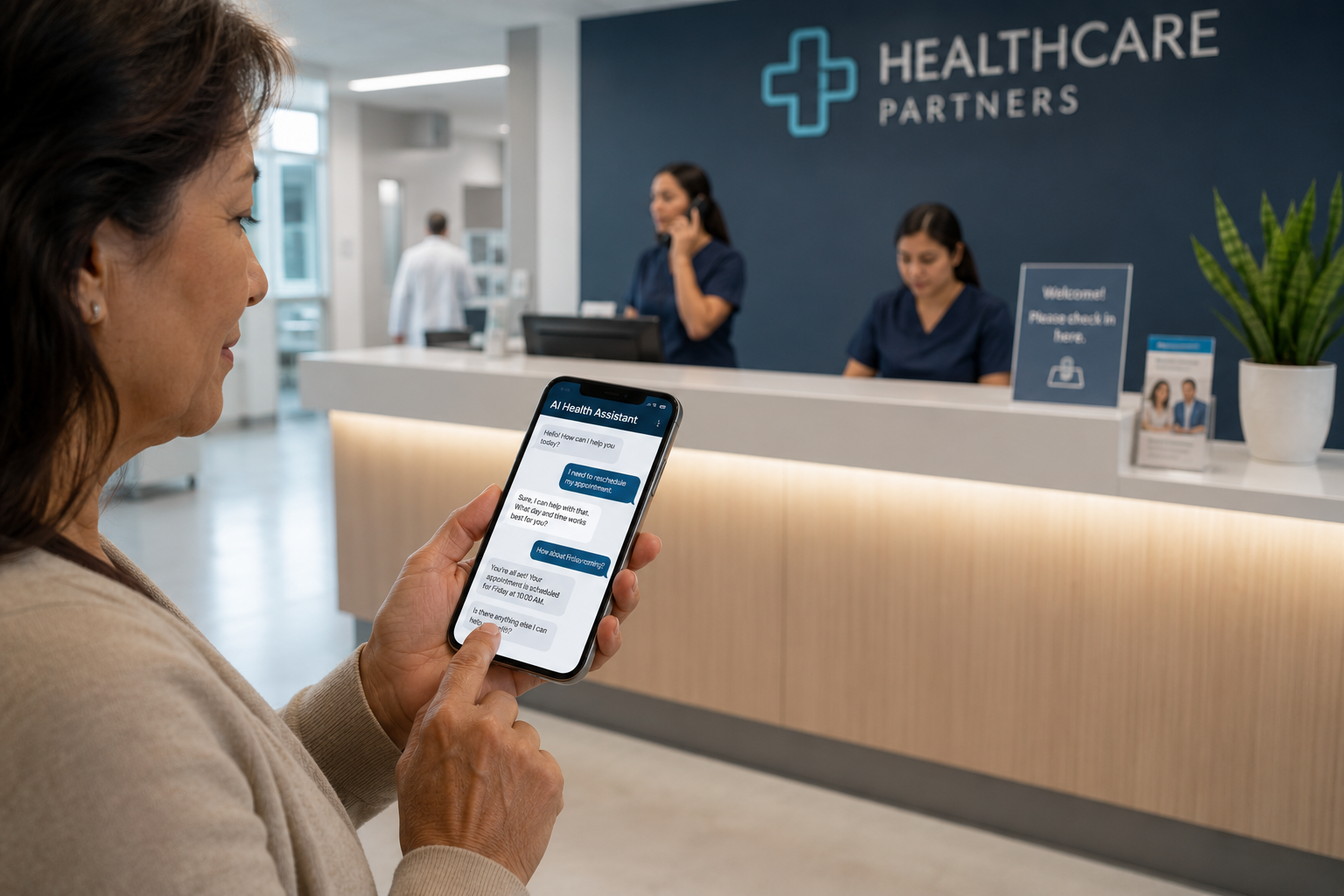
Modern healthcare systems process an enormous amount of communication daily. Patients call clinics to ask questions, confirm appointments, request follow-up appointments, view instructions, or receive updates on ongoing treatments. Smaller healthcare institutions often struggle to handle the constant stream of text messages, phone calls, and appointment requests.
Patients often experience communication delays even before they see healthcare providers, which leads to frustration. Long waiting times on the phone, missing crucial instructions, or problems reaching the right department can make the care process difficult and stressful.
This increasing stress is one of the reasons why healthcare institutions are considering introducing AI chatbots to support communication.
These systems are not intended to replace doctors or nurses; rather, they are aimed at streamlining the management of daily communication so that healthcare providers can focus on direct patient care and more complex situations that require human judgement.
What Role Do AI Chatbots Play in Healthcare?
AI chatbots use computer algorithms to communicate with patients via text or voice conversations. Many systems operate via websites, healthcare apps, patient portals, or instant messaging platforms.
Healthcare professionals typically use these systems for practical communication support, rather than for medical decision-making. Patients can use chat assistants to confirm appointments, enquire about opening hours, locate clinics, receive instructions for preparing for surgery, or check if forms have been successfully submitted.
Other systems can also help patients identify the right department if they do not know who to contact.
The goal is usually to remove communication barriers, rather than to provide medical diagnoses or treatment advice.
Healthcare Staff Often Spend Hours Handling Repetitive Questions:
A more subtle challenge in healthcare administration is that employees answer a large number of repetitive questions daily.
Receptionists and support staff often answer the same types of questions repeatedly, such as appointment confirmations, parking information, questions about insurance, or directions to the clinic.
AI chat systems can alleviate part of the administrative burden by automating routine communication. Thisofferss two important advantages: patients receive faster responses and healthcare staff save time on repetitive manual tasks.
Even a small reduction in workload can have a significant impact on daily operations in busy healthcare facilities.
Patients Increasingly Expect Faster. Digital Communication:
Patient expectations regarding communication have changed drastically over the past ten years.
Nowadays, people expect interactions with healthcare providers to be just as intuitive and effortless as other daily digital services. They want faster appointment confirmations, more flexible scheduling options, and convenient access to information without having to wait for opening hours.
AI-driven chatbots can help healthcare providers meet these expectations.
For example, a patient who needs to check a clinic’s address late at night can choose to use a chatbot instead of waiting until the next morning. Even if the medical services are the same, these small conveniences can improve the overall patient experience.
This technology primarily improves the convenience and responsiveness of daily communication.
Multilingual Communication Is Becoming More Important:
As healthcare providers serve patients with increasingly diverse language backgrounds, limited translation support can lead to communication barriers, resulting in misunderstandings, missed instructions, or scheduling problems.
Some AI-driven chatbots now support multiple languages, allowing patients to communicate in different languages.
Although automatic translation is not perfect, it can help streamline basic interactions such as appointments, reminders, or clinic information.
This accessibility support is becoming increasingly important in large healthcare institutions, where staff may not always be able to communicate in all of patients’ preferred languages.
AI Chat Systems Can Improve Appointment Coordination:
Scheduling appointments is one of the biggest challenges for both patients and healthcare providers.
Missed appointments, unclear instructions, and slow responses can disrupt the operation of clinics and hospitals. AI-based communication systems are increasingly helping to improve efficiency in these situations.
For example, chatbots can automatically send reminders, confirm appointments, assist with rescheduling appointments, or inform patients about changed appointment times.
Some systems can also answer questions about preparing for a visit, allowing patients to prepare necessary documents or complete relevant instructions in advance.
These small improvements in communication often help reduce confusion and make healthcare in general more efficient and better organised.
The Technology Is Also Helping Reduce Phone Congestion:
Many healthcare institutions have overloaded telephone systems.
During busy periods or seasonal peaks in demand for care, patients may experience long waiting times to speak with a staff member. AI-driven chatbots offer alternative communication channels that can alleviate telephone pressure.
Not all patients are willing to call for simple questions. Many patients prefer quick digital interactions, where they receive information immediately without lengthy voice menus and long waiting times.
This does not replace telephone support, but it does enable healthcare organisations to communicate better via multiple channels.
AI Chatbots Typically Have Limited Functionality:
It is important to understand that most AI chatbots in healthcare intentionally have limited functionality.
Many systems are not designed to make medical diagnoses or provide health advice regarding high-risk situations. Instead, they focus on operational communication, administrative support, and general information provision.
If a patient experiences symptoms or has an emergency, the system can refer them to emergency services, a nurse, or a qualified healthcare provider, rather than providing detailed medical advice.
This distinction is crucial, as healthcare providers still rely heavily on human expertise when making clinical decisions.
Some Patients Still Prefer Human Interaction:
Although digital communication tools are convenient, many patients still prefer speaking directly with a staff member.
Healthcare conversations can contain emotionally charged, confusing, or sensitive personal information that automated systems may not process well. The elderly or patients with less technical knowledge may also feel frustrated by overly automated or complex systems.
Therefore, most successful healthcare organisations do not replace their staff with AI-assisted tools but rather combine them with practical, human communication methods.
The best systems make it possible; they do not hinder it.
Privacy and Trust Issues Remain a Concern:
AI chatbots face serious privacy concerns because healthcare communication contains sensitive personal information.
Patients often want to know how we store conversations, what access they have to information, and whether we involve external companies in data processing.
For healthcare institutions, the implementation of AI communication tools requires a balance between efficiency, transparency, and data protection.
Trust is of paramount importance in healthcare. Even the best systems can fail if patients are unwilling to provide information about automated systems.
As technology in healthcare continues to spread, clear privacy rules and secure communication systems are becoming increasingly important.
The Growth of AI Communication Tools is Expected to Continue:
Now that healthcare systems are grappling with persistent staff shortages and increasing patient demand, communication automation is expected to become increasingly common in clinics, hospitals, and healthcare networks.
Although the technology is still relatively new, many healthcare providers already view AI chatbots as operational tools, rather than experimental technologies.
Patients may not even notice the presence of the AI. What they experience are faster response times, simpler appointment scheduling, and easier access to information when needed.
The true value of this technology currently lies primarily in improving daily communication.
Conclusion:
AI chatbots are transforming communication with patients and helping healthcare institutions handle daily interactions more efficiently and respond more quickly to patient needs.
These systems help reduce administrative burdens and improve patient access to care. They include features such as appointment reminders, appointment scheduling assistance, multilingual communication, and support with basic information.
However, they do not replace healthcare professionals or personal care. Their primary goal is to streamline communication processes, enabling clinics and hospitals to operate more efficiently and ensuring healthcare staff remain available for more complex situations.
As healthcare systems continue to evolve, AI-assisted communication tools will likely become an increasingly common part of patients’ daily interactions with healthcare providers.
Frequently Asked Questions
What are AI chatbots in healthcare?
AI chatbots are digital tools that assist healthcare institutions with patient communication, scheduling appointments, sending reminders, and providing general information.
Can AI chatbots diagnose diseases?
Most AI chatbots in healthcare are designed not to make medical diagnoses but to refer patients to qualified healthcare providers where necessary.
How do hospitals use AI chatbots?
In hospitals and clinics, AI chatbots are used to make communication more efficient, reduce administrative workload, and provide quick answers to common patient questions.
Are AI chatbots in healthcare available 24/7?
Many systems are available 24/7, allowing patients access to information and communication support even outside normal office hours.
Do current healthcare professionals still care for patients?
Yes. AI systems are typically used to support healthcare professionals, not to replace them, particularly in sensitive, urgent, or complex situations.

Nathan Hayes is a technology writer at Pimozoogin who covers AI, digital wellness, smart healthcare, and emerging technology trends. He creates simple, informative content that helps readers understand how modern technology is influencing everyday life, productivity, fitness, and connected living.