
Many families hope that their elderly relatives can continue living independently for as long as possible. At the same time, informal carers often worry about safety and potential accidents in daily life (such as falls or subtle changes).
This conflicting need for both independence and assistance drives the increasing use of smart sensor technology in elderly care.
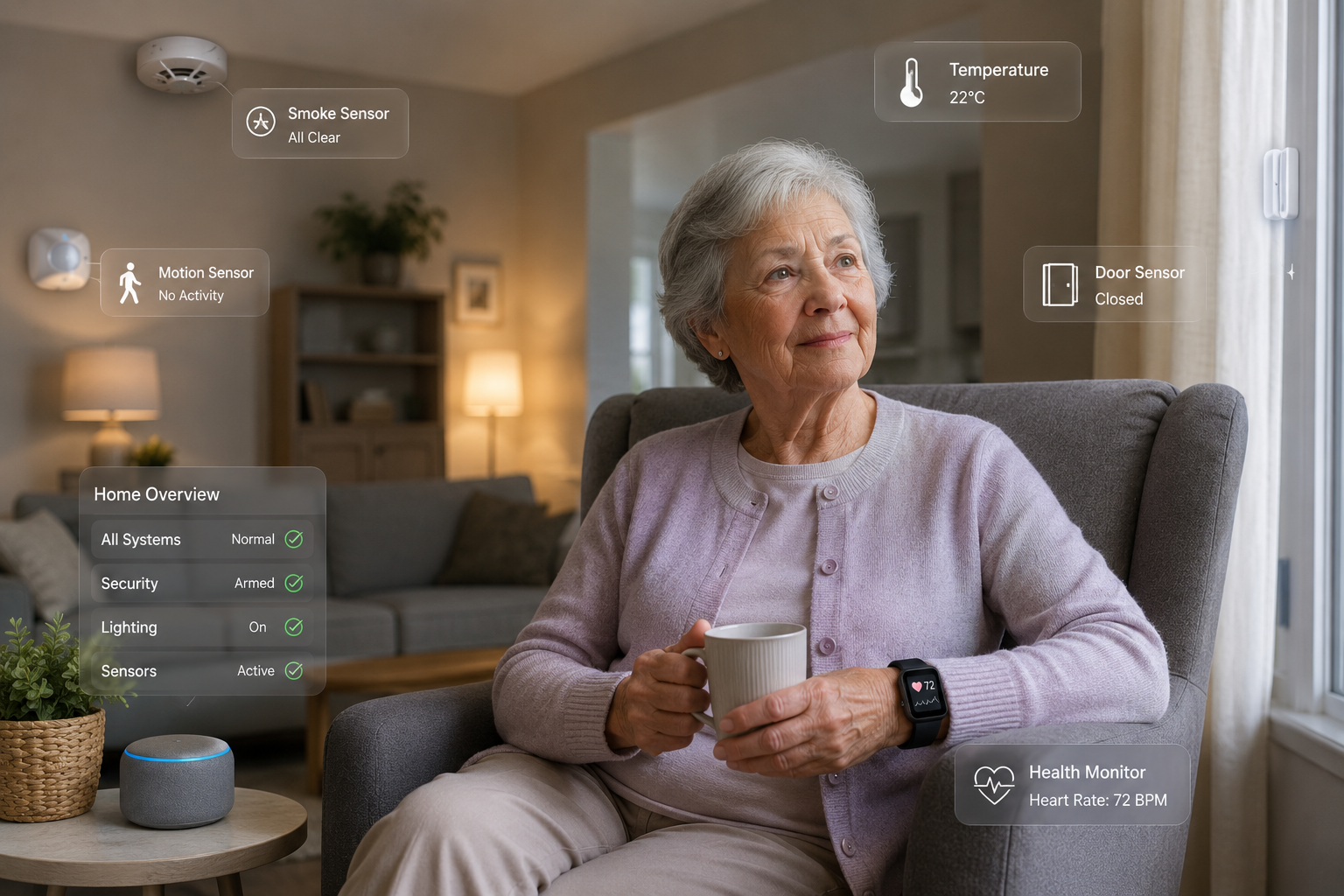
Smart sensors differ from large medical devices or expensive medical equipment. They typically operate silently in the background. Some sensors record activities within the home, while others monitor conditions in a room, daily activity patterns, or unusual periods of inactivity to detect potential problems.
This technology is not intended to replace human care. Its primary role is to help informal carers detect changes earlier and respond more quickly when help is needed.
How Smart Sensors Truly Support Elderly Care:
The word “sensor” may sound complicated, but many smart sensors actually work very simply.
Sensors collect information from the environment and react when conditions change. In elderly care, this manifests primarily in recording daily activities, rather than providing medical services. Here are some examples:
- Motion sensors for detecting activity in and around the home
- Bed sensors for tracking sleep or nighttime activity
- Door sensors for monitoring entry and exit
- Wearable fall detection devices
- Temperature and air quality sensors
- Smart medication reminder systems
- Pressure sensors in chairs or beds
These devices might not be very functional when used individually, but together they provide a more complete picture of a person’s daily activities.
Small Routine Changes Often Matter More Than Emergencies:
An interesting aspect of technology for elderly care is that it often focuses on subtle changes in daily habits rather than major events.
For example, a system might detect that someone who normally wakes up at 7 a.m. has been less active for several days in a row. Another sensor might go to the kitchen less often or detect less activity in the home.
These changes do not necessarily indicate major problems. In this way, they can encourage family members or carers to seek help early, before the situation worsens.
This continuous pattern monitoring is one of the reasons why smart sensors are becoming increasingly popular in elderly care.
Fall Detection Has Become One of the Most Recognised Features:
Many elderly people living alone are very worried about falling.
From wearable devices to floor sensors and motion detection systems, fall detection devices are increasingly being integrated into smart sensor systems. Some technologies can automatically alert carers or emergency contacts when abnormal movement patterns indicate a potential fall.
The reward is usually peace of mind.
When elderly people live alone or are unsupervised for extended periods, family members feel more at ease knowing that a monitoring system is in place.
Of course, not all systems are perfect. False alarms can occur, and sensor technology is not a foolproof safety solution.
Smart Homes Are Quietly Becoming Elderly Care Environments:
Nowadays, many elderly care technologies are integrated into ordinary household appliances, rather than medical or clinical equipment.
Sensitive lighting, voice assistants, automatic temperature control, and smart access control systems can create a safer living environment without turning the home into a hospital.
This subtle integration is crucial. For the elderly, technology feels more natural and less intrusive, making them feel more at ease. A home that discreetly supports daily activities is more welcoming and comfortable than a home full of monitoring equipment.
In fact, the most suitable technology for elderly care is sometimes almost imperceptible.
Sensors Can Reduce Pressure on Carers Too:
Home carers often have to deal with more than just occasional visits. They sometimes worry all day long about whether their parents are taking their medication on time, can move around the house safely, and maintain their usual routines.
Smart sensor systems can alleviate some of this uncertainty.
For example, carers can obtain basic information, such as observing the elderly person’s daily activities. This passive reassurance can replace countless phone calls and give carers peace of mind.
While this does not completely eliminate the emotional burden on carers, it can reduce stress and help them remain calmer during changes.
Practical Insights from Sleep and Activity Monitoring:
Solutions for the elderly are increasingly using non-invasive sensors, such as sensors installed under the bed, in wearable devices, or in the living space, to measure sleep regularity and daily activity patterns.
These systems can detect the following:
- Frequent nighttime activity
- Changes in sleep patterns
- Less walking
- More sedentary time
- Irregular sleep patterns
Again, we are not attempting to make a diagnosis. These systems are simply there to help us identify significant changes that require attention.
In some cases, this can help carers detect problems in the elderly earlier.
Privacy Concerns Are Part of the Conversation:
Some elderly people feel uncomfortable with home monitoring devices.
The reasons for privacy concerns are understandable, especially when systems collect data about our daily behaviour or share updates via apps.
Many families today are opting for sensor systems with minimal data collection instead of continuous video surveillance. Motion sensors, ambient sensors, and wearable alarms are generally less intrusive than cameras installed in the home.
Trust is a crucial factor in the acceptance or rejection of technology for elderly care.
However, generally speaking, a clear explanation of what information is collected and who has access to it is more important than advanced technological gadgets.
Simplicity Often Determines Whether Systems Actually Work:
A common mistake with technology for elderly care is designing it to be too complex.
Ultimately, a system with confusing notifications, cumbersome installation processes, or the need for continuous maintenance may be discarded entirely.
Generally, the best sensor systems are those that can be seamlessly integrated into daily life without requiring constant attention.
In practice, large buttons, automatic updates, clear alarms, and reliable battery life are much more important than futuristic technologies that could disrupt daily activities.
Practical utility is more important than innovation.
Healthcare Providers Are Watching These Trends Closely:
Hospitals, residential care homes, and home care organisations are exploring how they can deploy sensor technology to provide better and more efficient care for the elderly.
This is partly due to demographic shifts. Many countries are grappling with a growing, ageing population, while healthcare and available care capacity are coming under increasing pressure.
Smart sensors are not a miracle cure for these challenges, but they can help the elderly remain independent for longer and improve communication between informal carers, family, and care providers.
This practical support is becoming an important part of modern elderly care planning.
Technology cannot Replace Human Attention:
One thing is clear: despite the rise of smart sensor systems, the elderly still need meaningful interpersonal interaction and personal care.
Technology can monitor reduced activity or a lack of daily activities, but it cannot replace conversation, emotional support, or empathetic care.
The most successful elderly care systems often combine both. Smart sensors provide insight and organisation, while humans offer judgement, empathy, and practical support.
Provided it is used correctly, technoWhen you use technology correctly, it becomes a tool rather than a replacement for care.increasingly important role in modern elderly care. They help family members and carers monitor seniors’ daily activities more frequently and respond quickly to changes.
These devices operate silently in the background and create a safer and more autonomous living environment for many seniors. Features range from motion detection and fall detection to sleep monitoring and home automation.
This technology works best when it is simple to use, user-friendly, and easy to integrate into daily life. Smart sensors cannot replace carers, but they do offer additional insight, giving seniors and their families more confidence.
As the population ages, the application of practical and non-invasive care technologies will likely become an increasingly important component of long-term care systems for the elderly.
Frequently Asked Questions
What are smart sensors for elderly care?
Smart sensors are devices that record the movements, activities, environmental conditions, and daily habits of seniors. They are designed to help seniors live safely and independently.
Can smart sensors prevent medical emergencies?
No single system can prevent all crises. Smart sensors are typically used to detect unusual activity patterns or safety issues more quickly.
Are sensors for elderly care difficult to install?
Many systems are easy to install at home and require virtually no technical knowledge after installation.
Do smart elderly care systems use cameras?
Some systems use cameras, but many families prefer camera-free options such as motion sensors, wearable notification devices, and environmental monitoring devices to better protect their privacy.
Can smart sensors replace carers?
No. These systems are designed to support carers and increase their alertness, not to replace human care or personal contact.

Nathan Hayes is a technology writer at Pimozoogin who covers AI, digital wellness, smart healthcare, and emerging technology trends. He creates simple, informative content that helps readers understand how modern technology is influencing everyday life, productivity, fitness, and connected living.