
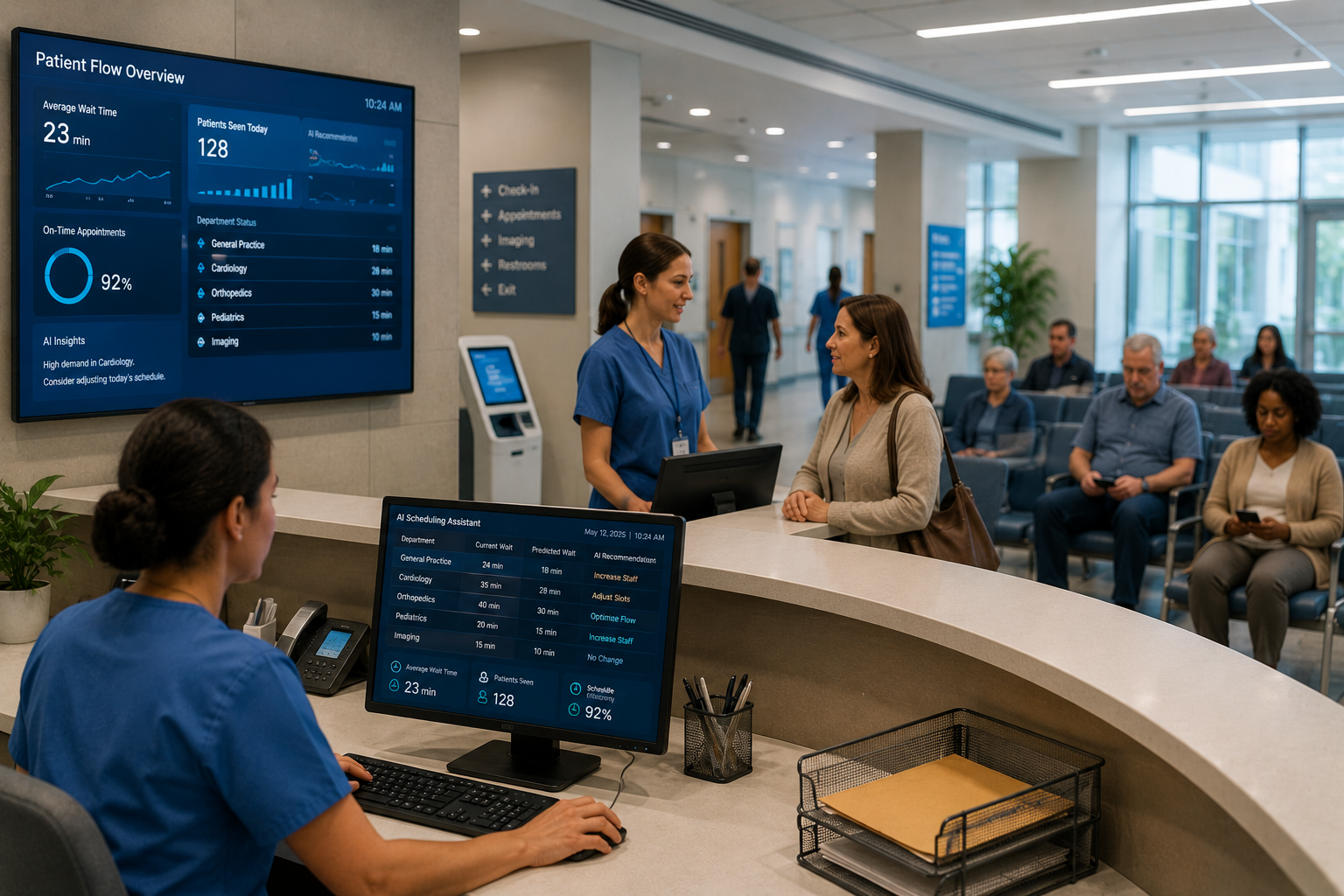
Anyone who has spent hours in a crowded waiting room understands how frustrating healthcare delays can feel. When hospitals become overloaded, patients feel anxious, staff members work under pressure, and schedules quickly fall behind.
What many people do not realise is that delays are often caused by operational problems behind the scenes rather than a lack of effort from healthcare workers. Emergency cases interrupt schedules, paperwork slows processes, rooms become unavailable, and patient demand changes throughout the day.
Hospitals are now turning to artificial intelligence to help manage these complex systems more efficiently. The goal is not to replace doctors or nurses. Instead, AI is being used to organise workflows, predict bottlenecks, and help hospitals respond faster when patient traffic increases.
AI Is Helping Hospitals Manage Patient Flow More Smoothly
One of the biggest causes of long waiting times is uneven patient flow.
Some hospital departments become overloaded while others temporarily sit underused. Traditional scheduling systems often struggle to adjust quickly when unexpected situations happen, especially during busy periods.
AI systems can analyse live hospital data and identify patterns that humans may not notice immediately. For example, software may detect that emergency room admissions typically increase during certain evening hours or that imaging departments become congested after specific clinic appointments.
Instead of reacting after delays occur, hospitals can prepare earlier by adjusting staffing levels, room availability, or appointment spacing.
This creates a smoother experience for both patients and healthcare workers.
Smarter Appointment Scheduling Is Reducing Delays
Scheduling sounds simple until thousands of appointments, cancellations, urgent visits, and specialist referrals are involved at the same time.
Hospitals increasingly use AI-assisted scheduling tools to help manage these moving parts more efficiently.
Predicting No-Shows and Late Arrivals
One practical use of AI involves identifying patterns linked to missed appointments. If a system notices that certain appointment times frequently result in cancellations or no-shows, scheduling teams can adjust accordingly.
This does not guarantee perfect attendance, but it helps reduce unused appointment slots that would otherwise increase delays for other patients.
Better Use of Available Time
Some AI scheduling systems can also estimate how long appointments are likely to take based on historical patterns. A follow-up consultation may require less time than a first-time specialist evaluation, for example.
By spacing appointments more realistically, hospitals reduce the chances of schedules collapsing by midday.
Emergency Departments Benefit From Faster Triage Support
Emergency rooms are among the busiest and most unpredictable parts of any hospital.
Patients arrive with different levels of urgency, and staff must make quick decisions under pressure. AI tools are now helping hospitals organise emergency department workflows more effectively.
In some hospitals, AI systems assist by analysing incoming patient information and identifying cases that may require immediate attention based on symptoms, vital signs, or medical history patterns.
These systems do not replace medical judgement. Doctors and nurses still make clinical decisions. The technology simply helps staff prioritise faster when waiting rooms become crowded.
That support can improve response times during high-volume periods.
Administrative Tasks Often Create Hidden Delays
Patients usually notice delays at reception desks, during registration, or while waiting for test results. Behind the scenes, administrative workloads consume enormous amounts of staff time every day.
Hospitals are using AI to reduce repetitive administrative work, such as the following:
- Processing forms
- Managing appointment confirmations
- Organizing patient records
- Routing lab results
- Handling insurance-related workflows
- Updating scheduling systems
When staff spend less time on repetitive tasks, they can focus more attention on patient communication and care coordination.
In many hospitals, small improvements in administration create noticeable improvements in waiting times overall.
Predictive Analytics Helps Hospitals Prepare Earlier
One reason hospital delays escalate quickly is that healthcare systems often react after congestion has already formed.
AI-powered predictive analytics changes that approach.
Instead of only tracking what is happening now, hospitals can estimate future demand based on historical trends, seasonal illnesses, staffing patterns, weather conditions, and local events.
For example, hospitals may anticipate increased emergency visits during extreme heat, flu season, or public holidays. Early preparation allows managers to adjust schedules, open additional treatment spaces, or coordinate staffing more effectively.
This proactive planning reduces operational strain before waiting rooms become overwhelmed.
Patients Notice Small Improvements More Than Technology
Interestingly, most patients never see the AI systems hospitals use behind the scenes.
What they notice instead are practical improvements:
- Shorter check-in lines
- Faster appointment updates
- More accurate wait estimates
- Quicker room assignments
- Better communication during delays
A hospital does not need futuristic robots to improve patient experience. In many cases, better organisation creates the biggest difference.
Even reducing uncertainty can help patients feel less stressed while waiting.
AI Cannot Solve Every Hospital Problem
Despite growing interest in healthcare AI, hospitals still face challenges that technology alone cannot fix.
Staff shortages, limited funding, ageing infrastructure, and sudden medical emergencies continue to affect waiting times in many regions.
AI systems also depend heavily on accurate data. Poor record management or disconnected hospital systems can limit how effective these tools become.
There are also important discussions around privacy, transparency, and fairness in automated healthcare systems. Hospitals must carefully monitor the use of AI tools and ensure that human oversight remains central.
Most healthcare professionals view AI as a support tool rather than a replacement for experienced staff.
Smaller Hospitals Are Beginning to Explore AI Too
Large medical centres were among the first to invest in AI operations tools, but smaller hospitals and clinics are increasingly exploring simpler versions of the same technology.
Cloud-based scheduling systems, automated patient messaging, and workflow management platforms are becoming more accessible and affordable.
This matters because major urban hospitals are not the only ones with waiting time problems. Community clinics and regional healthcare centres also deal with scheduling pressure and resource limitations.
As healthcare technology becomes easier to implement, more facilities may adopt practical AI tools focused on efficiency rather than complexity.
The Human Side of Faster Healthcare
Reducing waiting times is not only about efficiency metrics.
Long delays can increase stress for patients already dealing with pain, uncertainty, or anxiety. Healthcare workers also experience pressure when systems become overcrowded and schedules fall behind.
When hospitals improve operational flow, the environment often feels calmer and more manageable for everyone involved.
That human impact is one reason healthcare administrators continue investing in AI-supported systems. Better organisation can improve the overall experience without changing the core relationship between patients and medical professionals.
Conclusion
AI is helping hospitals cut down on patient wait times because modern healthcare systems are too complicated to manage well with just manual coordination.
From smarter scheduling and emergency room support to predictive planning and administrative automation, AI is helping hospitals improve how patients move through healthcare environments.
The technology is not replacing doctors, nurses, or hospital staff. Instead, it is helping them manage time, resources, and patient demand more effectively.
For patients, the benefits are often simple but meaningful: less waiting, clearer communication, and a smoother healthcare experience during moments that are already stressful enough.
FAQ Section
How does AI reduce patient waiting times in hospitals?
AI helps hospitals improve scheduling, manage patient flow, automate administrative tasks, and predict busy periods before delays become severe.
Does AI replace doctors or nurses in hospitals?
No. AI is mainly used as a support tool for operational efficiency and workflow management. Medical professionals still make patient care decisions.
Can smaller hospitals use AI systems too?
Yes. Many smaller hospitals and clinics now use affordable scheduling software, automated reminders, and workflow tools powered by AI technology.
What makes hospital waiting times difficult to manage?
Hospitals deal with unpredictable emergencies, changing patient demand, staffing challenges, and complex scheduling systems that can create delays throughout the day.
Is healthcare AI only used in emergency rooms?
No. Hospitals also use AI in appointment scheduling, administration, patient communication, lab coordination, and resource planning.