When you begin managing your finances seriously, one question often creates confusion. Should you build an emergency fund first or get insurance first
Both are important. Both protect you from unexpected financial problems. But if your income is limited, you may not be able to focus on both at the same time
This is where making the right decision becomes important
Some people focus only on saving and ignore insurance. Others buy insurance but have no savings. In both situations, financial protection remains incomplete
This guide will help you understand both options clearly and decide what to start first based on your real situation
Table of Contents
ToggleWhat Is an Emergency Fund and Why Does It Matter
An emergency fund is money that you keep aside for unexpected situations
These are expenses that you cannot plan in advance
Examples include
- Medical emergencies
- Sudden job loss
- Urgent home repairs
- Vehicle breakdown
- Family emergencies
This money should always be easy to access and used only when necessary
If you are starting from zero, you can learn practical ways to begin, from how to build a saving habit when you have no extra money
How Much Emergency Fund Do You Need
You do not need a large amount at the beginning
You can build your fund in stages
A simple structure can be
A starter fund that covers basic needs
A small safety fund for slightly bigger expenses
A strong fund that covers several months of living costs
If you are unsure about the right amount, you can refer to how much emergency fund you really need for financial security
What Insurance Does and Why It Is Important
Insurance works differently from savings
Instead of keeping money aside, you pay a fixed amount regularly. In return, the insurance company helps cover large financial losses
Common types of insurance include
- Health insurance
- Life insurance
- Vehicle insurance
- Home insurance
To understand how policies work in detail, you can explore complete guide to understanding insurance terms and coverage
How Insurance Protects Your Finances
Insurance is designed to handle big financial risks
For example,
A major medical treatment can cost more than your savings
A serious accident can lead to expensive repairs
Property damage can create a large financial burden
Insurance helps reduce these risks so that one event does not destroy your financial stability
Emergency Fund vs. Insurance: The Key Difference
Understanding the difference makes decision-making easier
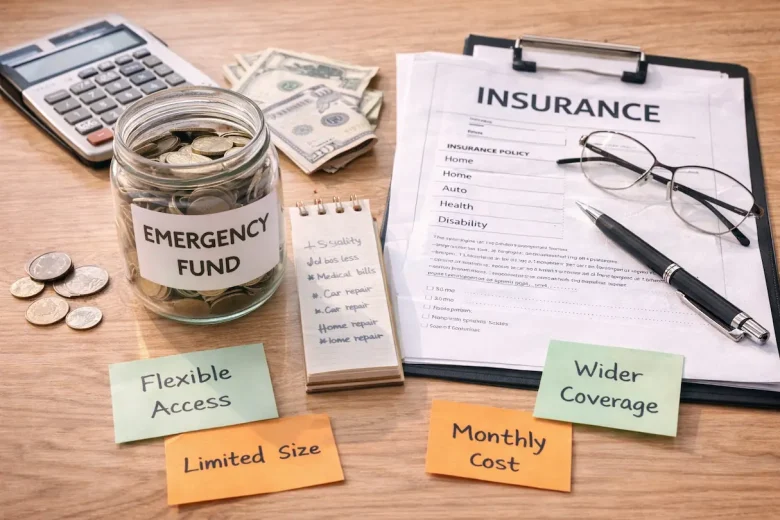
An emergency fund helps you handle small and medium unexpected expenses quickly
Insurance helps you manage large and unpredictable financial risks
An emergency fund gives you immediate access to money
Insurance requires a process, but covers bigger losses
Both are necessary, but they serve different roles
Why Choosing the Right Starting Point Is Important
If you delay this decision or choose incorrectly, it can lead to financial problems
You may end up
Using credit for emergencies
Taking loans frequently
Facing stress during unexpected situations
Struggling to recover financially
To avoid such situations, you need a structured approach. You can improve your planning habits by following weekly money planning routine for better financial control
When You Should Start With an Emergency Fund First
In many cases, building an emergency fund should be your first step
You have no savings at all
Without any savings, even a small expense can disrupt your life
Your income is not stable
If your income changes every month, you need a financial buffer
You depend fully on your monthly earnings
Missing one paycheck can create serious problems
Practical Example
Imagine your monthly expenses are limited, and suddenly you face an urgent medical cost
If you do not have savings, you may need to borrow money
If you have an emergency fund, you can handle it easily
This shows how important it is to start saving early
When Insurance Should Come First
There are situations where insurance should be your priority
You have dependents
If your family depends on your income, financial protection becomes necessary
You are exposed to health risks
Medical expenses can be very high without coverage
You can understand the basics through health insurance basics protect your wellbeing
You own important assets
If you own a house or a vehicle, protecting them is important
Practical Example
Consider a situation where a hospital bill is very high
An emergency fund may not be enough to cover the full cost
Insurance can reduce the burden significantly
This highlights the importance of insurance in major situations
The Smart Approach That Works in Real Life
Instead of choosing one and ignoring the other, you should follow a balanced strategy
Step One: Start With a Small Emergency Fund
Begin with a simple goal
Save a small amount that can handle basic emergencies
Even a small start can make a big difference
If you need help saving, you can learn from saving money on low income realistic tips that work
Step Two: Add Basic Insurance
Once you have a small safety fund, move towards basic insurance
Health insurance is usually the priority
Other types depend on your personal situation
Step Three: Grow Your Emergency Fund
After setting up insurance, continue building your savings
Increase your fund gradually to cover more months of expenses
Common Mistakes to Avoid
Avoiding mistakes is just as important as taking the right steps
Relying only on insurance
Insurance does not help with small daily emergencies
Saving without insurance
A major event can wipe out your savings completely
Ignoring financial planning
Without a system, it becomes difficult to stay consistent
You can improve your discipline by following simple methods to maintain long term financial discipline
How to Decide Based on Your Situation
Your decision should depend on your current condition
Ask yourself
Do I have any savings right now
Can I handle an emergency without borrowing
What is my biggest financial risk
Simple Decision Guide
If you have no savings, start with an emergency fund
If your main concern is medical or family protection, consider insurance first
If possible, build a small emergency fund and then add insurance
Building Long-Term Financial Stability
Financial stability is not achieved overnight
It is built through consistent actions
You start small
You improve gradually
You stay disciplined
To strengthen your financial base, you can explore the strategy i use to maintain long term financial stability
Final Thoughts
Emergency funds and insurance are both essential parts of a strong financial system
An emergency fund helps you manage immediate problems
Insurance protects you from large financial risks
Focusing on only one creates gaps in your financial protection
A balanced approach helps you stay prepared for both small and large challenges
Simple Takeaway
Start with a small emergency fund if you have no savings
Add basic insurance as soon as possible
Continue building both over time
This approach gives you better control, less stress, and stronger financial security

Aiden Lewis runs pimozoogin.com, where he provides practical and understandable financial tips. He writes articles about Everyday Finance, Financial Stability Tips, Insurance Basics, and Money Habits, with the goal of helping people gain more confidence in managing their finances. He designs his content to enhance financial literacy, foster informed decision-making, and simplify financial matters for everyone. The information provided is for educational and informational purposes only.