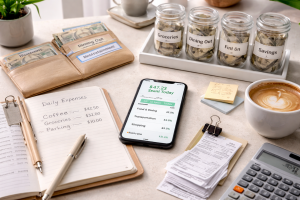
Controlling daily spending is one of the greatest challenges in personal finance. Most people do not overspend because of large purchases. Instead, small, frequent expenses gradually reduce their ability to save.
The problem is not a lack of knowledge. It is a lack of daily control.
Many people set budgets and financial goals, but they do not build habits that support those goals every day. Without daily awareness, even the best financial plans fail.
This guide focuses on practical daily habits that help you control spending and increase your savings without making your lifestyle feel restricted.
Why Daily Spending Gets Out of Control
Before building better habits, it is important to understand the root cause.
Daily spending often goes out of control because:
- Small expenses feel insignificant
- Spending decisions are made quickly
- There is no daily tracking system
- Emotions influence purchasing behavior
These factors combine to create a pattern of unnoticed overspending.
To understand this behavior better, you can explore understanding the psychology of spending and how to control it.
The Daily Spending Control System
Instead of relying on willpower, you need a simple system that guides your actions.
This system is built around small habits that are easy to follow and repeat.
Habit One: Start Your Day With Spending Awareness
Most people start their day without thinking about money.
This leads to unplanned spending.
Set a Daily Spending Intention
At the beginning of the day, take a moment to think about your spending.
Ask yourself:
- What expenses are necessary today
- Where can I avoid unnecessary spending
This simple step raises awareness before spending happens.
Habit Two: Track Every Expense Immediately
One of the most effective habits is real-time tracking.
Do Not Delay Tracking
Write down your expenses as soon as they happen.
This prevents forgetting and keeps your data accurate.
You can use a simple method explained in complete guide to tracking daily expenses for better money management.
Why Immediate Tracking Works
When you track instantly, you become more mindful of your spending decisions.
This reduces unnecessary purchases.
Habit Three: Use a Daily Spending Limit
Instead of managing your entire monthly budget at once, break it into daily limits.
How to Set a Daily Limit
Divide your flexible spending amount by the number of days in the month.
This gives you a clear daily boundary.
Benefits of Daily Limits
- Easier to manage
- Prevents overspending early in the month
- Creates consistent control
If you want to strengthen this system, apply how to stop overspending: a practical daily control system.
Habit Four: Delay Non-Essential Purchases
Impulse buying is a major cause of overspending.
Apply the Pause Rule
Before making a non-essential purchase, wait for some time.
This could be:
- A few hours
- One full day
This pause helps you decide more rationally.
Why This Habit Works
Most impulse purchases lose their appeal after a short delay.
This technique reduces unnecessary spending.
Habit Five: Review Your Spending at the End of the Day
Daily review is essential for improvement.
Ask Simple Questions
At the end of the day, review your expenses.
Ask:
- Did I stay within my limit
- Where did I overspend
- What can I improve tomorrow
This habit creates continuous improvement.
Build a Consistent Routine
This process takes only a few minutes but has a strong impact.
You can combine this with strategies from simple methods to maintain long term financial discipline.
Habit Six: Reduce Small Repeated Expenses
Small daily expenses often go unnoticed.
Identify Your Spending Patterns
Look for:
- Frequent small purchases
- Daily habits that cost money
- Unnecessary add-ons
Reducing these can significantly increase your savings.
Replace Instead of Removing
Instead of cutting everything, find alternatives.
For example:
- Replace expensive habits with affordable ones
- Limit frequency instead of eliminating
Habit Seven: Build Emotional Control Around Money
Emotions play a major role in spending behavior.
Recognize Triggers
Common triggers include:
- Stress
- Boredom
- Social pressure
Understanding these triggers helps you control them.
Develop Awareness
When you feel the urge to spend, pause and reflect.
Habit Eight: Save Small Amounts Daily
Saving does not need to be large to be effective.
Make Saving a Daily Action
Set aside a small amount every day.
This builds consistency and discipline.
Why Daily Saving Works
It creates a habit and reinforces positive financial behavior.
If you are starting small, refer to saving money on low income realistic tips that work.
Real Life Example
Consider someone who struggles with daily spending.
They often make small purchases without thinking and fail to save.
After applying these habits, they start tracking expenses, setting daily limits, and reviewing their spending.
They also delay non-essential purchases and reduce small expenses.
Within a few weeks, they notice better control and increased savings.
This example shows how small habits can create significant change.
Common Mistakes to Avoid
Relying only on motivation instead of building habits can lead to inconsistency.
Tracking expenses irregularly reduces awareness.
Setting unrealistic limits can cause frustration.
Ignoring small expenses can affect overall results.
Avoiding these mistakes improves your system.
How to Turn These Habits Into a Long-Term System
Start with two or three habits instead of trying everything at once.
Focus on consistency rather than perfection.
Gradually add more habits as you become comfortable.
Track your progress and make adjustments.
Signs That Your Spending Is Under Control
You will notice:
- Increased awareness of spending
- Fewer unnecessary purchases
- Better budget control
- Improved savings
These are indicators that your system is working.
Why Daily Habits Are More Effective Than Monthly Plans
Monthly budgets are important, but they are not enough.
Daily habits ensure that your plan is followed consistently.
They create real-time control over your finances.
Frequently Asked Questions
How can I control daily spending easily?
Start by tracking your expenses and setting a daily limit. These two habits create immediate awareness and control.
What is the best habit for saving money?
Saving a small amount daily and reviewing your spending regularly are the most effective habits.
Do I need to track every expense?
Yes. Tracking every expense improves accuracy and helps you understand your spending behavior.
How long does it take to build these habits?
You can start seeing improvements within a few weeks if you stay consistent.
Can I still enjoy my lifestyle while controlling spending?
Yes. The goal is to optimize your spending, not eliminate comfort.
Final Thoughts
Controlling daily spending is not about restriction. It is about awareness, consistency, and smart decision-making.
By building simple daily habits, you can take control of your finances, reduce unnecessary expenses, and increase your savings.
Start small, stay consistent, and focus on gradual improvement.

Aiden Lewis runs pimozoogin.com, where he provides practical and understandable financial tips. He writes articles about Everyday Finance, Financial Stability Tips, Insurance Basics, and Money Habits, with the goal of helping people gain more confidence in managing their finances. He designs his content to enhance financial literacy, foster informed decision-making, and simplify financial matters for everyone. The information provided is for educational and informational purposes only.