
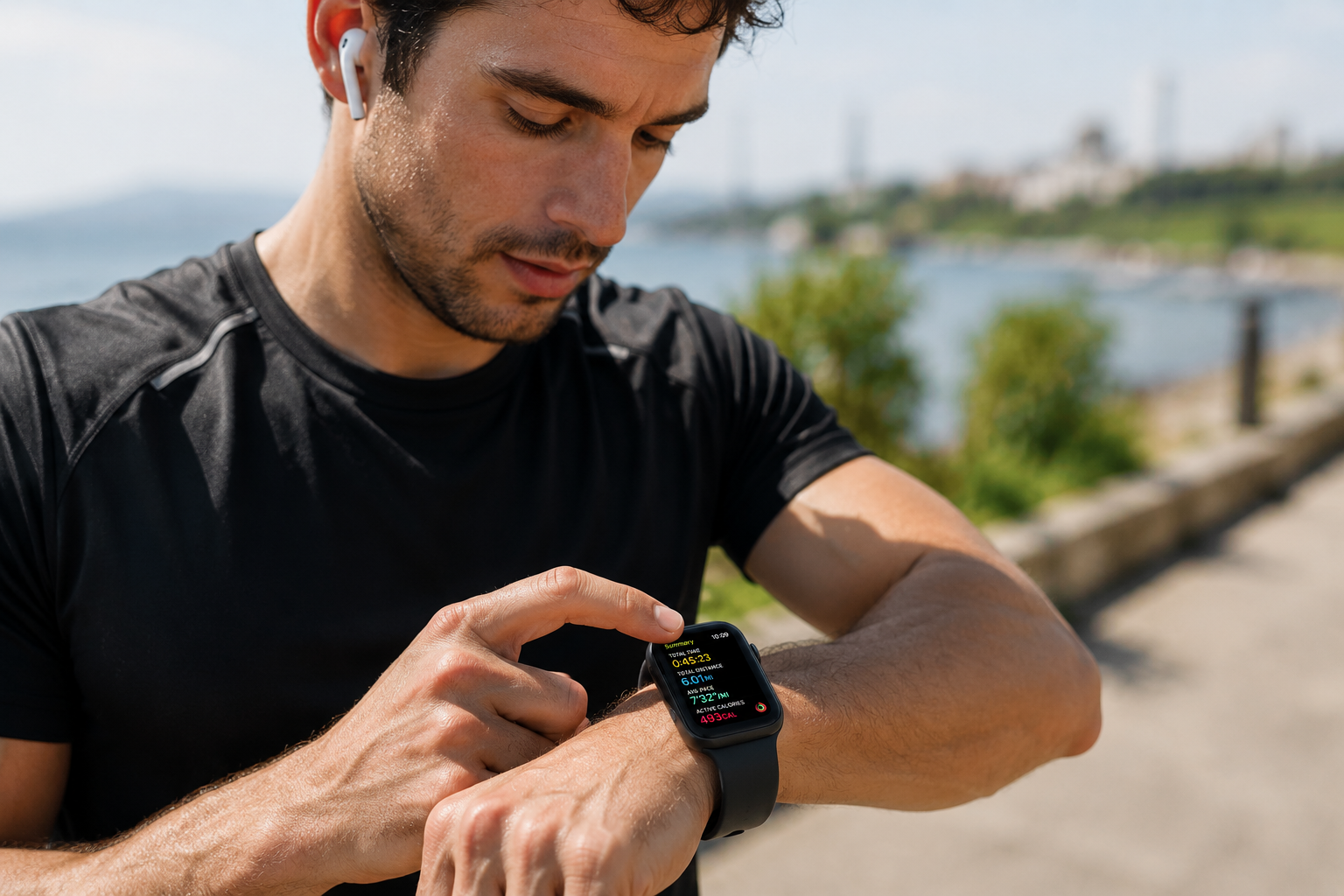
About two years ago, I finally stopped guessing whether my morning jog was actually doing anything useful. I had been running the same loop for months, feeling roughly the same level of tired each time, but I had no real data to tell me if my heart was working harder, if my pace was improving, or if I was just wearing myself out for no reason. Then I strapped on a basic fitness tracker. The difference was immediate and, honestly, somewhat embarrassing—turns out I had been running way too fast on my “easy” days and not nearly hard enough on the days I thought I was pushing it.
That experience is not unique. Walk into any gym in 2026 and you will notice wrists glowing with small screens. It’s not just tech enthusiasts anymore who are using them. Regular people—people who barely knew what a VO2 max was five years ago—are now checking their recovery scores before deciding whether to deadlift or take a rest day. Smartwatches have quietly shifted from luxury gadgets to genuine workout companions, and the reasons go far deeper than step counting.
The Shift From “Nice to Have” to “Actually Useful”
For a long time, fitness trackers felt like expensive pedometers. They told you how many steps you took and maybe estimated some calories, but serious athletes mostly ignored them. That changed when the sensors got better. Modern smartwatches now use optical heart rate monitors, accelerometers, gyroscopes, and even skin temperature sensors to build a surprisingly complete picture of what your body is doing during exercise.
According to recent testing by certified personal trainers, devices like the Garmin Venu 3 and Fitbit Charge 6 now track heart rate with accuracy that rivals dedicated chest straps during high-intensity workouts. One tester noted that when her heart rate jumped from 160 BPM mid-set down to 120 BPM during rest, the Charge 6 kept pace with a Polar H10 control device through the entire window. That level of precision matters because heart rate data drives nearly every other metric—calorie burn, training intensity, and recovery recommendations. If the heart rate is wrong, everything else is useless.
Quick Reality Check: No wrist-based sensor will ever be 100% identical to a chest strap, especially during explosive movements like burpees or heavy lifting where the watch shifts on your wrist. But for steady-state cardio, jogging, cycling, and even controlled strength training, the gap has narrowed dramatically in the past two years.
What Modern Smartwatches Actually Track During Workouts
It is worth breaking down what these devices are capable of now, because the list has grown well beyond steps and heart rate. Here is what a decent smartwatch in 2026 will monitor during a typical training session:
| Metric | What It Tells You | Why It Matters |
|---|---|---|
| Heart Rate Zones | Time spent in fat-burning, cardio, or peak zones | Prevents undertraining and overtraining; helps target specific fitness goals |
| GPS Pace & Distance | Real-time speed and route mapping | Essential for runners and cyclists who train by pace rather than feel |
| VO2 Max Estimation | Aerobic fitness level based on workout data | Tracks cardiovascular improvement over months |
| Training Load & Recovery | Cumulative stress on your body vs. readiness to perform | Reduces injury risk by flagging when you need rest |
| Automatic Rep Counting | Detects sets and reps during strength training | Removes the mental burden of logging gym sessions manually |
| Blood Oxygen (SpO2) | Oxygen saturation during and after exercise | Useful for altitude training and spotting potential health issues |
Some watches, like the Garmin Forerunner 970, go even further. They offer physiological metrics such as sleep tracking, Body Battery energy monitoring, and a readiness indicator that assesses how prepared you are for the day ahead. For someone training for a marathon or triathlon, that kind of integrated data is genuinely valuable. You are not just tracking a workout; you are managing a training cycle.
Why Gym-Goers Specifically Are Adopting Them
Runners and cyclists were the early adopters. GPS made smartwatches an obvious fit for outdoor sports. But the gym crowd was slower to come around. Lifting weights does not produce the same clean data stream as a five-mile run. Your heart rate spikes and drops erratically. You stop and start. You use different muscle groups. Early trackers struggled with this.
That has changed. The WHOOP 5.0, for example, has become a favorite among weightlifters and CrossFit athletes because it focuses on strain and recovery rather than just counting reps. It measures how much stress your body accumulates during a session and tells you whether you should push hard the next day or back off. It does not even have a screen—you check your data afterward—which some lifters prefer because it keeps them focused on the barbell, not their wrist.
Meanwhile, watches like the Apple Watch Series 11 and Samsung Galaxy Watch Ultra have added automatic workout detection. Forget to start a session? The watch notices your elevated heart rate and movement patterns and begins logging anyway. For people who treat the gym as a habit rather than a science experiment, that convenience removes friction. You do not need to remember to press a button. You just work out, and the data is there when you want it.
Gym-Specific Tip: If you lift heavy, consider a watch with a raised bezel or sapphire glass. I have scratched two watch faces on barbell knurling. The Samsung Galaxy Watch Ultra and Huawei Watch Fit 4 Pro both use tougher materials designed for exactly this kind of abuse.
The Data Is Only Half the Story
Here is the part that does not get enough attention: smartwatches have gotten better at telling you what the numbers mean. Raw data is useless if you do not know how to interpret it. Early fitness trackers dumped spreadsheets of numbers on you and expected you to figure it out.
Now, platforms like Garmin Connect, Fitbit Premium, and even Apple’s Fitness app translate your metrics into plain language. They will tell you that your heart rate variability is lower than usual, which might mean you are under-recovered. They will flag that your resting heart rate has trended upward for three days, suggesting you might be getting sick. They will notice that your VO2 max has plateaued and suggest adding interval training.
This coaching layer is where the real value sits. A watch that tells you your heart rate is 140 BPM is a thermometer. A watch that tells you to slow down because your recovery score is low and you have a hard session planned tomorrow is a coach. The gap between those two things is enormous.
Battery Life and Practical Realities
One honest complaint that kept people away from smartwatches was battery life. If you have to charge your watch every night, you miss sleep tracking. If it dies mid-run, you lose your data. The good news is that this has improved significantly, though it still varies wildly by brand.
The Garmin Forerunner 970 lasts roughly 15 days in smartwatch mode. The WHOOP 5.0 goes up to 14 days and allows on-wrist charging, meaning you never have to take it off. On the other end, the Apple Watch Series 11 and Pixel Watch 4 still require daily charging for heavy users, though fast-charging features have reduced the pain. The Apple Watch SE 3, for instance, gives you about 8 hours of use from a 15-minute charge.
My practical advice: if you are buying a watch primarily for workout tracking, prioritize battery life over smart features. You do not need to reply to texts from your wrist. You need the watch to survive a weekend hiking trip or a week of twice-daily gym sessions without dying.
What “All-Day Battery” Actually Means: Manufacturers love to quote multi-day battery life, but that usually assumes minimal GPS use and no always-on display. If you run with GPS and music for an hour daily, expect to cut those numbers in half. Always check real-world testing reviews before buying.
Accuracy vs. Consistency: What Actually Matters
Purists will argue that wrist-based heart rate monitoring will never match a chest strap. They are technically correct. But for most people, consistency matters more than absolute accuracy. If your watch reads 5 BPM high every single workout, your trends are still valid. You can still see whether your easy-run heart rate is dropping over time. You can still compare today’s effort to last month’s.
The danger comes from devices that are erratic—accurate one day, wildly off the next. That is why the testing methodology matters. When reviewers compare smartwatches against a Polar H10 chest strap across multiple workout types, they are not just checking a number. They are checking whether the device is trustworthy enough to build a training plan around.
In current testing, the Garmin Venu 3 and Fitbit Charge 6 have emerged as the most consistent performers across varied workout intensities. Budget options like the Xiaomi Smart Band 8, by contrast, have shown inconsistent tracking that makes trend analysis unreliable. If you are serious about using data to guide your fitness, it is worth spending a bit more for a device that does not lie to you randomly.
Who Should Actually Buy One?
Not everyone needs a smartwatch. If you go to the gym twice a week, do the same three machines, and are perfectly happy with that routine, a $300 wearable is probably overkill. But if you fall into any of the following categories, the investment starts making sense:
- You train with specific goals—running a 10K, building muscle, losing weight—and want objective feedback on whether your plan is working
- You have a tendency to overtrain or ignore rest days, and need an external signal to back off
- You are working with a coach or physical therapist who wants to see your heart rate data and recovery metrics
- You simply enjoy the motivation of seeing numbers improve; gamification works for you
- You are managing a health condition where monitoring heart rate, blood oxygen, or irregular rhythms provides peace of mind
The last point is worth emphasizing. The Apple Watch Series 11 now includes FDA-cleared hypertension notifications and ECG capability. The Pixel Watch 4 offers passive atrial fibrillation detection. These are not fitness gimmicks; they are health monitoring tools that happen to live on a device you wear during workouts.
The Honest Downsides Nobody Talks About
Before you buy, there are a few realities to accept. First, subscription fatigue is real. WHOOP requires a monthly fee for full data access. Fitbit Premium locks some of the most useful insights behind a paywall. Even Garmin, which historically avoided subscriptions, has started offering premium coaching features for a fee. The hardware is just the entry ticket.
Second, more data does not automatically mean better results. I know people who spend twenty minutes analyzing their sleep scores before getting out of bed and then adjust their entire day based on a “Body Battery” percentage. That is not healthy. The watch should inform your decisions, not make them for you. If you find yourself obsessing over metrics, you might be better off with a simpler device or no device at all.
Third, gym tracking for strength training is still imperfect. Automatic rep counting works reasonably well for basic movements like bicep curls or squats, but it struggles with compound lifts, cable machines, and anything involving irregular movement patterns. You will likely still need to manually edit your workouts in the app.
Warning: Do not let a recovery score become an excuse. I have seen people skip perfectly good workouts because their watch said they were at 45% readiness, even though they felt fine. Your subjective feeling still matters. Use the data as one input among many, not as a dictator.
Final Thoughts
Smartwatches have earned their place in the gym bag. They are no longer novelty items for tech bros; they are legitimate training tools that provide feedback most people simply cannot get on their own. Heart rate zones, recovery scores, VO2 max trends, and sleep quality metrics give you an objective lens on your fitness that removes guesswork.
But they are still tools, not magic. The best smartwatch in the world will not lift the weight for you, will not force you out of bed for a run, and will not fix a bad diet. What it will do is show you, with surprising clarity, whether the work you are putting in is actually moving the needle. For most people, that clarity alone is worth the price of admission.
About This Article: This piece was put together to help everyday gym-goers and fitness enthusiasts make sense of the wearable tech landscape in 2026. I have no affiliation with any of the brands mentioned, and recommendations are based on publicly available testing data and user reports from certified reviewers. Always consult a medical professional before making significant changes to your exercise routine, especially if you have underlying health conditions.
Sources and References
- Forbes – Best Fitness Trackers 2026 | Trainer Tested (June 2026)
- CNET – The Best Fitness Trackers of 2026 for Every Type of Workout (June 2026)
- Wareable – The Best Wearables for Weightlifting and Gym Workouts (June 2026)
- Android Central – Top Fitness Smartwatches and Trackers (May 2026)
- Men’s Fitness UK – Best Fitness Watches Tested (May 2026)
- Men’s Health UK – The 9 Best Fitness Trackers for 2026 (January 2026)