
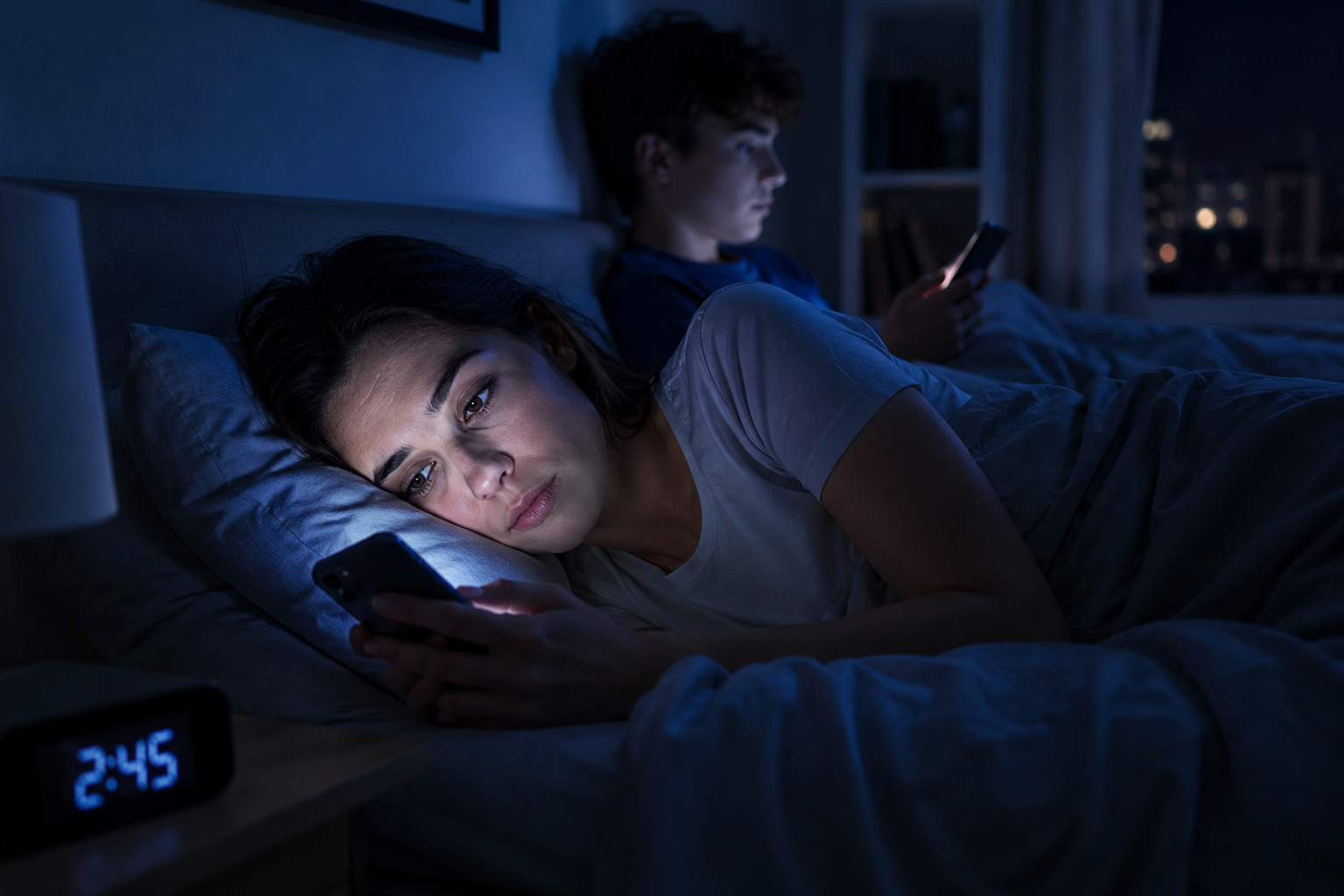
For many individuals, falling asleep was easy – a few years ago. The lights went off, the room was quiet, and the body just naturally slowed down. Bedtimes look extremely different today. The illumination of phones under covers, the unending scroll of social media posts, and the “just five more minutes” that morphs into an hour without realising it. Screen time has become a stealthy sleep thief for teenagers and adults alike. Although many blame stress, hectic schedules or coffee for feeling weary every morning, late-night scrolling is frequently a hidden cause behind sleepless nights.
The problem is not only that people spend too much time online. It’s also about the effect of screens on the brain and body and our normal sleep schedule. The bright blue light, emotional stimulation of films and texts and regular updates can keep the mind stimulated long after midnight. The problem is that screens are now everyday life. People work on computers, learn on tablets, interact on their phones and relax viewing movies. It’s not practical to be screen-free. The actual answer is to learn to use technology in a healthier way, without losing sleep quality. Understanding the link between screen usage and sleep can help kids and adults feel more rested, focused and emotionally balanced. Small tweaks to your bedtime routines might have a surprisingly large effect.
Why Screens Make It Tougher to Fall Asleep
Most individuals know the impact but not the effect. You’re up watching movies or going through social media and suddenly you’re not tired anymore. And you still can’t get your mind to stop racing even after you hang up. One big reason: exposure to blue light. Phones, tablets, computers and televisions all give out blue light, which fools the brain into believing it is still sunlight. Normally the body produces a hormone called melatonin in the evening. Melatonin helps the body get ready for sleep by making you sleepy naturally.
Screens used late at night, especially in dark rooms, decrease melatonin synthesis. The brain is puzzled about whether it is time to sleep or time to stay up. It’s not only adults that this impacts — kids are especially vulnerable to it since their sleep cycles tend to vary later in puberty. Many teens have a hard time falling asleep early and screens might push their bedtime further into the night. Another problem is mental stimulation. Social media, games, brief movies, and online interactions keep the brain busy. Even peaceful material might stop the mind becoming entirely relaxed. The brain remains in “engagement mode”, as opposed to a resting state.
This is a cycle many individuals experience:
- They feel sleepy before bed
- They get out their phone for a few minutes
- Their brain wakes up again
- Sleep time is delayed by 1 or 2 hours
Over time, this habit can substantially affect the quality of sleep.
The Difference Between Sleep Quality and Sleep Quantity
The quantity of sleep is what most people look at, but the quality of sleep is just as important. A person can sleep for eight hours and yet wake up tired if they have had disturbed or light sleep. Too much screen time can cut down on deep sleep, the stage in which the body heals itself and the brain correctly absorbs information.
Poor Sleep Quality can result in the following:
- Morning tiredness
- Trouble focusing
- Mood changes
- Lower productivity
- Greater stress
- Problems with memory
- No motivation
For teens, the impacts may manifest in academic performance, emotional management and energy levels throughout the day. Adults may experience decreased job performance, irritation or continuous weariness despite sleeping “enough”. A typical case is checking for alerts at night. Even short breaks can diminish deep sleep cycles. several have their phones beside their beds and wake up several times, not knowing how much this is affecting their sleep. The body requires undisturbed sleep to recuperate correctly. Constant digital disruptions hinder that healing from happening entirely.
Late-Night Scrolling Creates a Mental “Always On” Mode
One of the biggest modern sleep problems is late-night scrolling. Social media platforms are designed to keep users engaged for long periods. Endless feeds, autoplay videos, personalised recommendations, and notifications make it difficult to stop naturally. This habit creates what many sleep experts describe as an “always on” mental state. Instead of gradually slowing down before bed, the brain continues processing information rapidly. Emotional content can make the situation even worse. News updates, arguments online, stressful videos, or comparison-driven social media posts can increase anxiety before sleep.
Teenagers often experience this strongly because social interactions happen heavily through digital platforms. Fear of missing out, responding to messages, or staying updated with trends can delay sleep every night. Adults are not immune either. Many people scroll through work emails, news headlines, or productivity content before sleeping, believing they are relaxing while actually overstimulating the brain.
How Poor Sleep Affects Daily Life More Than People Realize
Many people normalise poor sleep because it has become so common. Feeling tired during the day often feels “normal” now, especially among adults balancing work and responsibilities.
But chronic sleep disruption slowly affects nearly every part of life.
Adults may notice:
- Reduced focus at work
- Slower decision-making
- Increased stress levels
- Frequent headaches
- Low patience and irritability
- Reduced motivation to exercise
Teenagers may experience:
- Lower academic performance
- Difficulty remembering information
- Emotional sensitivity
- Reduced attention span
- Lack of energy during school
Sleep also affects physical health habits. People who sleep poorly often crave sugary foods, rely more on caffeine, and exercise less consistently. Over time, this creates a cycle where low energy leads to unhealthy routines, which then make sleep even worse. Relationships can also suffer. Constant exhaustion affects communication, patience, and emotional stability. Many people spend years trying productivity hacks while ignoring one of the biggest foundations of good mental performance: healthy sleep.
Why Teenagers Are Especially Vulnerable to Screen-Related Sleep Problems
Teenagers face a unique challenge because their biological sleep schedule naturally shifts during adolescence. Most teens do not feel sleepy as early as younger children or many adults. Their bodies naturally prefer later bedtimes. When phones and social media are added to the situation, bedtime can become extremely delayed.
Many teens stay awake far later than intended because:
- Social media activity increases at night
- Friends are online late
- Streaming platforms encourage binge-watching
- Homework often requires screens
- Gaming sessions continue for hours
At the same time, schools still require early wake-up times. This creates chronic sleep deprivation. A teenager may sleep only five or six hours regularly while needing much more for healthy brain development. Over time, lack of sleep can affect mood, focus, emotional regulation, and learning ability. Parents sometimes interpret these effects as laziness or attitude problems when the real issue may be sleep exhaustion linked to screen habits. Healthy screen boundaries can make a major difference without requiring extreme restrictions.
The Small Sleep Habits That Actually Work
Improving sleep quality does not require completely removing technology from life. Most people simply need better boundaries and healthier nighttime habits. One of the most effective changes is creating a screen-free wind-down period before bed. Even 30 to 60 minutes without screens can help the brain transition into sleep mode more naturally.
During this time, people can:
- Read a physical book
- Stretch lightly
- Listen to calm music
- Prepare for the next day
- Journal thoughts
- Practice quiet breathing exercises
Another helpful habit is reducing brightness on devices during evening hours. Many phones now include night mode or blue light filters that reduce harsh lighting. Keeping phones away from the bed also helps significantly. When devices stay within reach, the temptation to check notifications becomes stronger.
Simple environmental changes matter too:
- Dim room lighting before bedtime
- Keep bedrooms cool and quiet
- Maintain consistent sleep schedules
- Avoid heavy late-night meals
- Limit caffeine in the evening
The goal is not perfection. Consistency matters more than strict rules. Even small improvements in bedtime habits can lead to noticeable changes in energy and mood within a few weeks.
How Adults Can Balance Technology and Better Sleep
Adults often struggle because work and personal life are deeply connected to screens. Many jobs require late-night emails, digital meetings, or extended computer use. The key is intentional usage rather than constant passive usage. For example, someone may genuinely need a laptop for work at night, but endless social media scrolling afterward is optional. Separating necessary screen use from mindless screen time can improve sleep significantly.
Some practical strategies include:
Create a Digital Cutoff Time
Choose a time each evening when unnecessary screen use ends. Even a consistent cutoff one hour before bed can help reset sleep patterns.
Avoid Doomscrolling
Constantly consuming stressful news or emotional content late at night increases mental alertness and anxiety.
Use Technology With Purpose
Instead of automatically opening multiple apps, decide intentionally what you are using devices for.
Charge Phones Outside the Bedroom
This reduces nighttime checking habits and improves sleep consistency.
Replace Screen Habits Gradually
Trying to quit all nighttime screen use immediately often fails. Replacing just part of the routine works better in the long term.
Adults often underestimate how much mental recovery depends on quality sleep. Better sleep improves focus, patience, emotional balance, and even creativity.
Creating a Healthy Digital Routine for Teens
Teenagers usually respond better to balanced guidance than strict punishment-based rules. Completely banning screens may create conflict without teaching healthy habits. Instead, families can work together to build realistic digital routines.
Some helpful approaches include:
- Setting device-free bedtime routines
- Encouraging offline hobbies
- Using charging stations outside bedrooms
- Talking openly about sleep importance
- Modeling healthy screen behavior as adults
Parents who constantly use phones late at night may struggle to convince teens to reduce screen time themselves. Consistency matters more than perfection. It also helps to explain why sleep matters instead of only enforcing rules. Teens are more likely to cooperate when they understand how sleep affects sports performance, mood, appearance, focus, and energy. Schools and communities are increasingly discussing digital wellness because screen-related sleep problems continue growing among younger age groups. Healthy habits developed during teenage years often continue into adulthood.
Better Sleep Starts With Small Choices Every Day
When sleep issues begin, individuals usually want something big. They buy pricey sleep products or complex routines or rely on coffee during the day to make up for tiredness. But for many, the greatest benefits are in the little everyday choices, made regularly. Earlier shutdowns of the screen. Not having phones in the bedroom.
Less scrolling late at night. Establishing soothing night-time rituals. Sticking to sleep routines even on weekends. Such behaviours may be simple, but they are directly supportive of the normal sleep process of the body. The modern world is always in competition for attention. Notifications, videos, chats, and limitless material make it simple to keep cognitively stimulated well into the night. Now protecting sleep takes conscious effort.
The good thing is that any modification, no matter how small, may make a difference in the quality of your sleep. A lot of individuals find that cutting down on screen time at night helps them fall asleep faster, wake up less often during the night and feel more refreshed when they get up in the morning. Sleeping well is more than just not being exhausted. It impacts cerebral clarity, emotional stability, physical vitality, productivity and general well-being. When people sleep better, other parts of their lives tend to improve too.
Conclusion
In today’s world, screen time is heavily integrated into our lives, yet its influence on sleep quality is generally overlooked. Constant digital stimulation, exposure to blue light and late-night browsing can slowly erode good sleep habits over time for both teenagers and adults. Poor sleep impacts focus, mood, productivity, energy and emotional equilibrium. Teenagers can develop scholastic and emotional problems, while for adults, burnout, stress and constant tiredness are common, sometimes without realising the powerful influence that screen habits have on the situation.
The answer is not to abandon technology altogether. Instead, it’s about building better boundaries and more thoughtful evening rituals. Small behaviours such as decreasing screen time before bed, putting phones out of sleeping areas and creating tranquil night routines may make a big impact. One drastic change is seldom a good thing for sleep. It’s often the result of tiny, consistent decisions, repeated every day. Protecting sleep in a digital era may require some effort. The long-term benefits are worth it.”
FAQs
1. How does blue light impact sleep?
The blue light emitted from phones, tablets and laptops suppresses melatonin synthesis, making it more difficult for the body to feel naturally drowsy at night.
2. Is screen time more harmful to kids than adults?
And because teens’ normal sleep cycles already shift later during puberty, they may be more vulnerable to sleep difficulties from screens.
3. When should screens be removed before bed?
Many sleep specialists advocate avoiding devices for at least 30 to 60 minutes before bedtime to let the brain naturally wind down.
4. Do blue light filters actually work?
Blue light filters and night mode settings can alleviate some strain but they don’t fully eliminate the stimulating effects of screen use before sleep.
5. Ways to cut down on late-night scrolling?
Some of the best tactics include keeping phones away from the bed, having digital cutoff times and trading scrolling for relaxing offline activities.