
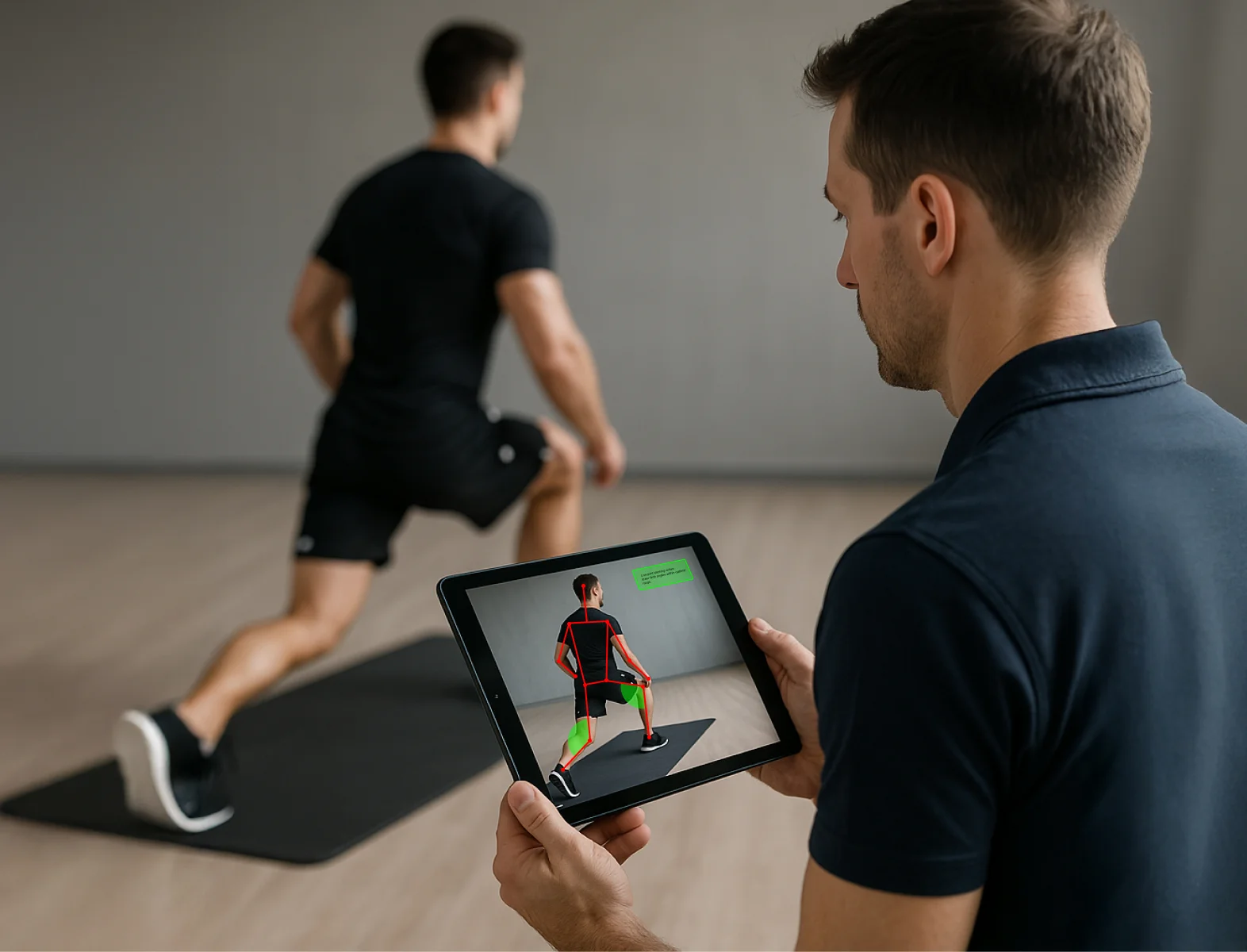
Motion tracking technology uses advanced sensors and cameras in real-time to analyse the body mechanics. This fitness technology gives users immediate feedback that can be used to prevent injuries during workouts and maximise muscle engagement. It does so by ensuring proper posture, alignment of joints, and execution of movements. To achieve the perfect deadlift or squat, you need to have a solid understanding of body mechanics. Fitness enthusiasts have relied on personal trainers and mirrors for decades to detect flaws in workout posture. Human eyes, on the other hand, can miss micro-movements or subtle misalignments which may lead to joint pain over time.
The motion tracking technology takes the guesswork out of physical training. Digital tracking systems capture three-dimensional data across the body to map how muscles and joints work under load. These systems compare the user’s movement to a biomechanical ideal baseline. Individuals can correct their posture in real time by accessing biomechanical data. The motion tracking system provides immediate auditory and visual feedback to the user, so they don’t have to wait for their personal trainers. This immediate intervention reduces the chance of injury and ensures that the targeted muscles perform the main work.
How does Motion Tracking Technology Analyse Movement?
Motion tracking relies on a combination of hardware sensors, machine learning algorithms, and computer vision to map human kinematics. Wearable sensors such as accelerometers or gyroscopes measure the speed and angles of specific limbs. While optical systems track joint positions using smartphone cameras or depth sensors, they do not require the wearer to use additional equipment.
Machine learning algorithms then process the raw data captured by the hardware. The software recognises anatomical landmarks such as hips, shoulders, and knees. The motion tracking system calculates the exact angles between these anatomical landmarks during the entire range of motion of the exercise. The fitness application can detect deviations immediately thanks to this continuous data processing. Motion tracking software will alert you if a user’s legs cave inwards during a lunge. This technology is a digital coach who never forgets the biomechanics of its users.
Benefits of Real-time form Correction
Injury prevention is the most important benefit of motion tracking technology. The incorrect lifting mechanics can put unnatural strain on spinal discs, ligaments and tendons. Individuals can prevent physical injuries by receiving alerts regarding spinal flexion and knee valgus.
Motion tracking technology is not only safe but also maximises the effectiveness of your workout. When the form is not correct, the body will naturally shift the weight from the primary muscles to the secondary muscles. By maintaining strict biomechanical alignment, you can ensure that your intended muscles do the work. This leads to better muscle development and faster strength gains.
Moreover, real-time feedback speeds up the learning curve of complex compound exercises. Beginners have a difficult time translating verbal instructions to physical actions. Motion tracking systems offer objective metrics that help users develop strong neuromuscular links and correct muscle memory faster than traditional methods.
What Motion Tracking System is Right for Your Workout Routine?
The type of training you do and your fitness goals will determine the best motion tracking technology. If convenience is more important than clinical precision, opt for optical or camera-based motion trackers. These apps require no setup and are perfect for analysing bodyweight exercises, basic dumbbell routines and yoga postures in the home gym.
Wearable sensor systems are ideal for high-velocity sports or barbell lifting. Wearables can provide accurate data on bar speed, explosive power and velocity. Optical cameras are often unable to do these measurements from one angle. No matter the format of the tracking system, make sure it integrates seamlessly into your lifestyle. It is important to use the motion tracking system consistently. Please check the software interface to ensure that the post-workout analysis provides clear, actionable insights rather than confusing raw data.
Take The Next Step to Injury-Free Fitness
The integration of motion tracking into your fitness programme represents a fundamental shift in how you view physical health. By embracing objective biomechanical information, you can ensure that each repetition safely moves you toward your goals.
Start by downloading an application that uses a camera to track motion to your smartphone. You can film a set of standard squats and push-ups in order to understand how the software will analyse your joint angles. You can apply the digital feedback to more complex lifting exercises as you get more comfortable. By paying close attention to data, you can build a more resilient and stronger body. You will also be able to avoid frustrating injuries.
FAQs
1. How accurate is the smartphone-based motion tracker technology?
Smartphones provide highly accurate motion tracking capabilities that you can use for a wide range of fitness applications. Computer vision algorithms are able to track joint angles with a margin of a few degrees, which makes them extremely effective in identifying major form errors during exercises such as squats or lunges.
2. Can motion tracking replace a personal trainer completely?
Motion tracking cannot replace a personal trainer. Software is great at identifying flaws in biomechanics and counting repetitions. However, human trainers can provide emotional motivation, customised programme design and nuanced communications that digital systems are unable to replicate.
3. What equipment will I need to track my exercise form?
You only need a smartphone with a camera that works and a room well lit to start tracking your form. Many accessible motion tracking platforms use mobile applications. They do not require wearable sensors or any specialised hardware.
4. Can motion tracking be used for high-speed sports like racing?
Motion tracking works well for high-speed sports. However, it is usually more effective to use dedicated sensors than smartphones. Wearables can sample data up to 100 times per second. This allows them to accurately record the rapid kinematics of golf swings, Olympic weightlifting and sprinting.