
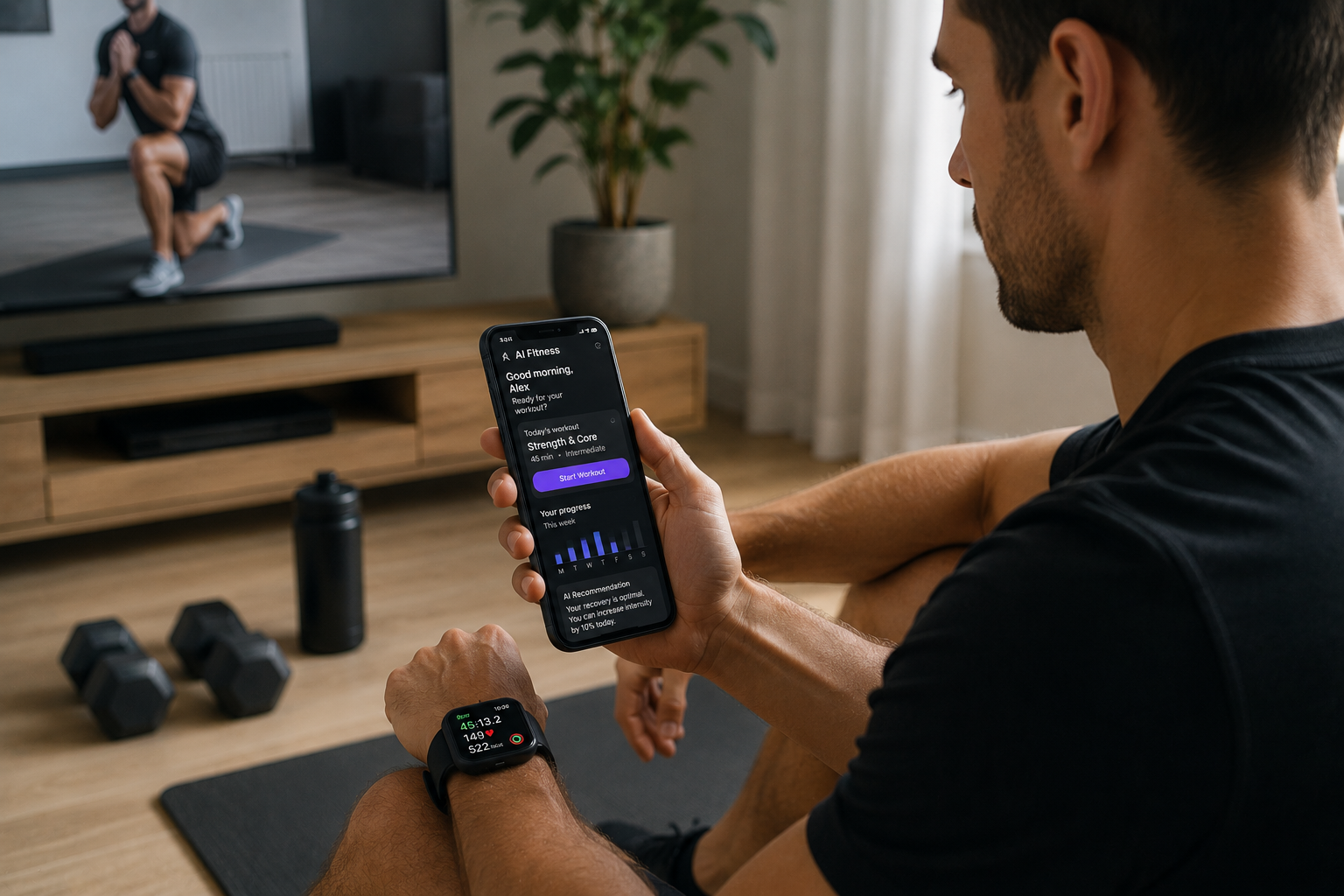
For years, many people have blindly copied fitness routines from magazines, fitness websites, or social media influencers, without understanding whether these routines are suitable for their fitness level or personal goals. This approach is often frustrating. Some exercises are too difficult, others too monotonous, and many people eventually give up after attempting to stick with them. AI-powered fitness apps address this problem by developing personalised training schedules instead of standard programmes. These apps analyse data such as activity level, previous training habits, goals, available equipment, and training results to provide more personalised recommendations. Many AI systems do not use a static training program but gradually adjust the content based on the user’s actual training progress.
The Unique Features of AI-powered Fitness Apps
Most fitness apps offer a static library of training programmes. Users choose a program and then execute it manually, with the system rarely making adjustments. AI-powered fitness apps work differently. Many apps analyse user behaviour and adjust recommendations based on progress, consistency, recovery, and performance feedback. This software can recognise when you regularly skip workouts, when certain exercises become easier, or when you struggle with specific movements. As a result, the system can also create customised training schedules. For instance, people who haven’t trained for a long time and are starting again receive shorter, lower-intensity training sessions, while experienced users receive schedules with higher intensity and greater volume as their training progresses. The goal is not only to offer training material but also to continuously optimise and improve.
Personalization Usually Starts with Basic Information
Most AI-powered fitness apps start with a series of setup questions. Common questions include age, activity level, fitness goals, training preferences, available equipment, and time constraints. Some apps may also ask about past injuries or activity limitations,they usually do not intendended to replace professional medical advice. Although these setup forms may seem simple at first glance, they form the basis for personalised recommendations. The training schedules needed by someone training at home without equipment are completely different from those of a gym member looking to improve their fitness. For example, the strategies a beginner needs to improve their daily training habits differ from those of an experienced runner with endurance training goals. AI systems do not assume that all users train in the same way but rather use this information to provide a more realistic starting point for training.
Activity Tracking Helps Systems Learn Time Patterns
Another reason for the increasing popularity of AI-driven fitness apps is their ability to learn from long-term user behaviour. The software not only accepts the rules the user initially set; it also takes into account how the user trains over a certain period. For example, the system can monitor the following:
- Number of completed workouts
- Number of missed workouts
- Training duration
- Heart rate trend
- Recovery time
- Optimal training time
- Training difficulty
Continuous input enables the program to improve future recommendations. If a user regularly shortens their training sessions, the algorithm can start recommending shorter training schedules. If a user makes rapid progress with a beginner’s workout, the software can gradually increase the difficulty level. This flexibility can be more motivating than strict training schedules that do not fit into our daily routine.
Personalization is Becoming Increasingly Important in Wearables
With the advent of smartwatches and fitness trackers, AI-driven fitness apps rely on data more than ever. Many apps now synchronise seamlessly with wearables and measure activity levels, heart rate, sleep patterns, and daily activities. This helps to gain a more complete picture of a user’s recovery and performance between workouts. For example, if a wearable detects insufficient sleep or excessive fatigue, some apps can temporarily lower training intensity or recommend recovery activities instead of intensive training. This shift makes training recommendations more flexible rather than static. “One of the reasons is that people are more receptive to training schedules that can be adapted to their energy levels, rather than having to do the same amount of exercise every day.
Personalization can Also Increase Motivation
People often stop exercising for psychological reasons, not physiological ones. These generic training schedules are usually poorly tailored to individual habits, lifestyles, or energy levels. The goal of AI-driven fitness apps is to improve training consistency by making schedules more feasible and personalised. Busy people, for example, can do shorter workouts during the week and longer workouts on the weekend. Users who prefer low-intensity training receive recommendations focused on walking, flexibility exercises, or bodyweight training, rather than high-intensity workouts. Aerobic exercises. These small adjustments can reduce the fear of exercising. Many users do not strive for top performance; they simply want a training schedule that truly fits into their daily lives.
Some Apps Focus More on Guidance
Not all personalisation is based on activity data. Many AI-powered fitness apps adapt their communication and reward mechanisms based on user behaviour. Some users enjoy tracking their performance, others want to engage in winning streaks and competition, while still others prefer subtle progress reminders and less intrusive fitness advertisements. Ultimately, the software can adjust the timing of messages, encouragement methods, or goal presentation to the user’s needs. This subtle personalisation may be imperceptible, but it is crucial for long-term user retention. User engagement is significantly influenced by this. Fitness technology is more about behavioural support than training guidance.
Limitations Remain for AI-powered Fitness Systems
Although there are many benefits to using AI-powered fitness apps, they cannot fully replace expert guidance or medical advice. Apps cannot fully reflect the quality of training, discomfort, or complex health issues based on statistics alone. Two people performing exactly the same workout may experience significantly different levels of physical exertion or recovery. Moreover, there is a risk of over-reliance on automated suggestions while ignoring one’s own comfort and physical limitations. Most apps are better suited as tools than as authoritative guidance systems. Users must still make their own decisions regarding rest, recovery, and exercise, based on their individual circumstances. Smart decisions based on intensity. Apps that promote flexibility seem more useful than forcing users to set fixed goals.
Privacy Concerns are Rising
Naturally, privacy concerns arise when AI-driven fitness apps collect massive amounts of personal activity data. Connected devices and fitness platforms have become common ways for users to exchange activity patterns, sleep habits, training history, and health information. As these systems become increasingly complex, people are increasingly asking themselves:
- **What data is being collected?**
- **How long is data retained?**
- **Sharing data with other parties?**
- **Integration with wearables: how safe?**
As apps increasingly utilise AI-driven personalisation, trust becomes a crucial factor in the adoption of fitness technology.
The Evolution of Fitness Personalisation
This is particularly evident in the latest fitness apps, which increasingly prioritise sustainability over extreme results. Traditional fitness platforms often touted ambitious goals, daunting challenges, or unrealistic promises of transformation. However, many new AI-powered fitness systems focus on promoting consistency, habit formation, and adaptable training schedules. This approach is often more practical for people with jobs, families, and fluctuating energy levels. AI systems gradually guide users in developing habits that fit more naturally into their daily lives, rather than viewing fitness as a short-term goal.
Summary
AI-powered fitness apps are changing the way people interact with fitness. They offer personalised training schedules tailored to the user’s goals, schedule, performance trends, and activity data. By enhancing data from workouts, wearables, and user behaviour, these technologies can create adaptive, customised fitness plans instead of standard, monotonous programmes. Although AI cannot replace professional coaches or medical advice, it can offer useful guidance and support to users who want to develop a regular training habit. With the ongoing development of wearable electronic devices and fitness software, personalised training plans based on AI are expected to become an increasingly common part of the daily fitness experience.
FAQs
1. How do AI fitness apps generate personalised training plans?
They tailor training recommendations based on information such as the user’s fitness goals, activity level, training history, and long-term performance data.
2. Can AI fitness apps work with smartwatches?
Many apps can synchronise with wearable devices to measure heart rate, activity level, sleep patterns, and training performance.
3. Are AI fitness apps suitable for beginners?
Yes. Many apps adjust the difficulty of workouts based on your fitness level and progress.
4. Will AI fitness apps replace personal trainers?
Apps with AI can help set up a training programme and provide direction, but they cannot replace professional coaches or personal medical advice.
5. Why do fitness apps with AI functionality adjust training schedules?
These apps analyse workouts and the user’s progress to adjust future training schedules based on the number of workouts, recovery, and overall performance.

Nathan Hayes is a technology writer at Pimozoogin who covers AI, digital wellness, smart healthcare, and emerging technology trends. He creates simple, informative content that helps readers understand how modern technology is influencing everyday life, productivity, fitness, and connected living.