For a long time, in-person consultations have been an essential part of healthcare. Patients must travel to clinics for basic health checkups, follow-up appointments, and routine check-ups, which often entails time, travel time, and significant waiting times.
This model is changing.
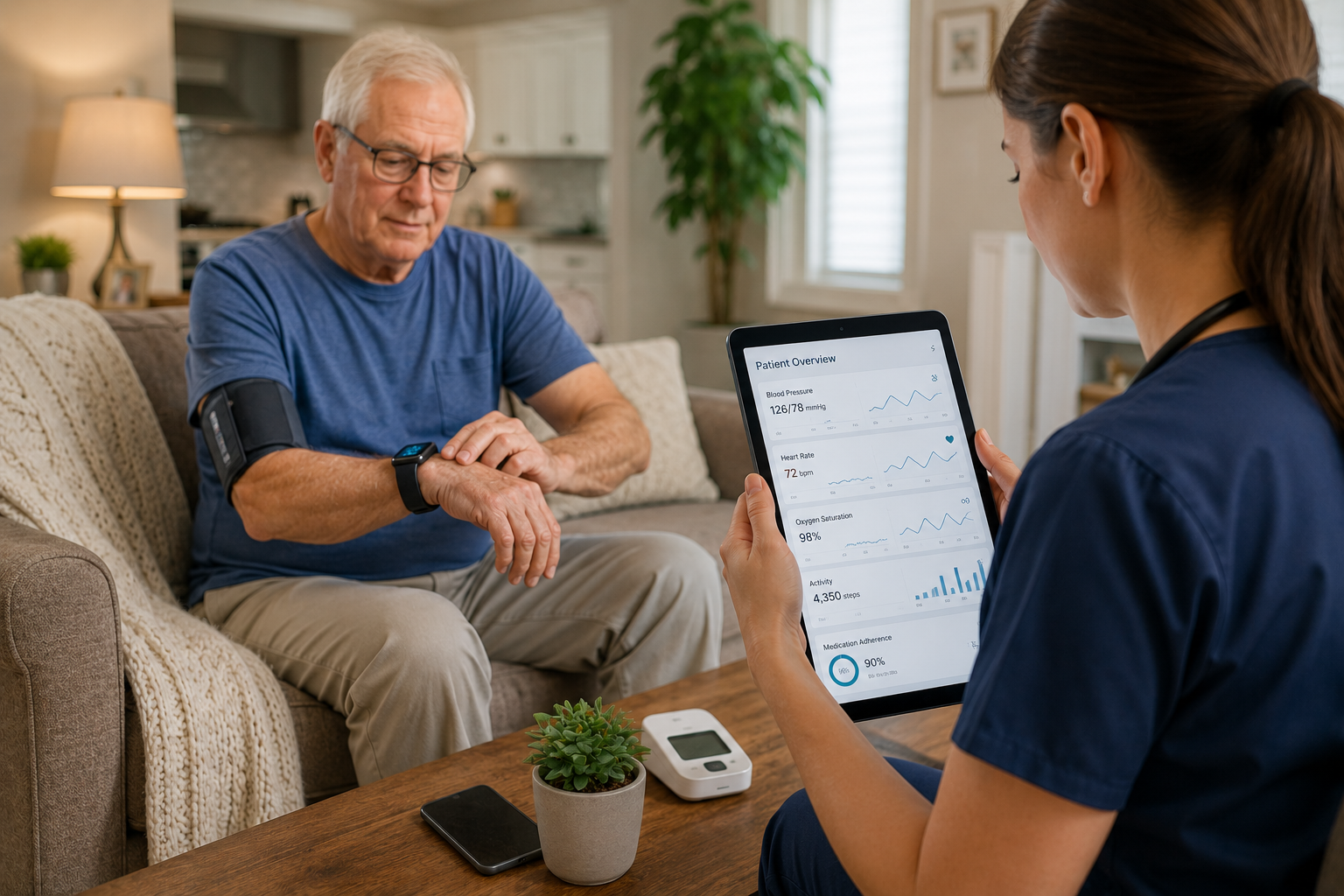
Remote Patient Monitoring (RPM) enables doctors to monitor a patient’s specific health data while they are at home. Doctors and care teams can view a patient’s real-time health data via connected devices and secure digital systems, without frequent contact with the patient.
This technology is not intended to replace hospitals or doctors, but rather to make healthcare continuous, flexible, and accessible for people who need regular checkups but cannot travel to a hospital.
What Remote Patient Monitoring Actually Means:
Systems that collect health information from individuals outside clinics or hospitals and transmit it digitally to healthcare providers are called “remote monitoring”. Some devices can be used to track the following:
- Blood pressure
- Heart rate
- Blood oxygen saturation
- Weight changes
- Sleep patterns
- Blood glucose levels
- Activity level
In most cases, the data is transmitted directly via mobile apps, wireless devices, or secure online platforms.
Patients no longer need to make occasional appointments but can simply continue their lives, while healthcare providers monitor trends in their health over time.
Why Home Healthcare Is Becoming More Important:
An ageing population, chronic diseases, and a growing number of patients are increasing the pressure on healthcare systems in many countries.
Frequent hospital visits are not always feasible, especially for the elderly or people with chronic conditions. Travelling alone is both tiring and expensive for some families.
Thanks to remote monitoring technology, some care services can noprovide careed at home, often making patients feel more at ease.
Many people do not realise how important this convenience is. If regular monitoring is integrated into a patient’s daily life, rather than being required at every clinic visit, they are more likely to adhere to it.
Continuous Monitoring Can Reveal More Useful Patterns:
Regular clinic visits only provide a snapshot of a patient’s health status at a specific moment. Remote monitoring offers more comprehensive information.
For example, measuring blood pressure at home multiple times over several weeks can reveal trends that a single measurement at the clinic might not show.
Some patients experience more stress during their appointments, while others’ stress levels fluctuate significantly throughout the day, depending on their activities, sleep patterns, or daily routine.
Patients Often Feel More Involved in Their Care:
A major advantage of remote monitoring tools is continuous visibility.
People generally feel more involved in managing their health. An important change brought about by remote monitoring is that patients are now more actively involved in managing their health.
People who regularly check their health status via apps or smart devices often understand better which daily habits affect their health.
For example, someone who measures their blood pressure at home might notice that factors such as stress, lack of sleep, insufficient hydration, or physical activity can change blood pressure readings over time.
However, such behaviour does not mean that people suddenly become medical experts. Continuous feedback does help people adhere better to daily care and follow-up treatments.
Many healthcare professionals view these developments as an important step towards collaboration in healthcare.
Remote Monitoring Helps Reduce Unnecessary Hospital Visits:
Not all health problems require a visit to the emergency room or a consultation.
In some cases, remote monitoring enables medical teams to detect subtle changes early and determine whether immediate treatment is necessary. For people recovering from surgery or suffering from chronic diseases, such monitoring can reduce unnecessary travel and relieve pressure on already overburdened healthcare facilities.
Hospitals can also operate more efficiently, as remote monitoring can help them determine which patients require immediate care and which can recover at home.
As the demand for healthcare increases, this more efficient prioritisation becomes increasingly important.
Wearable Technology Plays a Growing Role:
Connected health devices, smartwatches, and wearable sensors have become essential components of remote patient monitoring systems.
Some wearable technologies can record your heart rate, activity level, sleep pattern, and daily activity level.
Their appeal lies in their ease of use.
Patients do not need to constantly manually record data, as the device does this work automatically in the background. This method of monitoring is generally more accurate and reliable than traditional self-reporting.
As smart technologies continue to evolve, healthcare systems are exploring how to deploy these tools to support large-scale home care programmes.
Caregivers and Families Benefit Too:
The use of remote monitoring tools can reduce stress for carers and family members.
Adult children caring for their elderly parents often worry about whether medication is being used correctly or if sudden changes in their parents’ health between visits are being overlooked. Some tracking systems provide a warning when measurements exceed normal values or when there are significant changes in daily habits.
This does not replace patient care, but it can offer families peace of mind and facilitate communication between healthcare providers and families.
Regular monitoring and small updates often help prevent larger problems from going unnoticed.
Data Security and Privacy Remain Crucial Issues:
As healthcare becomes increasingly interconnected, the importance of privacy is becoming ever clearer.
Remote monitoring systems collect personal information, making the secure processing of this data crucial.
Patients often want clear answers to the following questions:
- Who can view their information?
- How long is data retained?
- Are external companies involved?
- What measures have been taken to prevent data breaches?
Healthcare institutions and technology companies are still working on strengthening security systems, but trust issues remain a major reason why some users hesitate to use connected care technologies in the long term.
Technology Still Has Limitations:
Telehealth systems are receiving a lot of attention these days, but not all medical conditions are suitable for remote monitoring.
In some cases, diagnostic imaging, laboratory tests, physical examinations, or emergency care remain essential and cannot currently be performed remotely.
Technical problems can also cause telemedicine systems to malfunction. Network connection issues, faulty equipment, dead batteries, or inaccurate data can reduce the system’s reliability.
Another practical issue is public acceptance of the technology. Some people, particularly the elderly who are not accustomed to internet technology, may experience problems during initial setup or continued use.
In most cases, well-functioning systems strive for simplicity and ease of use, rather than technological complexity.
Healthcare Is Becoming More Hybrid:
Remote monitoring is gradually shifting standard care models toward a hybrid approach, rather than replacing them.
Patients can still attend appointments and be monitored at home between appointments. Doctors still have to make medical decisions, but they now have access to more coherent, long-term data instead of random snapshots.
This hybrid model makes the healthcare system more flexible and simultaneously helps patients access care outside regular healthcare facilities.
For many, this balance is more beneficial than relying exclusively on in-person consultations or entirely on teleconsultations.
Conclusion
Remote monitoring is transforming home care and enabling patients, carers, and doctors to stay in contact more easily, even outside of regular appointments.
With connected sensors, wearable technology, and digital health platforms, care teams can track trends, closely monitor disease progression, and act quickly when circumstances change.
This technology is not intended to replace hospitals or doctors. Its true value lies in improving communication, streamlining processes, and making health monitoring more consistent in daily life.
As care systems continue to evolve, this is expected to become an increasingly common way to manage long-term care and home care in the coming years.
Frequently Asked Questions
What is remote monitoring?
Remote monitoring refers to the collection and sharing of health information between patients and care providers using connected devices outside the regular medical environment.
Which devices are used for online monitoring?
Commonly used devices include blood pressure monitors, smartwatches, blood glucose meters, pulse oximeters, and wearable fitness trackers.
Can remote monitoring replace medical visits?
No. Remote monitoring helps manage healthcare, but it cannot replace necessary physical examinations or professional medical care.
Is remote monitoring only suitable for people over 65?
No, people of all ages can use remote monitoring to check their health, manage chronic conditions, track recovery, and receive ongoing medical assistance.
Why do hospitals use remote monitoring tools?
Hospitals use remote monitoring to better track patients’ conditions, reduce unnecessary hospital visits, support home care, and monitor long-term health trends more closely.

Nathan Hayes is a technology writer at Pimozoogin who covers AI, digital wellness, smart healthcare, and emerging technology trends. He creates simple, informative content that helps readers understand how modern technology is influencing everyday life, productivity, fitness, and connected living.